
Flâneries in Paris: Explore the Town of Vincennes
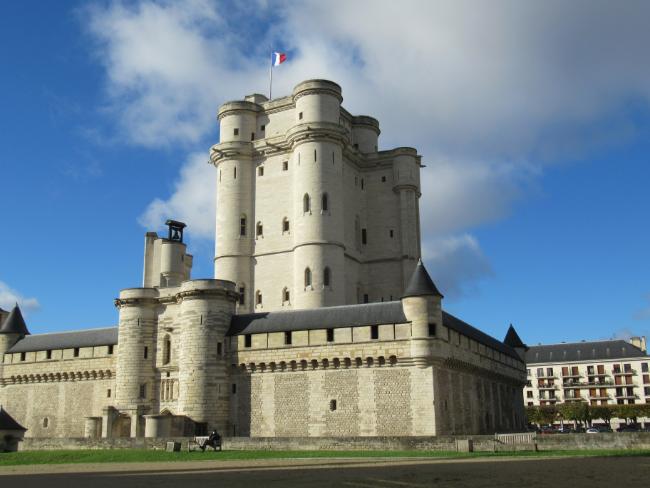

This is the 40th in a series of walking tours highlighting the sites and stories of diverse districts of Paris.
It took a firm resolve to ignore the castle just to my left as I exited the Château de Vincennes metro station. I had fond memories of exploring the keep and peering into rooms where Charles V ran the country in the 14th century and Henry V died an ignominious death of dysentery a few years after his triumph at Agincourt. But today, I planned to venture over to the other side of the Rue de Paris and explore the town of Vincennes. I’d come on market day, having heard that’s a highlight not to be missed.
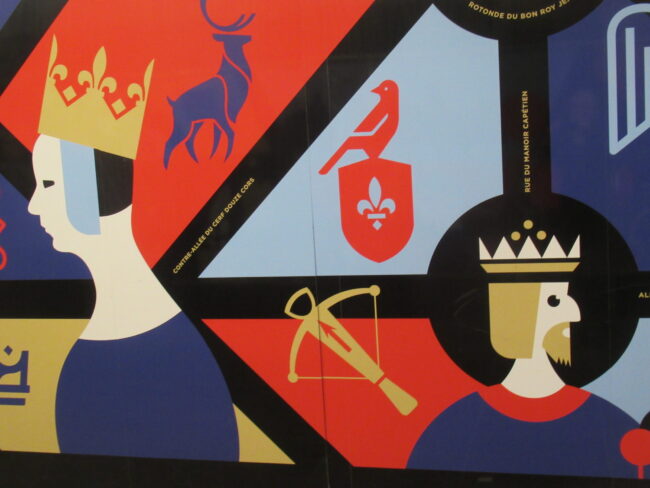
Inside the Château de Vincennes metro station. Photo: Marian Jones
At the Tourist Office, just past the château at number 28, I picked up a handy map outlining a heritage trail through the town, starting right outside their door with a right turn into Rue de Montreuil. I peeked through the entrance of the Bains Montansier, whose decorated façade belonged to a previous era when many people used public bathrooms. A tiled passageway, decorated with Art Deco style pictures of girls bathing in pools gave it a distinctly retro feel. Google told me that the premises had once included un sauna gay, now closed. Back at the entrance, a board advertised its current use, offering hypnose and other forms of thérapie for both children and adults.
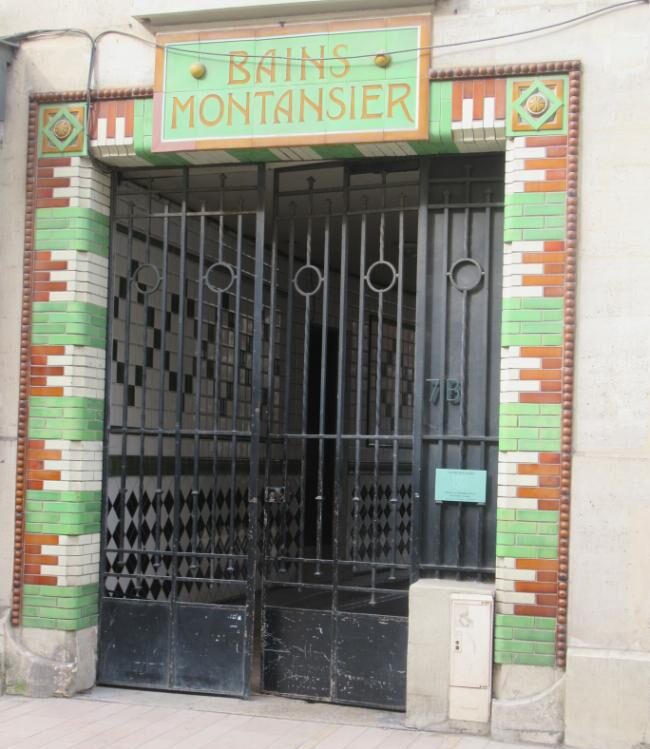
Bains Montansier. Photo: Marian Jones
Before long, on the other side of the road, I was intrigued to look through the window of Herviou Chocolatier and watch two of their staff melting and moulding chocolate into the goodies for sale in the room next door. Of course, I had to pop in and naturally I could not leave without a box of chocolate teaspoons for a mere 6 euros. The sensible choice would have been a mini selection box to try out some of their flavors, but the edible cutlery option just seemed irresistible. One day, I will build a dinner party dessert around them.
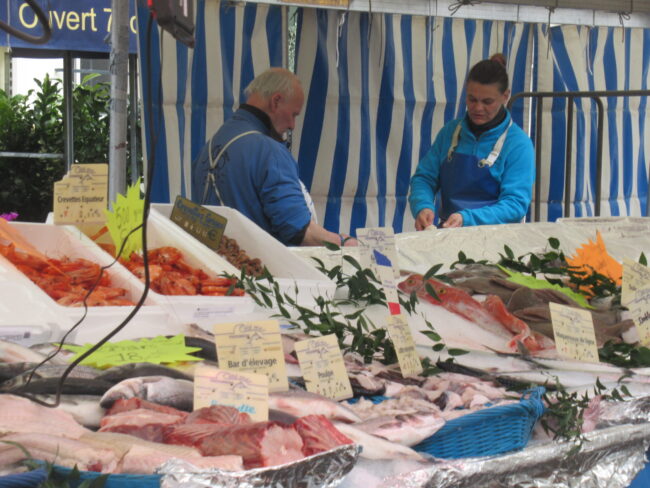
Vincennes market stall. Photo: Marian Jones
A glance into Rue du Midi on my right revealed it to be a haven of high–quality produce for discerning cooks. A double-fronted poissonnerie offered inspiration for a thousand recipes, the butcher’s across the road was comprehensively titled a charcuterie-boucherie–vollailles-triperie, and, as one high-end chocolaterie is clearly not enough for the residents of Vincennes, there was another, owned by Alain Ducasse, whose commitment to bean-to-bar excellence means his team source, roast and grind all the cocoa beans used in their products. Spoiled for choice seemed a phrase designed specifically for Vincennes.
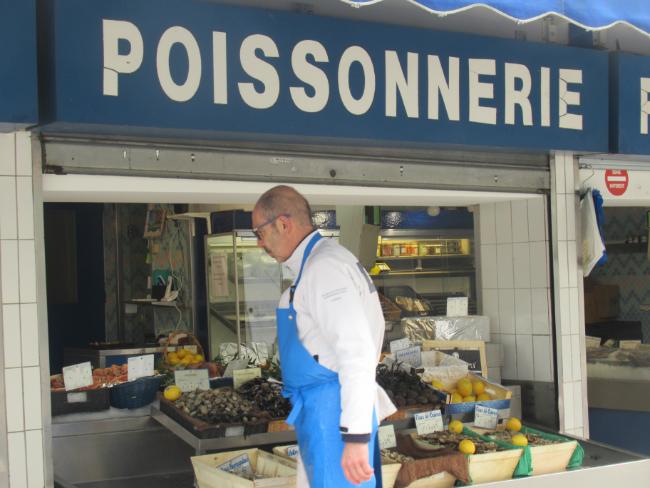
Rue du Midi in Vincennes. Photo: Marian Jones
The market was heralded on the corner of Rue Fontenay by the shouts of a tiny stallholder half hidden behind a cascade of strawberries. Fresh and perfect, they could be mine, as the seller yelled out on repeat, for a mere six petits euros le kilo. A passing customer explained helpfully, “She’s been here for decades. Perfect produce. You don’t have such beautiful markets your country, do you?” His gallic pride was evident, quite certain that nowhere else could compete. And a wander past the endless stalls crammed with high-quality foods made me think that maybe he had a point. You could buy a different set of picnic treats here every day all summer long.
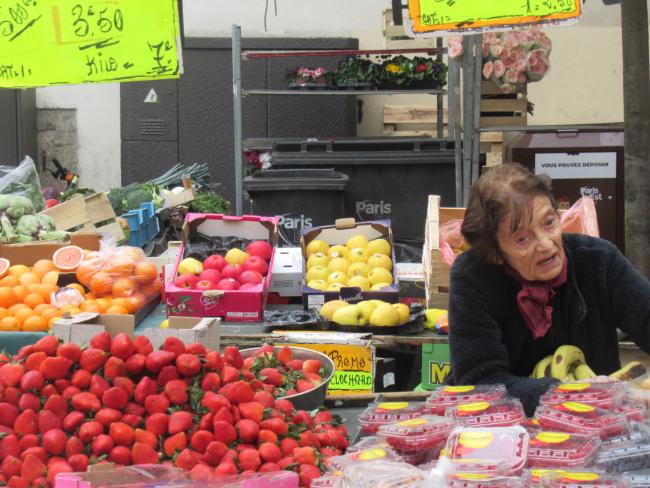
Market stall in Vincennes. Photo: Marian Jones
There were multiple versions of stalls, each with their own speciality. One of the cheese stalls specialized in “authentic flavors from the mountains of Auvergne” and Cantal of varying ages was on offer. The entre deux, explained the stall-holder, was neither young nor old, but had been aged for 10 months. And the aligot, a rich baked mixture of potatoes and cheese, will warm you up: ça réchauffe. Among the tempting hot food stalls further down was a rôtisserie where the pommes de terre grenaille – potatoes roasted under the spit, soaking up chicken juice – smelt irresistible. But then so did the gratin dauphinois and the paëlla and the brochettes d’agneau.
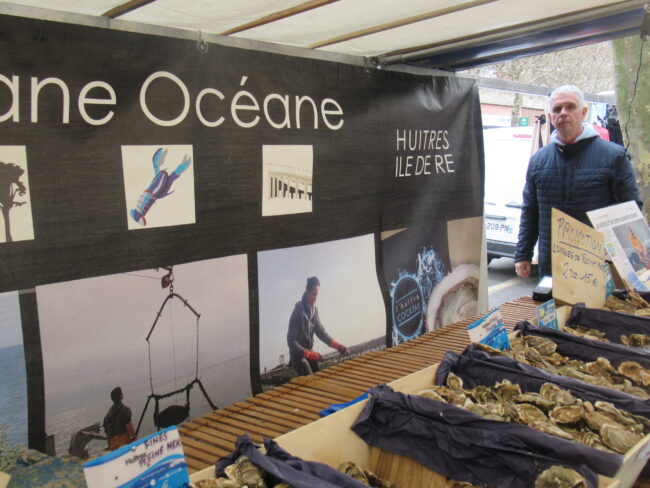
Oyster stall in the market. Photo: Marian Jones
The owner of the Cabane de l’Océan was particularly chatty. “I drive through the night from the Île de Ré with these oysters. You won’t find fresher.” He carefully took me through the five sizes of oyster, from the smallest, a 5, suitable, he explained, “pour l’apéro“ and then up through sizes 4, 3 and 2, which he had on offer, to the supreme size 1, the meatiest and most flavorsome, of which, malheureusement, he had none that day. Serving instructions followed: I should use either shallots and vinegar or lemon juice. On this he was most definite. Shallots and lemon juice? Mais non. A little salt and pepper perhaps? Mais non, non, trois fois non. It was an impromptu masterclass.
The market ended at the Place de l’Église where I paused for a coffee opposite another vast fruit and vegetable stall and watched a little scene play out between an elderly customer and an endearingly solicitous young stall-keeper. She wanted potatoes, he asked how she intended to cook them – au four, she replied, ie baked in the oven – and for how many people. Then he cast his eye over all the different varieties, suggested one, rummaged around to find two evenly sized ones – c’est important, she agreed – and checked for her approval before packing them carefully into her string bag. He really couldn’t have taken more care over this one, low-cost purchase. It was another example of how seriously the French take la gastronomie.
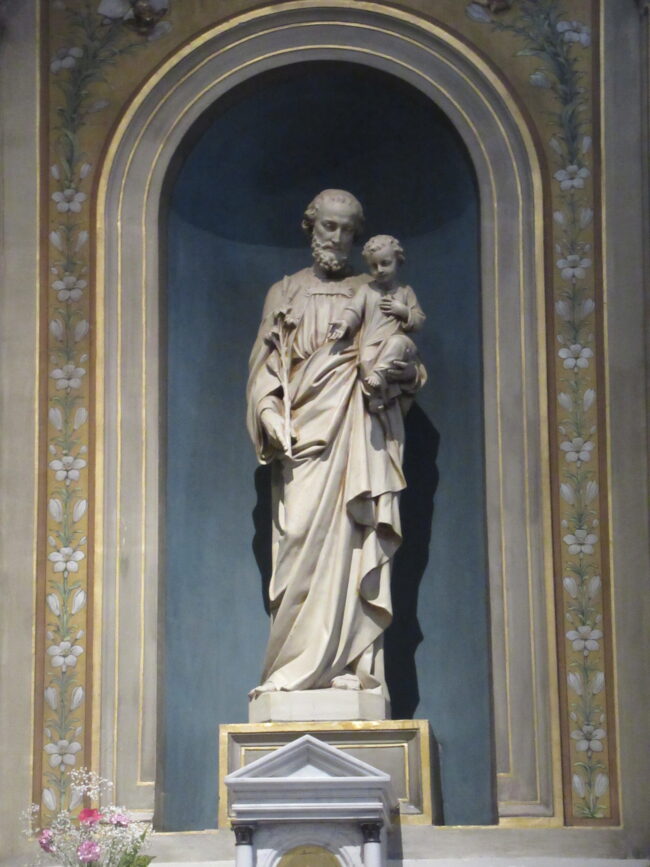
Statue inside the Vincennes church. Photo: Marian Jones
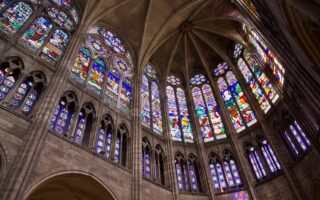
Crossing the square to the church, I found a busy place where mass is said at least once each day and a poster in the entrance invites one and all to a petit déjeuner convivial each Sunday. Inside, the traditional was mixed in with the surprisingly new. Beautiful statues of Mary and Joseph sat in niches either side of the altar and there were Latin quotations from the psalms above the exit, referencing the faith of many centuries. In contrast, in the side chapels, sunlight streamed through stained-glass windows installed by over 100 21st-century volunteers. Abstract designs in bright reds, blues and yellows sparkled from some windows, simple outlines of biblical scenes in luminous colors from others. Stunning!
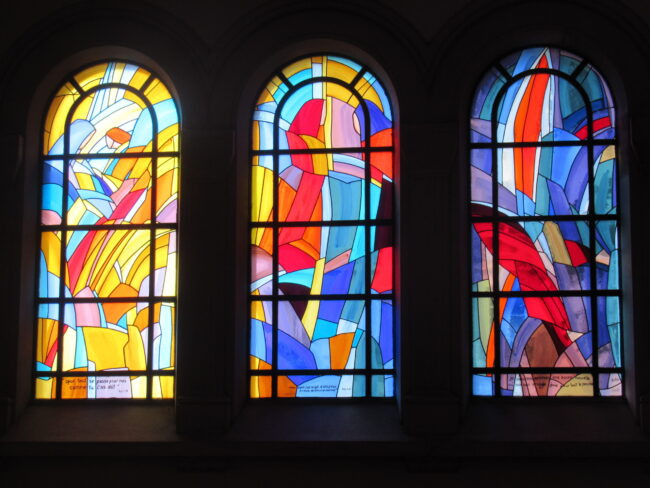
Stained glass windows inside the church in Vincennes. Photo: Marian Jones
The nearby Hôtel de Ville is a magnificent building, built at the end of the 19th century but drawing heavily on the arches and pillars of renaissance style, a stone beauty wearing its three flags with pride: the tricolore, the EU flag and Vincennes’ coat of arms, one half a scattering of golden fleur-de-lys on a royal blue background, the other the castle’s imposing keep on a red background.
I went down the side of the building, past the publications de mariage on display in glass cases, to the park behind where an impressive square, full of pale green planters gave way to a long lawn running all the way back to the main road. Dotted over it were play areas and trees, pale green benches and, more unexpectedly, a cluster of artificial trees painted to match. In the distance, back towards the Rue de Paris, large white lettering across the lawn proudly spelled out the word “Vincennes.”
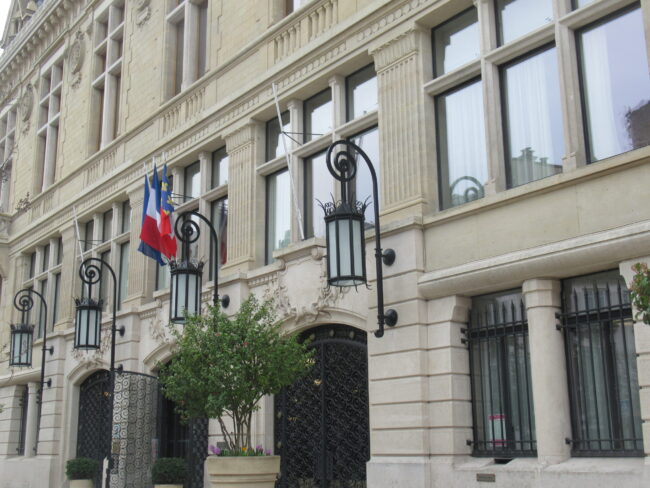
Vincennes Hotel de Ville. Photo: Marian Jones
The heritage trail led me past a statue of General Daumesnil, a hero from Napoleonic times, known for his bravery, particularly for one famous saying. He lost a leg fighting alongside Napoleon at Wagram in 1809 and later he was serving as the Governor of the Château of Vincennes when it came under attack from Austrian, Russian and Prussian troops. He and his men defended it staunchly for 100 days and it was at this moment that he uttered the statement which has been quoted ever since. “I will give you Vincennes,” he is said to have told the enemy, “when you give me my leg back.” And indeed, he held on despite the odds until King Louis XVIII ordered him to leave.
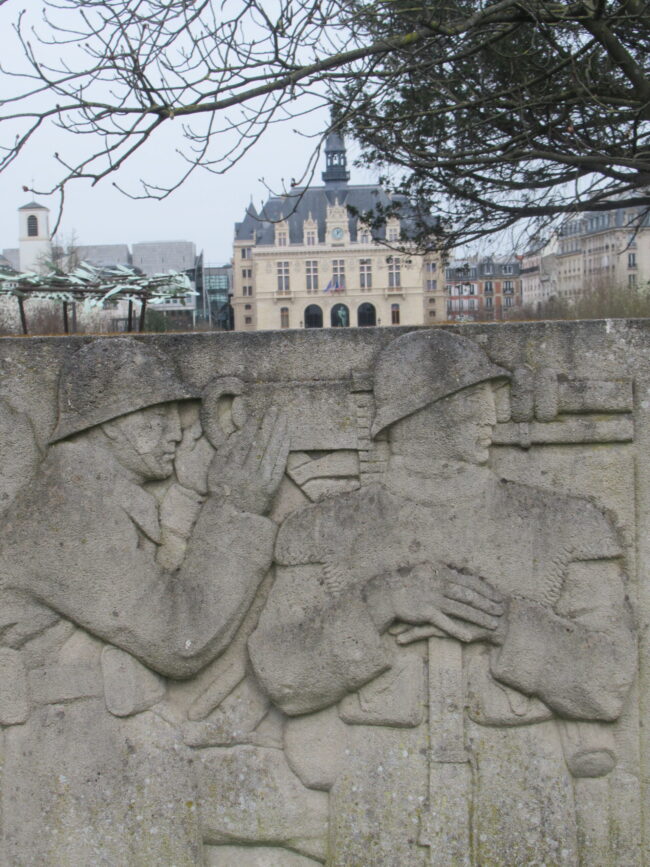
The Vincennes war memorial with the Hotel de Ville in the distance. Photo: Marian Jones
The town’s moving war memorial is sited at the far end of the park where the men of the 6th Dragoon Regiment assembled in August 1914 before marching off to the conflict in which so many of them were killed. And here too, a memorial was placed exactly 100 years later to honor all the Vincennes citizens who have died for their country: A la Gloire des Combattants, morts pour la patrie. I walked round the stone tablets, each carved with pictures of men in battle, before turning towards the metro station. There, I noticed that the walls are decorated with bright drawings representing the past in Vincennes, kings, knights and soldiers. Vincennes is a proud little town and after this flânerie, I had a much better idea why.
ADDITIONAL INFORMATION
The market in Rue de Fontenay is open on Tuesdays, Fridays and Sundays until 1:30pm.
Vincennes Tourist Office: 28 Rue de Paris, Vincennes
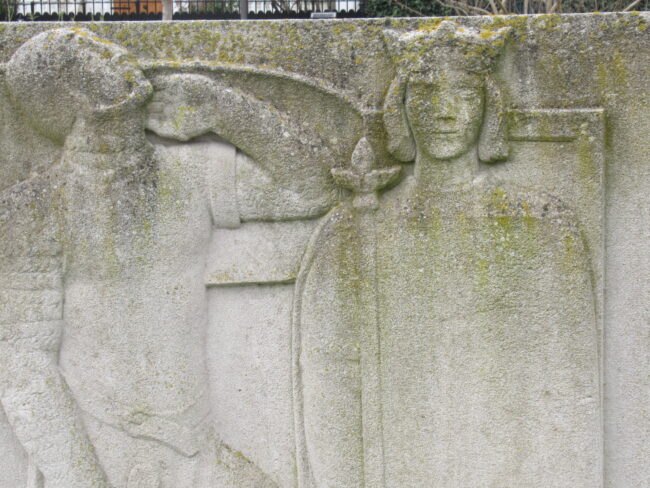
The Vincennes war memorial also shows kings and historical figures from the town’s past. Photo: Marian Jones
Lead photo credit : Chateau de Vincennes. Photo: Marian Jones
Share to: Facebook Twitter LinkedIn Email
More in Flâneries in Paris, Vincennes
Related Posts
By Marian Jones
REPLY
REPLY