
Behind the Scenes at the Chateau de Rambouillet
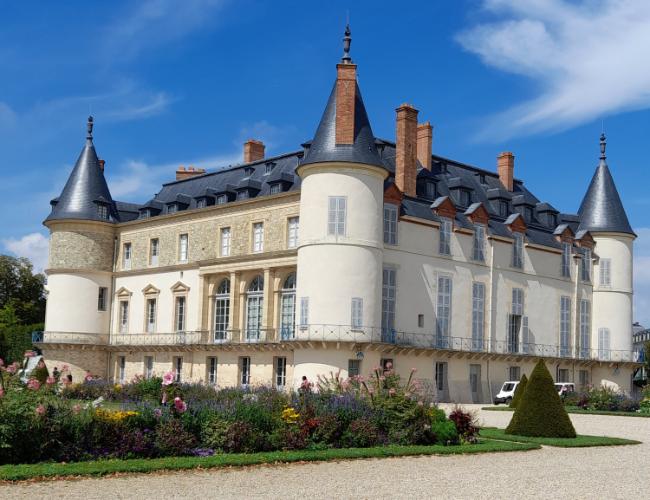

The Château de Rambouillet, just 50km from Paris, is unlike any other château. Its asymmetrical L-shape surrounds a Cour d’Honneur, the result of numerous alterations over the centuries. It is also quite small compared to huge châteaux like Chambord and the vast forest and park that surrounds it. The first château was built in 1374 to extend an existing manor house belonging to a knight and royal counselor by the name of Jean Bernier. Through the centuries it was partially demolished, rebuilt, and extended several times over. It remained in the hands of the powerful Agennes family for nearly 300 years before being sold to pay off debts, and in 1701 sold again to the Duc de Toulouse, the legitimized son of Louis XIV. The Duc, in turn, passed it to his son the Duc de Penthièvre, the last aristocratic owner before the Revolution.
During all these centuries not only was the château altered, but the gardens were extended and redesigned, and the neighboring forest became a renowned royal hunting ground. Having been pillaged and abandoned during the Revolution, the château was rescued by Napoleon who carried out the most drastic restoration in its history. It was his favorite home, spending all of 60 days there (in view of his constant military campaigning, that was actually a significant length of time for him). After his final exile the château passed in and out of favor with Restoration monarchs, Napoleon III and Third Republic governments until, in 1883, it became an official residence of the President of the Republic and once again a popular place for hunting.
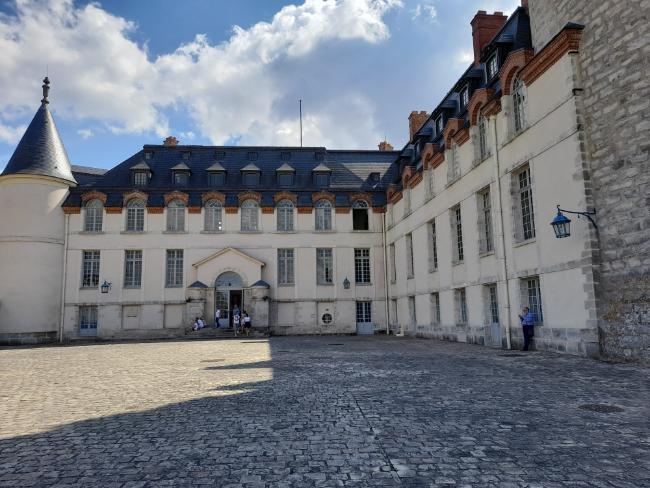
Cour d’Honneur at the Chateau de Rambouillet. Photo: Pat Hallam
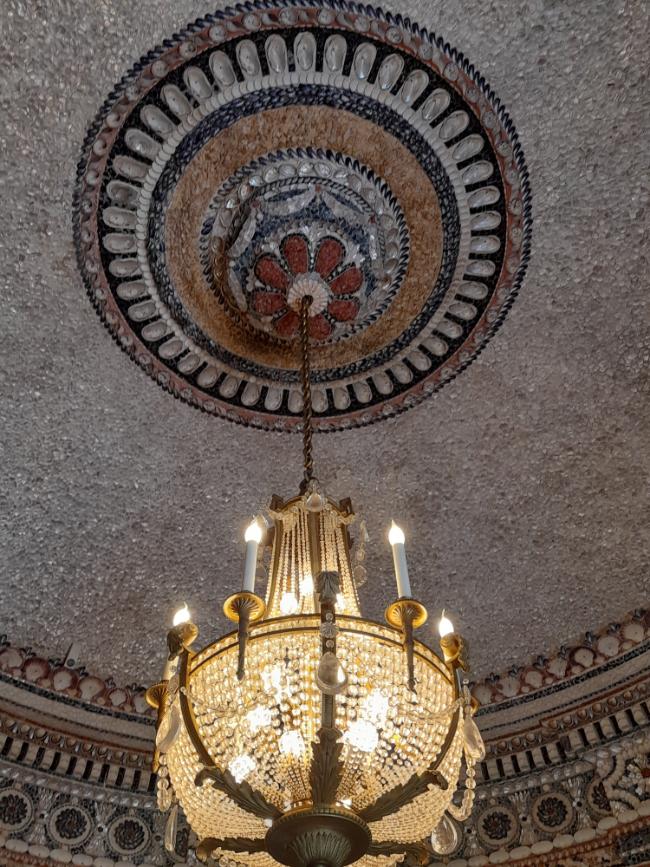
The Domaine National de Rambouillet today is the largest of its kind in the île de France, larger than Fontainebleau or even Versailles, extending over 1200 hectares. As well as the château itself there is the exquisite Chaumière des Coquillages or “Shell Cottage” and the Laiterie de la Reine, a pretend dairy built by Louis XVI to please his wife Marie Antoinette, who found Rambouillet boring (it didn’t work; she still preferred the Petit Trianon at Versailles). The hydraulic network feeding the canals is more extensive than that of Versailles. And a bit further away is the Bergerie Nationale, originally established to manage a flock of merino sheep imported from Australia in order to improve the quality of France’s woolen cloth.
Amazingly, the estate functions with a team of just 20 staff, including seven gardeners who manage the vast park. The staff are assisted by a team of around 30 volunteers who offer assistance to visitors. Unusually, they are managed directly by the château instead of the more usual affiliation to a third-party association, part of a two-year project to encourage wider direct public involvement and the first to be done at a château. It is also self-financing, in common with the other Monuments Nationaux, in that its revenue is put into a common “pot” which pays for repairs and restoration alongside a certain amount of private sponsorship.
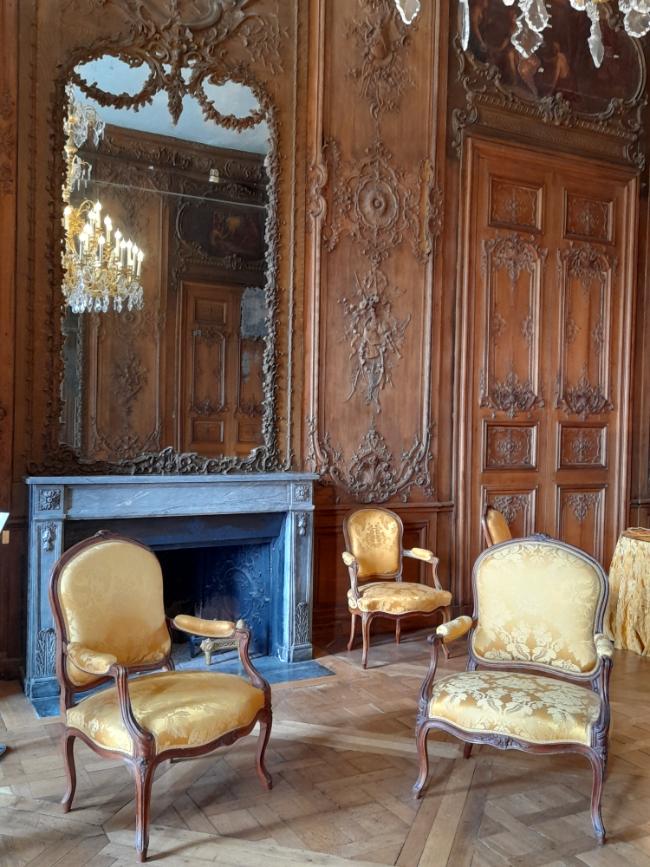
Boudoir Comtesse de Toulouse at Chateau de Rambouillet. Photo: Pat Hallam
For many years public access was restricted by the château’s status as an official presidential residence and it is only now that Rambouillet is emerging from the shadows and starting to take its proper place in the cultural and heritage landscape of the region. The person responsible for widening public access is its Head of Education and Cultural Services, Anne-Claire Saunier. A very approachable and outgoing woman, she manages programs aimed at engaging the wider community.
“We create tools to allow different types of group to discover the château, for example schoolchildren, people with disabilities, family-oriented events at weekends and during school holidays,” she explained. “We participate in events that punctuate the cultural calendar, such as highlighting the garden in spring, we always have discovery events during the Journées du Patrimoine in September. This year, as well, on 12th October, we are going to have a lovely day of historical reconstruction for Imperial Sunday. In partnership with the town of Rambouillet and the Bergerie Nationale, which isn’t far away, we will be reminding visitors of the Napoleonic past of Rambouillet. We’ll be having people in historical costume reenacting the past.”
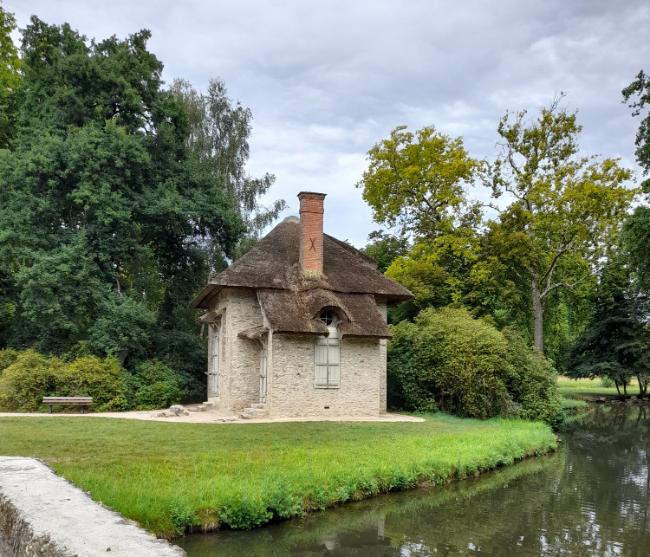
Chaumière des Coquillages. Photo: Pat Hallam
She is assisted by a cultural manager who is responsible for group reservations and helps her with the outreach program. “We work in partnership with social centers in Rambouillet to try and make people come who feel cut off from cultural activities.” Mme Saunier also has an apprentice and a volunteer who assists with communications such as press releases and updating the website, as well as support from the headquarters of the Centre des Monuments Nationaux.
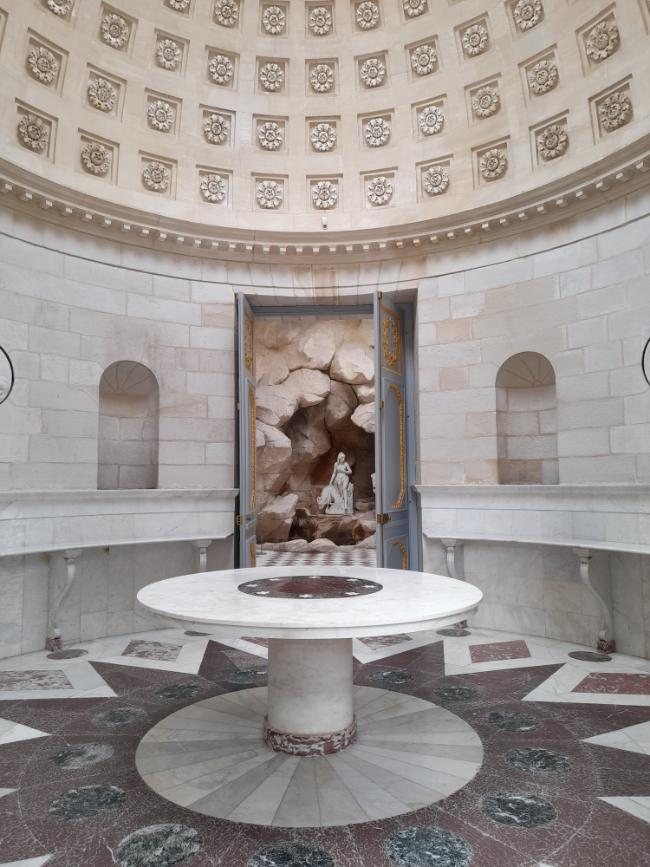
La Laiterie de la Reine. Chateau de Rambouillet. Photo: Pat Hallam
It hasn’t always been like this. While late 19th and early 20th century presidents viewed Rambouillet as a country retreat for relaxing with their families, post-World War II presidents, starting with Vincent Auriol in 1948, made extensive use of Rambouillet for work. It was ideal for working on sensitive or even secret matters of state far from the gossipy corridors of the Elysée.
Rambouillet expanded its diplomatic function as well. Heads of State including Queen Elizabeth II of the UK and Queen Juliana of the Netherlands, with their respective consorts, stayed at Rambouillet, as did US Presidents including Eisenhower. More recently, in 2010 it hosted a visit by Vladimir Putin. Many years earlier, General de Gaulle had held numerous meetings and summits at Rambouillet to thrash out the principles and structure of a nascent European Economic Community (later to become the European Union). In 1975 it hosted the inaugural summit of the G6 – the world’s leading six economies at the time including, of course, France.

However, this regular political and diplomatic use of Rambouillet severely limited its potential for development. The château was open to the public but no community outreach was possible, not even school visits, for you never knew when the château might be “requisitioned” at a moment’s notice by the President, when it would completely close. There was even a statute prohibiting any kind of cultural development. Even now it’s hard to find directions in the town towards the château as the presidents didn’t want people walking around.
Although Jacques Chirac ended the tradition of hunting in 1995 – a nod towards changing attitudes to hunting game – it wasn’t until 2007 that Nicolas Sarkozy effectively stopped using the château. Apart from the fact that the 1950s decor was perhaps not to the taste of “President Bling Bling,” nothing had been modernized since the 1970s and the château was no longer suitable for hosting foreign VIPs or conducting 21st-century affairs of state. However, it wasn’t until 2017 that President Macron officially relinquished it and handed it to the Centre des Monuments Nationaux. Work is progressing on improving signage and interpretation in and around the château but it will take time.
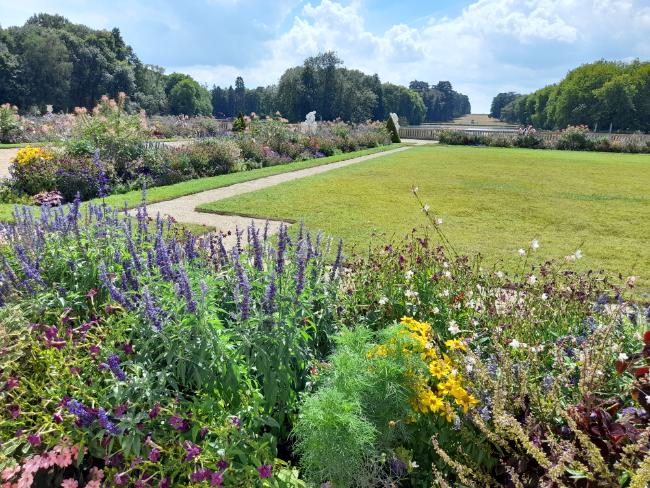
A peek at the gardens of Rambouillet. Photo: Pat Hallam
As well as state rooms furnished and decorated in sumptuous 18th- and 19th-century style, the château boasts a rare 16th-century vaulted brick staircase and stunning imperial apartments used by Napoleon. These have recently reopened after a major restoration and while his bathroom is an ostentatious display highlighting his imperial conquests and the importance of his family, the bedroom is surprisingly restrained with a calming, pale blue color scheme. As Mme Saunier said, you can imagine Napoleon kicking off his boots and hooking his feet over the end of the chaise longue to warm them in front of the fire. Rambouillet was a place where its residents could kick back and relax, unconstrained by formal protocol.
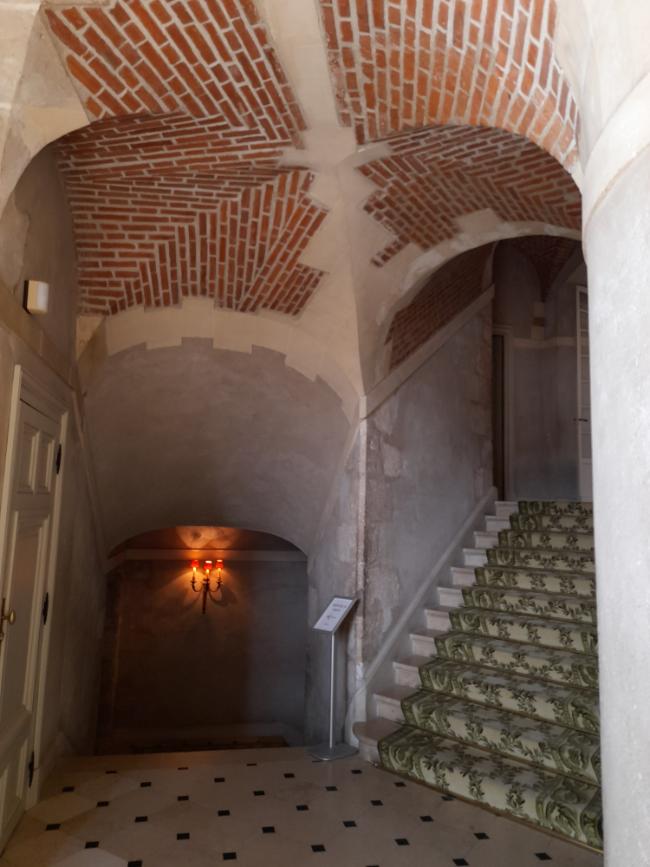
16th-century vaulted brick staircase at Chateau de Rambouillet. Photo: Pat Hallam
It was France’s postwar president Vincent Auriol who launched a major program of modernizing the château with luxury apartments and guest rooms to welcome foreign dignitaries and show off France’s savoir-faire. Until a year ago they were closed but now they are undergoing a new restoration and gradually opening to the public. Mme Saunier kindly took me on a tour.
“Every bedroom has its own bathroom, 30 of them. It was crazy to have that in the 1950s,” explained Mme Saunier. “Auriol tried to find the greatest decorators of the time and in fact, all the decorators had worked on luxury transatlantic liners like the Normandie. They created what was known as the ‘Rambouillet Liner’ – you can see long corridors that recall those found on liners.”
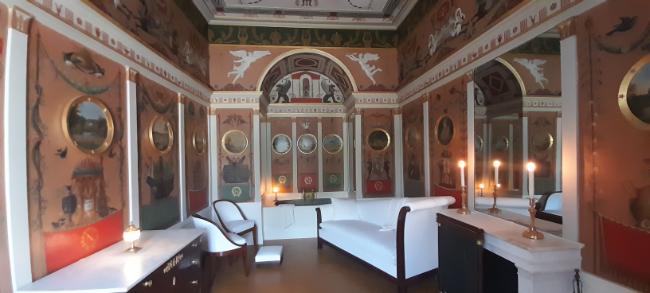
Napoleon’s bathroom at Chateau de Rambouillet. Photo: Pat Hallam
Everything was conceived to showcase French expertise and the highest quality materials were used. So, for example, a coffee table in the bedroom belonging to Vincent Auriol’s son (the “Room with a View”) is made of wild cherrywood and parchment. Its circular shape mounted on splayed legs deliberately evokes a flying saucer, very much in tune with the craze for all things science fiction at the time.
One of the most elegant suites is that adopted by President Auriol’s daughter-in-law Jacqueline, a noted aviator. An understated dressing table in cherrywood is topped with an unusual octagonal mirror, while her private bathroom has its own towel-warmer, possibly the first to be installed anywhere in France.
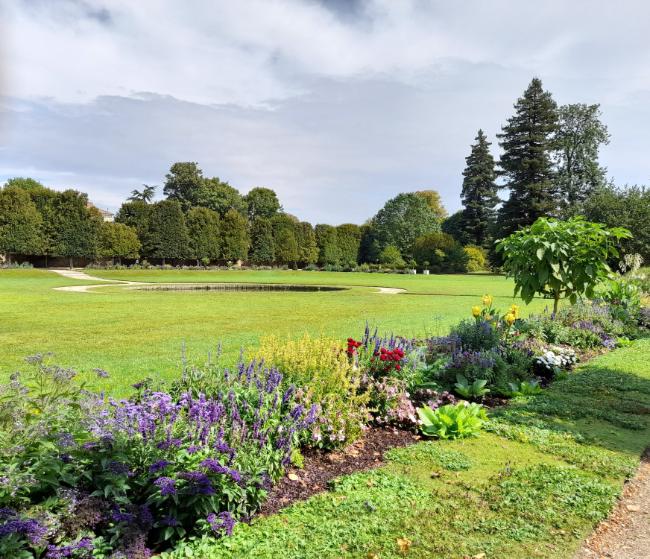
Chateau de Rambouillet grounds. Photo: Pat Hallam
From the luxury liner ambience, we moved into one of the oldest remaining parts of the château, the Tour François 1er, named after the 16th-century king who loved hunting at Rambouillet and actually died here, in March 1547. Fallen into semi-disuse by the end of World War II, the tower was restored and repurposed as a suite of rooms for foreign heads of state. The yellow and green color scheme in the sitting room/office is definitely of its time, but you can’t fail to be impressed by the half-timbered vaulted roof. The Chambre de Monsieur upstairs in the tower, supposedly François’s own chamber, is furnished with period pieces which the designer largely picked up in antique shops. The Chambre de Madame by contrast, is once again in 1950s-contemporary style, including a secretaire which, when opened up, reveals its letter racks and drawers as a replica of the Palais de Chaillot.
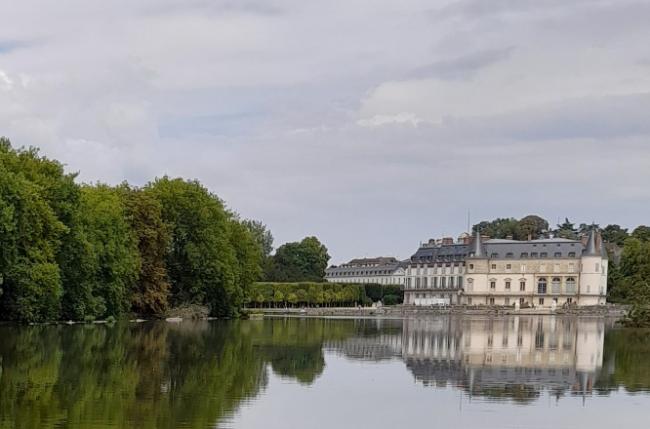
Chateau de Rambouillet. Photo: Pat Hallam
Finally, the Salon Médicis, its walls still covered with polychrome marble dating back to the Duc de Toulouse, is comfortably furnished with squishy couches, low tables and rugs. It’s a convivial room for dignitaries to get together before or after dinner and talk about less weighty matters than international diplomacy or affairs of state.
Renovation work continues and in 2026 the President’s personal apartments will reopen. The château has been particularly fortunate in that, as each president replaced pieces of furniture in his own taste, the old furniture was given back to the Mobilier National, the national furniture repository. That means that the rooms have been refurnished with the exact same pieces, suitably restored, as they originally contained. They are real time capsules of the 1950s for anyone who is interested in the interior design of that decade. Alongside the 18th- and 19th-century rooms, they bring the story of Rambouillet forward into modern times.
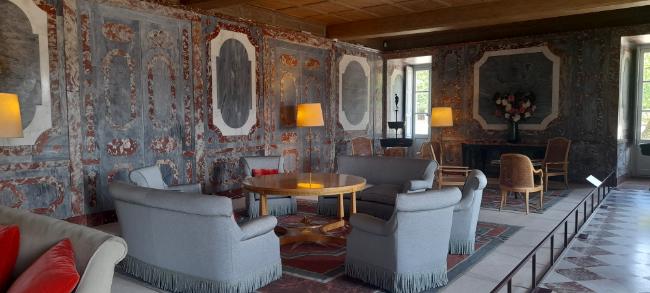
Salon Medicis at Chateau de Rambouillet. Photo: Pat Hallam
“Rambouillet is ‘a baby’ among France’s heritage sites,” said Mme Saunier. “The Ministry of National Monuments is investing in Rambouillet now because there is unbelievable potential. It has a very rich history, it has the Shell Cottage and Laiterie which are very precious, an incredible garden.”
For so long constrained by its official residency status, it is having to catch up with other visitor attractions. But it is set on a path of modernization, actively pursuing greater community involvement and bringing the story of its past up to date. The future is looking exciting for this gem of a château just an hour’s train ride from Paris.
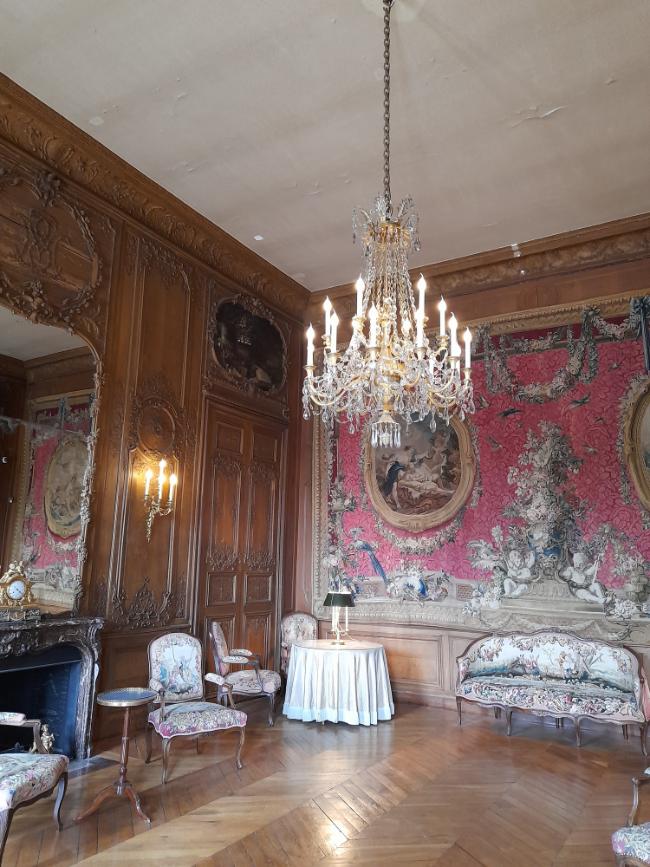
Salon de Réception at Chateau de Rambouillet. Photo: Pat Hallam
Lead photo credit : Chateau de Rambouillet. Photo: Pat Hallam
Share to: Facebook Twitter LinkedIn Email
More in Chateau de Rambouillet, day trips
Related Posts

By Pat Hallam