
Explore the Famous Puces de Saint-Ouen

This is the 42nd in a series of walking tours highlighting the sites and stories of diverse districts of the Paris region.
I’d heard that when heading for the markets of Saint-Ouen, it’s best to take the metro to Garibaldi on Line 13 and walk through the park behind the church to Rue des Rosiers. That way I’d avoid a hectic main road and overpass complex and miss out the street vendors lurking to persuade me to buy cheap tat from them rather than saving my euros for something classier from one of Saint-Ouen’s multitudinous antique or bric-a-brac stalls. And so it was that I discovered Notre Dame du Rosaire, whose spire rose up to greet me as soon as I exited the station.
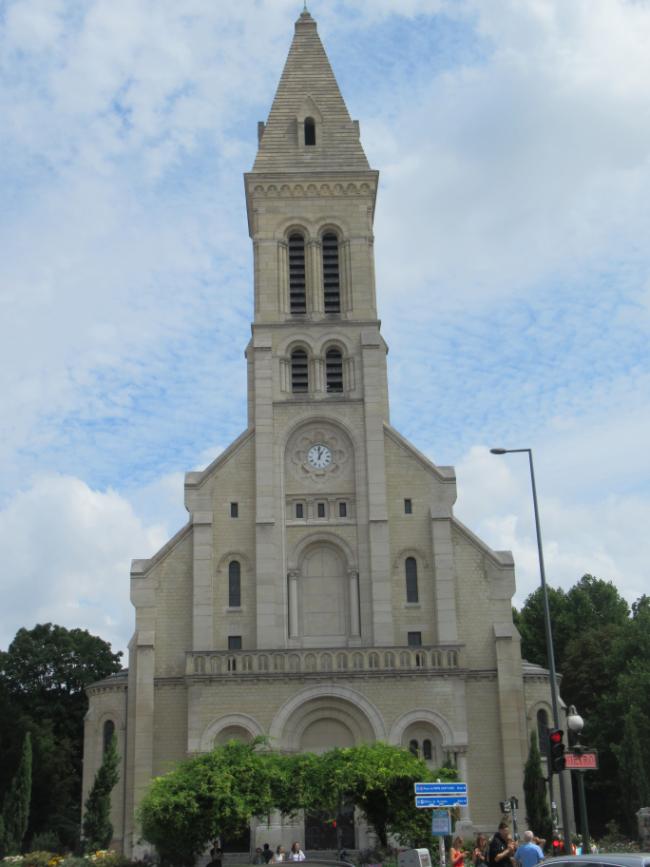
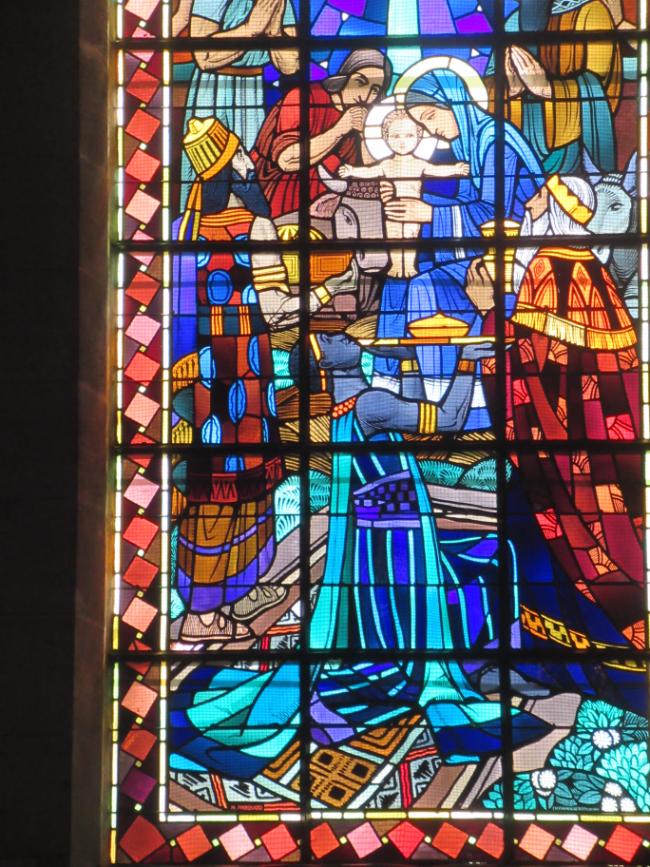
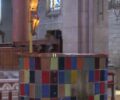
The plain, clean lines of its façade made sense when I discovered that the building was completed in 1903. It had the arches, niches and towering spire so familiar from earlier eras, but all done simply and almost devoid of artifice. Inside, the stained-glass windows were also curiously modern and vivid. Large clear scenes unfolded, telling the story of the life of Jesus in vibrant colors, blues and yellows for the annunciation, splashes of red and gold for the visit of the three kings. The altar was a mix of the unusual, being covered in rectangular tiles in all the colors of a child’s paintbox, and the classic, sitting directly underneath a golden crucifix.
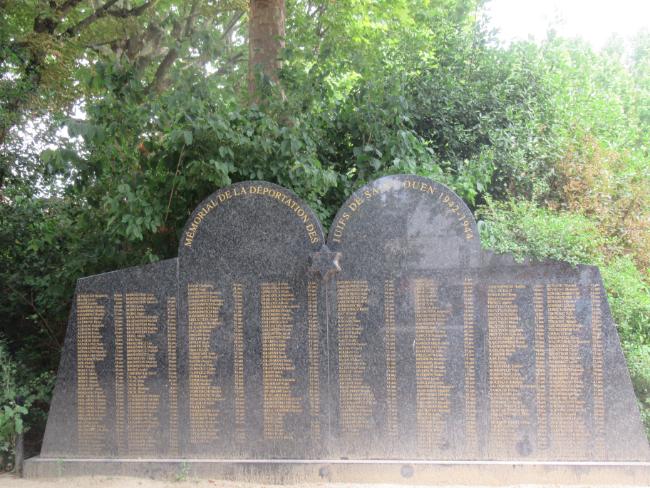
The church, I learned from an information board outside, was jointly financed by rich industrialists and public donations, destined to be a center of worship for the factory workers flooding to this area in the newly minted 20th century. The park behind the church owes its existence to a legacy left by Paul Marmottan, art historian and founder of the Musée Marmottan Monet. He would surely have loved to see the family party taking place as I passed, balloons strung between the trees and a noisy picnic underway. It made a poignant contrast to the nearby deportation memorial, listing the names of over 400 local Jews who did not survive the war. Did they too gather here, families like the Cicals, Smul, Haïa and their children, Achille, 14, Jean, 7 and Monique, 4? I read their names, listed in one of the columns of gold lettering on a black marble background.

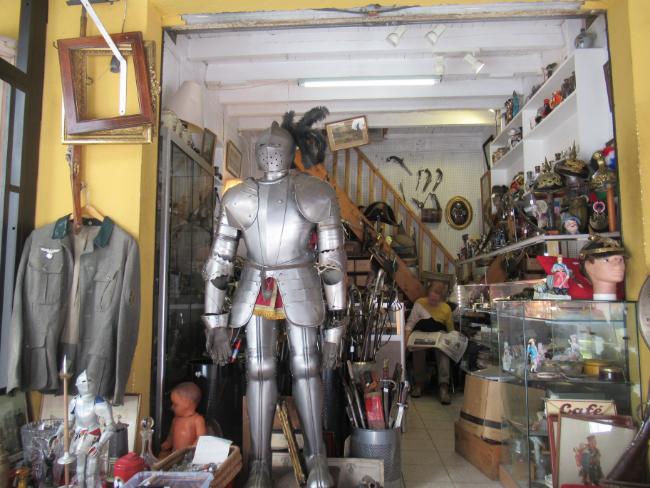
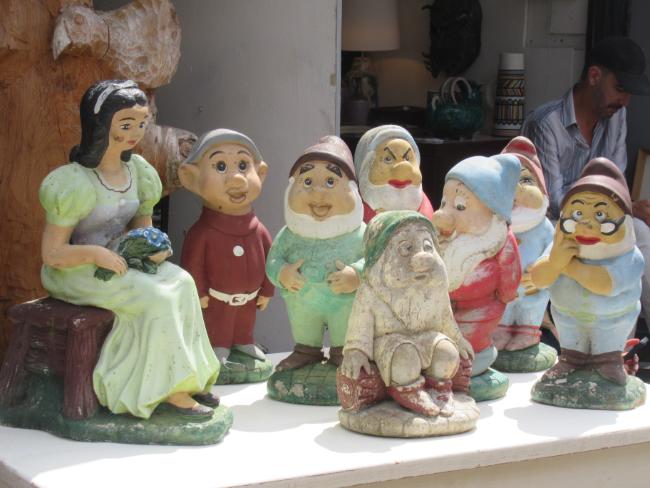
At the far end of the park, a right turn took me into Rue des Rosiers and soon to the first of the 14 markets clustered here, each of which has its own flavor. I took another right into the Marché Paul Bert and was immediately overwhelmed by what opened up before me: stalls everywhere, offering everything from a full suit of armour to mirrors and glassware, pictures and lampstands, carved wooden chairs from a century or two ago sitting next to an orange sofa and a couple of very ’70s blue standard lamps. If I sought a set of seven model dwarves, complete with a guardian Snow White, my luck was in. Were I to need a life-size model soldier wearing the uniform of 1870, there it was. One shop sign read Objets trouvés (roughly translated as “stuff I’ve found”), and seemed to sum up the random charm of the place, although the owner had added a more alluring postscript, namely Objets de charme et de curiosité.
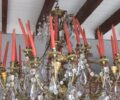
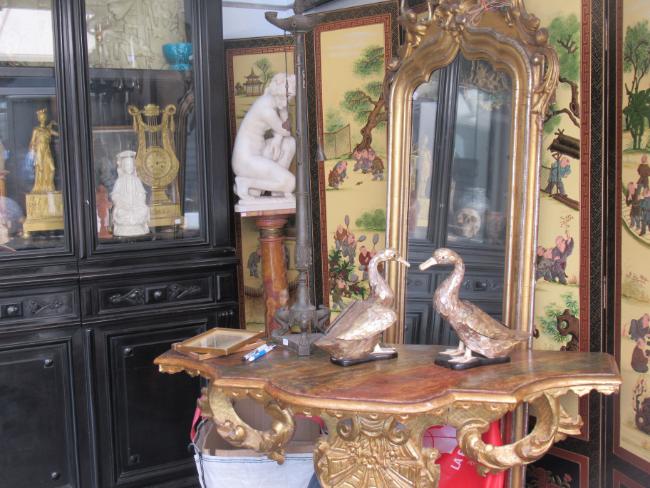
I stopped at one stall to enquire of the owner where he found that ancient brass and crystal chandelier with the wobbly orange candles? In a Haussmannian apartment which had just changed hands, he replied. The new owner had decided to sell most of the contents. Did he think someone would buy it? He was sure someone would. They would remove the candles, spruce it all up and turn it electric. I wandered past a cluttered window where a statuette, a sort of female version of Rodin’s The Thinker, sat pondering next to two model geese who were having a head-to-head. Then came a window on which someone had scrawled some life advice which translated as “Don’t kill yourself trying to be someone.” Exhausted by having my brain pulled in so many different directions, I headed back out to the main road.
In the nearby Biron market, things seemed a bit more straightforward. Unlike the jumble of the Paul Bert Market, this one stretched out along one long road, albeit with a red carpet right down the middle. Before long I came across a display of information on the market’s history which gave me some answers on how this incredible 17-acre area, perhaps the largest antique market anywhere in the world, came into being. I would never have guessed that its origins lay partly with Baron Haussmann whose enlarging and beautifying of central Paris in the mid-19th century led the authorities to drive those who didn’t fit the city’s new image away: the biffins (rag-and-bone men), and pêcheurs de lune, literally “moonlight fishermen,” those who roamed the streets at night picking through rubbish and looking for things they could sell.
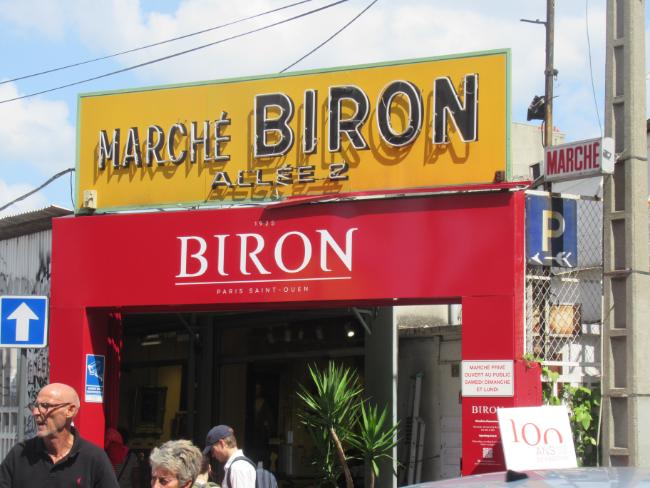
They came to Saint-Ouen and set up stalls here. They proliferated, word spread that the prices were often attractive and Parisians began traveling out here in search of bargains. It’s said that one visitor, appalled that it was “nothing but a flea market,” coined the phrase which spread throughout the world for markets selling second-hand goods. The first permanent cabins were set up after the First World War and gradually antique dealers began to move their businesses here too. The Biron market opened in 1925, specializing in antique furniture and artworks, gradually gaining a reputation as the “Faubourg Saint-Honoré of Flea Markets.”
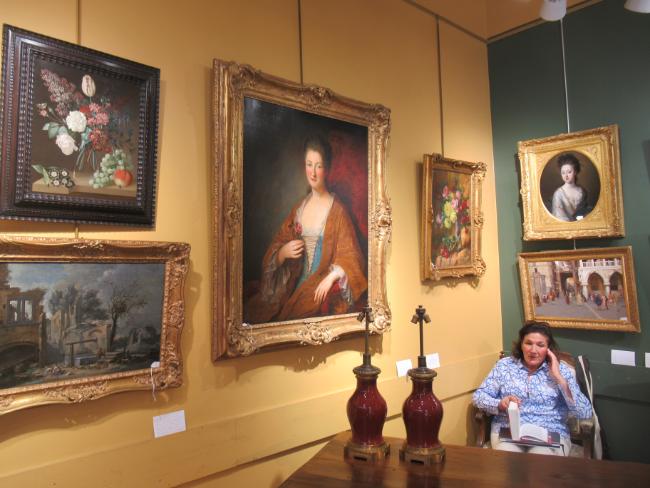
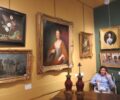
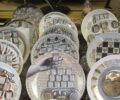
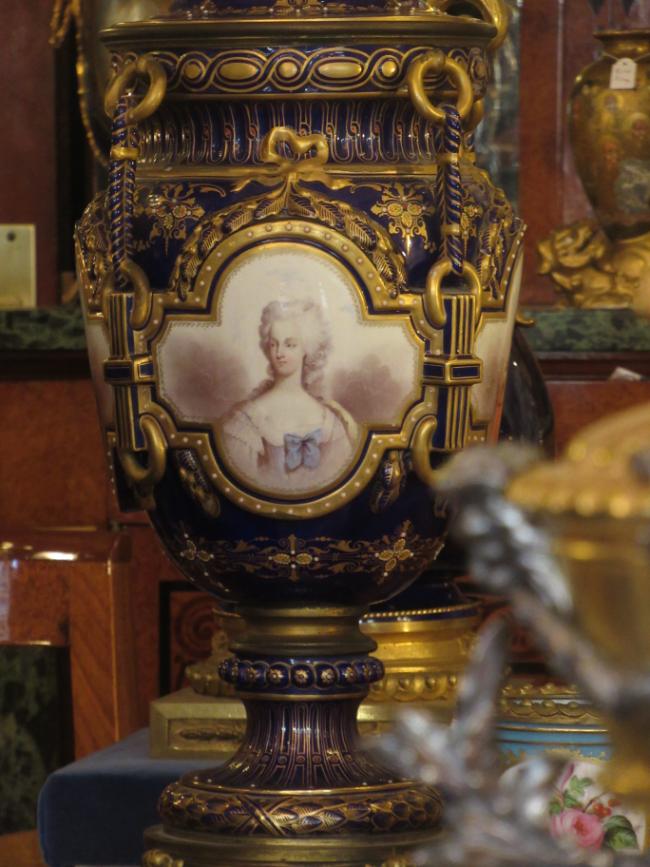
The display told me that there are over 200 antique and art dealers just in the Biron where they specialize in antique furniture, jewelry, art and decorative objects, covering the 17th to the 20th centuries. Was that a pair of antique vases featuring portraits of Louis XVI and Marie-Antoinette, I wondered. Indeed, said the owner, but they do not date from the 18th century, they were made in Sèvres about a hundred years after the two monarchs were executed. The two vases could be mine for 15,000 euros. Or how about a set of signature Fornasetti plates, one for each year from 1968-78 which he had bought piecemeal until he had the full set? The owner, who spoke totally fluent French, then revealed that he was American and had left his interior design business behind a decade ago because of “le burn-out” and headed for Paris.
I wandered out of the Biron Market and along to the Marché Malassis, a two-storey building whose sign outside indicated that I’d find it crammed with everything imaginable: paintings and sculptures, carpets and textiles, jewellery, African art, Art Deco…
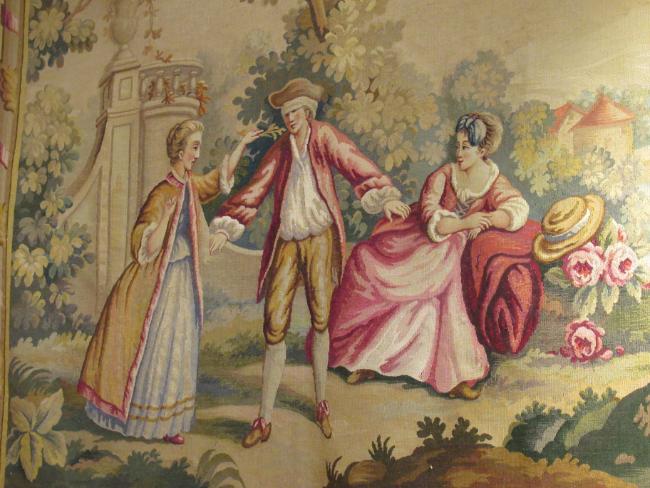
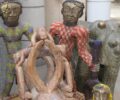
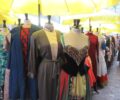

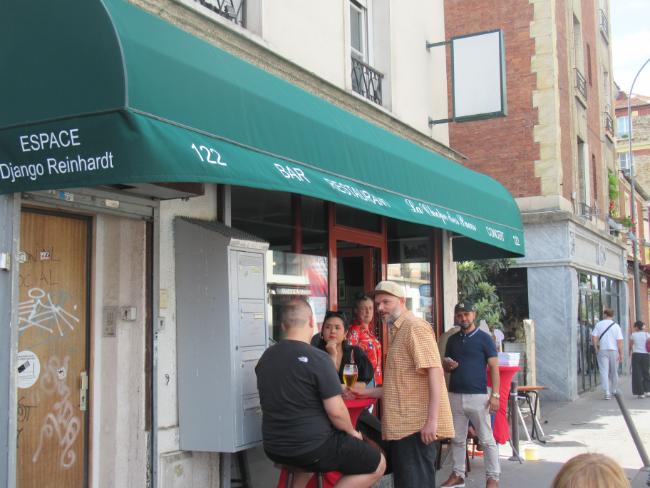
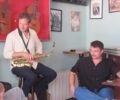
And indeed, inside was an overflowing mix of all of that and more. On the upper floor were racks and racks of vintage clothing and a whole series of book and record shops. That’s records as in box after box of LPs to rifle through. Looking around, I passed, to cite just three things at random, an ancient tapestry (or was it a carpet?) showing a group playing blind man’s buff, a shop full of Batman posters from all different eras and some colorful sculptures with a definite far-eastern flavor. My cup ran over to the point of exhaustion and so I retreated and went back up the Rue des Rosiers to perch on bar stool outside the Espace Django Reinhardt. As I sipped a pastis, the sax-and-guitar jazz wafting onto the terrace from inside the bar gradually calmed my over-stimulated mind.
DETAILS
More Information on the markets of Saint-Ouen, including a downloadable map.
The markets are generally open on Saturday, Sunday and Monday, from 10 am to 6 pm.
Lead photo credit : Marché Paul Bert. Photo: Marian Jones
Share to: Facebook Twitter LinkedIn Email
More in Flâneries in Paris, Marché aux Puces de Saint-Ouen, Marché Biron, Marché Malassis, Marché Paul Bert, Puces de Saint-Ouen
Related Posts

By Marian Jones
REPLY