
Double Inspiration: Jane Goodall in Paris (Two of Her!)
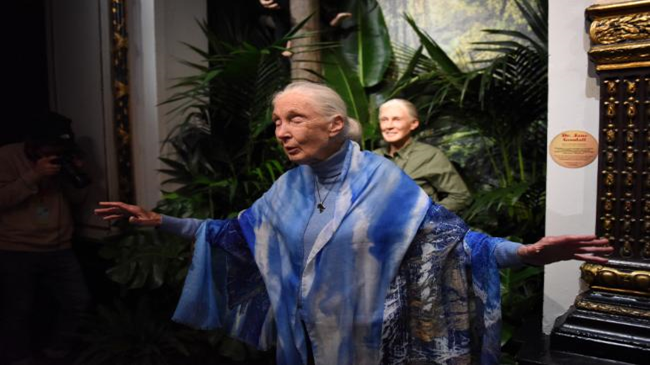
“It has never been more important than now to give people hope,” Dr. Jane Goodall said during her visit to Paris this week for the grand unveiling of her wax lookalike at the Musée Grévin. “And my job is giving people hope.”
These words were fueled by her lifetime of service and were driven by “the grim state of the world”— words she used to describe our planet’s current condition.
If there were a position of Ambassador for the Planet, 89-year-old primatologist/ethologist/activist Jane Goodall would be at the top of the shortlist. She has dedicated her life to protecting the earth’s animals, humans, and environment and has tenaciously and passionately used her gifts of intelligence, compassion, words, and storytelling to inspire actions that will make a difference.
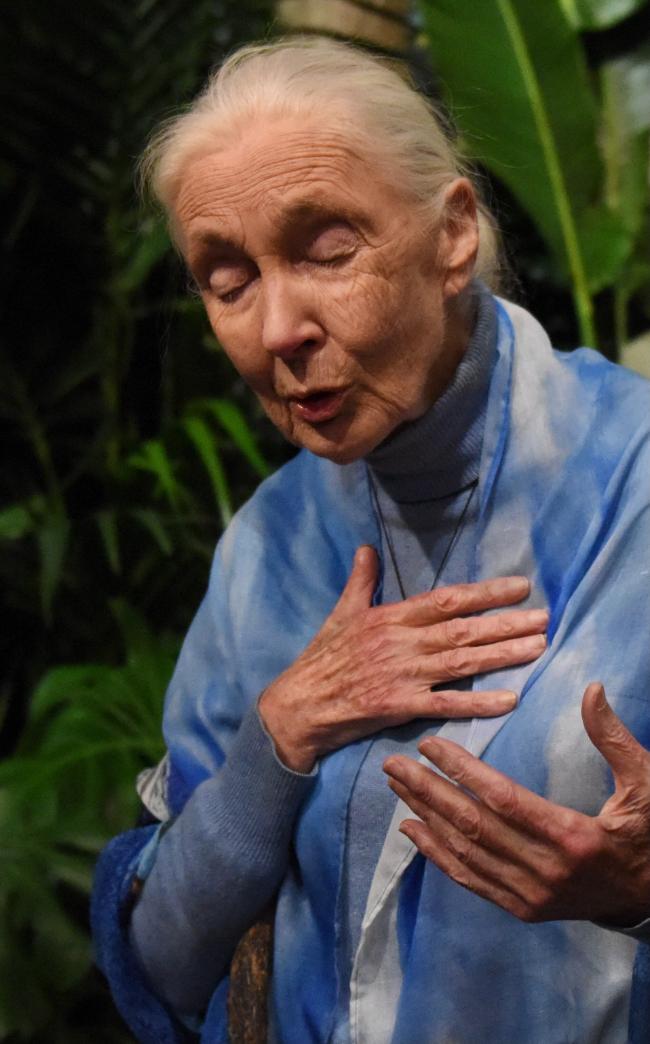
A lifetime of service. “My job is giving people hope.” © Meredith Mullins
With the inauguration of her wax incarnation this week, her message will be heard in new ways. As Musée Grévin Director Yves Delhommeau said in his introduction to the gala induction, “What an honor it is to welcome Dr. Goodall into the museum. In her own powerful words . . . Only if we understand, will we care. Only if we care, will we help. Only if we help shall all be saved. Your work will remain for future generations.”
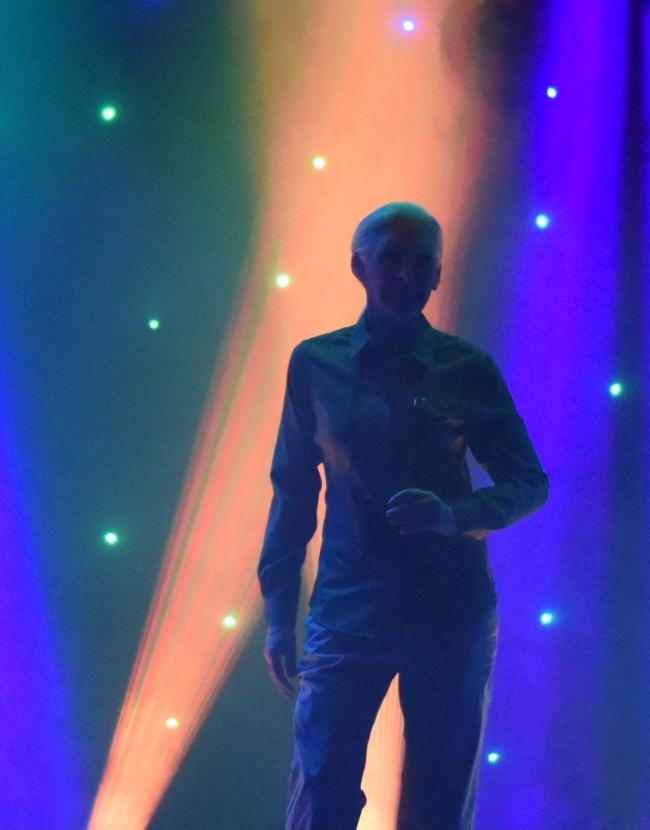
A dramatic entrance for the new Jane Goodall waxwork, accompanied by Barbra Streisand singing Memories. © Meredith Mullins
Dr. Goodall hopes that, with the wax figure in the public eye, along with information about her life, people will understand what she’s been fighting for — all her life. First, the protection of animals, especially her beloved chimpanzees. But also an understanding that, to protect the animals, the people of the local communities must be a part of the conservation conversation.
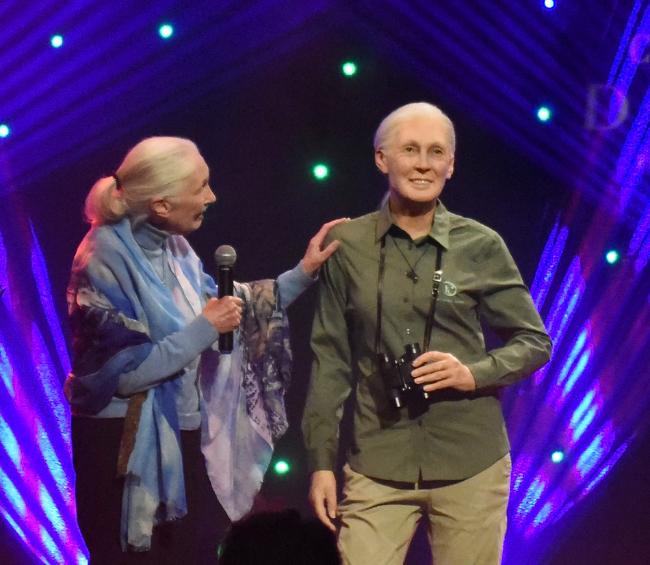
Jane meets Jane. © Meredith Mullins
“If we don’t help these people without destroying the environment, we can’t help chimpanzees, forests, or anything else,” she noted to her Paris audience.
Her solution many years ago was to start the Jane Goodall Institute (in 1977), which focuses on community-led conservation programs. The program now exists in six African countries. Her mission was not to tell the villages what the Institute would do to make their life better, but to ask them what could be done. The villagers then became partners for their future, particularly in ecological food production, health services, and education.
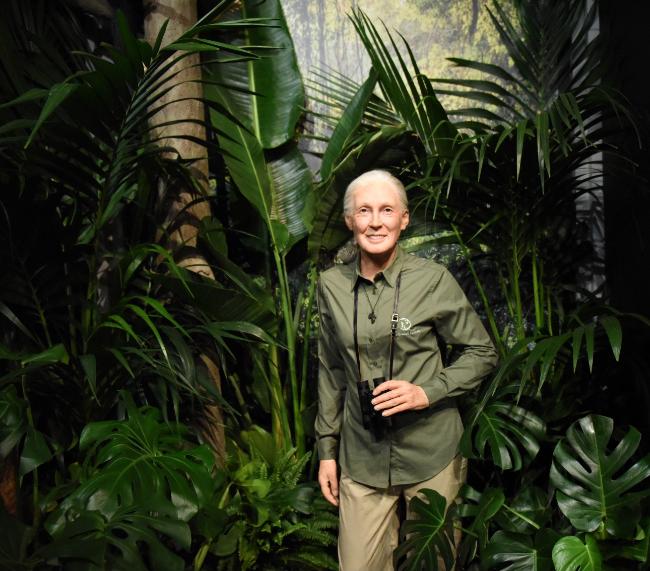
Nostalgia for Jane’s days in the hills of the Gombe Region in Tanzania. © Meredith Mullins
As Dr. Goodall greeted her newly sculpted self, she waxed (pun intended) nostalgic for the past and remained hopeful for the future. She said she was reminded of the time when she lived in the forest with the chimpanzees of the Gombe region of Tanzania in the 1960s. The camouflage clothes and ubiquitous binoculars of the waxwork transported her to that time, where she shared that “the daily walks into the hills, in harmony with nature, were the best years of my life. This was where I was meant to be.”
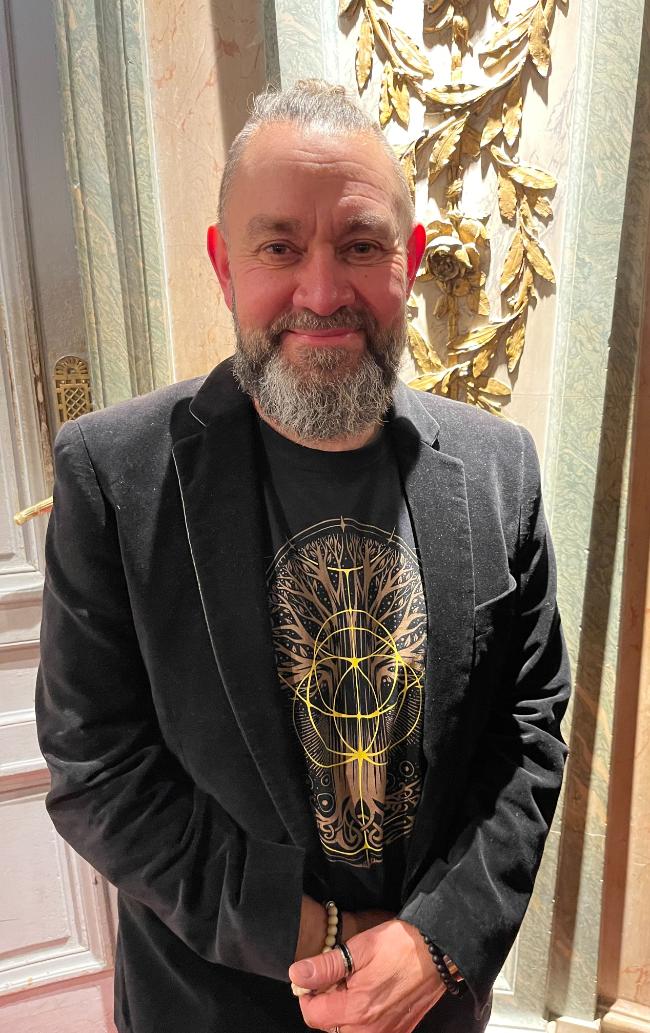
Musée Grévin sculptor Stéphane Barret and the team took six months to create the waxwork installation, working from photos of Dr. Goodall. © Meredith Mullins
It was the time, under the mentorship of Dr. Louis Leakey, who chose her for her open mind and love of animals, when she began studying chimpanzee behaviors. She said she wanted to be like Dr. Doolittle … to talk to the animals … and to be like Tarzan . . . without fear.
She became the first to live with chimpanzees in the wild and to observe that they had emotions, could use tools, and had long-term relationships.
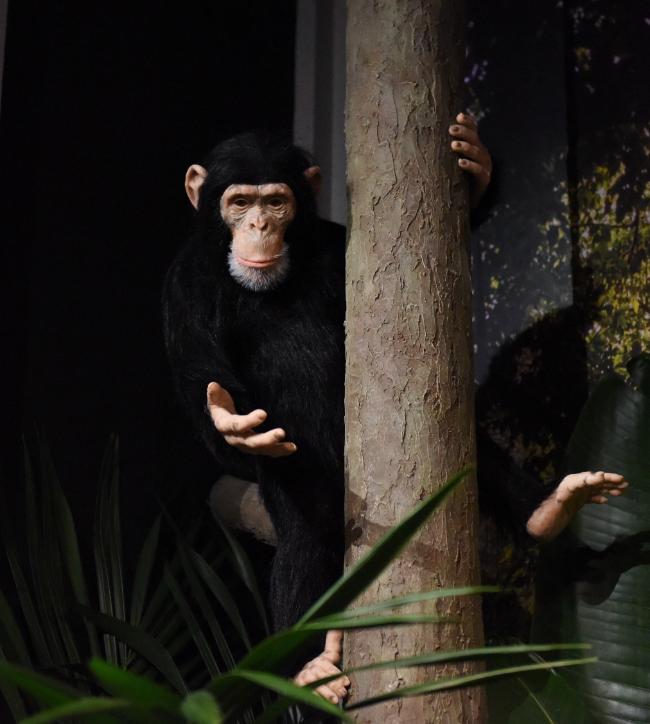
A baby chimp (wax, of course) is included in the jungle setting for the Goodall figure. © Meredith Mullins
Scientists were slow to confirm her discoveries and criticized her for giving names to her chimps rather that scientific numbers, identifying unique personalities, and discussing the chimps’ varied emotions (including the tenderness and patience of a mother with her child and males swaggering from time to time like some politicians she knew).
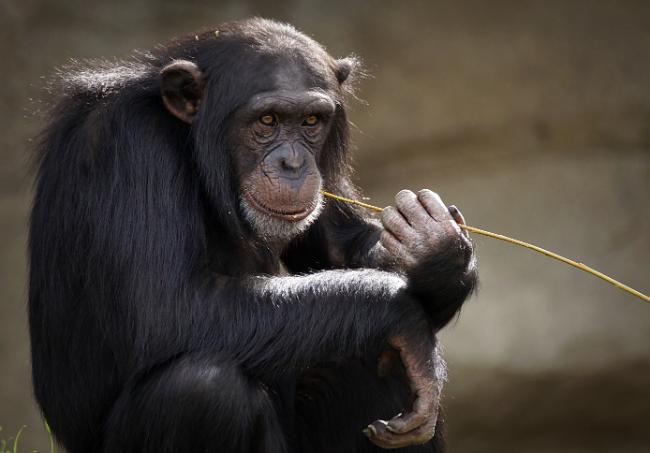
How could anyone say chimps don’t have personality? Photo: Pixabay.
Today, she continues her appreciation of animals’ intelligence. She shared stories with the Paris audience about the parrot with a vocabulary of 1600 words (words counted only if used correctly in context) and the artist pig in South Africa (Pigcasso) whose paintings go for $5000 a shot. (She smiled when explaining that people who see these paintings often say they will never eat bacon again.) And she reminded us of the well-documented intelligence of elephants, dolphins, and octopuses.
Dr. Goodall’s recent focus has been on the strength and commitment of young people. The Roots and Shoots youth service program that she created in 1991 began with students in the Gombe region, but has now expanded to 70 countries. The day following the wax inauguration, a conference was held at the Fondation Good Planet in the Bois de Boulogne with the theme of Hope for the Young.
Dr. Goodall was in Tenerife just before coming to Paris. (She still travels extensively in her work to promote awareness.) She was inspired by the youth of all ages there who collect the garbage every weekend that comes in with the ocean tides. They know that more garbage will appear the next week and the next week, but they don’t give up.
In her response to questions at the unveiling ceremony, she presented four reasons for hope.
- The energy, commitment, and passion of young people.
- The human brain, which has the ability to form the right questions and to search for solutions.
- The resilience of nature. Even when almost destroyed, nature can replenish itself if given time and resources.
- The indomitable human spirit. People tackle things that seem impossible, but they won’t give up.
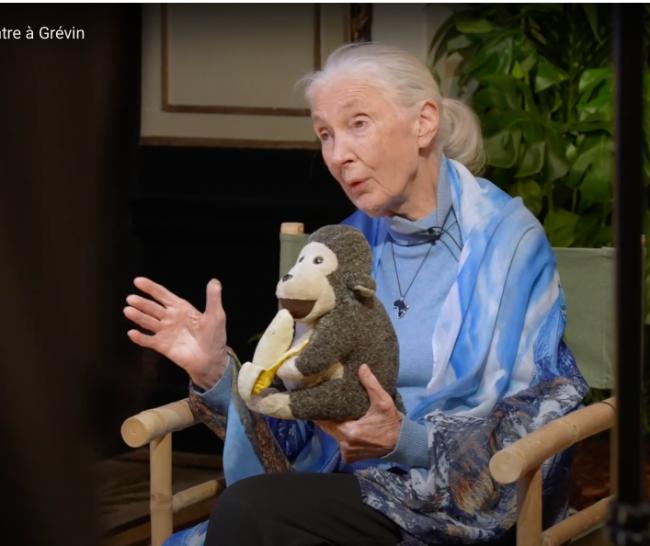
Dr. Goodall travels with Mr. H, a stuffed monkey given to her by a friend who is a blind magician—the essence of indomitable spirit. Photo courtesy of the Musée Grévin.
She closed with her message for each of us:
Every individual matters. Every individual has a role to play. Every individual makes a difference every single day.
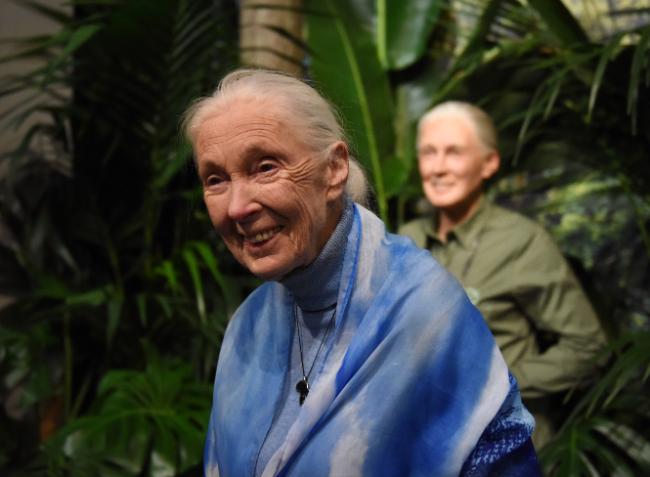
The best of the human spirit. © Meredith Mullins
The question often posed to Jane Goodall is “How long will you be associated with chimpanzees?” Her response has often been “Until I die,” although she clearly would like to be known for her broader reach.
The better question to ask is “How long will you be working to save our fragile planet?” Her answer would be a definitive “Until I die.”
More information about the Jane Goodall Institute.
To further celebrate the inauguration, the Musée Grévin is donating part of the December ticket sale profits to the Jane Goodall Institute.
Lead photo credit : Jane Goodall at the Musée Grévin wax figure unveiling. © Meredith Mullins
Share to: Facebook Twitter LinkedIn Email
More in environment, Jane Goodall, Musée Grévin, People
Related Posts


REPLY
REPLY