The Essential Guide to the 12th Arrondissement
A Great Place to Live … But Also to Visit
The 12th arrondissement is one of Paris’ largest districts (without even counting the Bois de Vincennes), stretching from the Bastille to the eastern city limits, merging seamlessly with the suburbs of Vincennes, Saint-Mandé, and Charenton. It has a reputation for being calm, safe, even sedate. I can attest to this, having lived in the arrondissement for years. The paradox of the 12th is that the vibe is middle class and yet it’s quite diverse in ethnicity, age, and social class. It’s a comfortable place to live and to sojourn (it’s become a favorite among Japanese travelers). But there are many features the casual visitor shouldn’t overlook. Several are the result of successful transformations: old railroad lines, warehouse depots, and industrial sites have been repurposed into attractive spaces, urban but green.
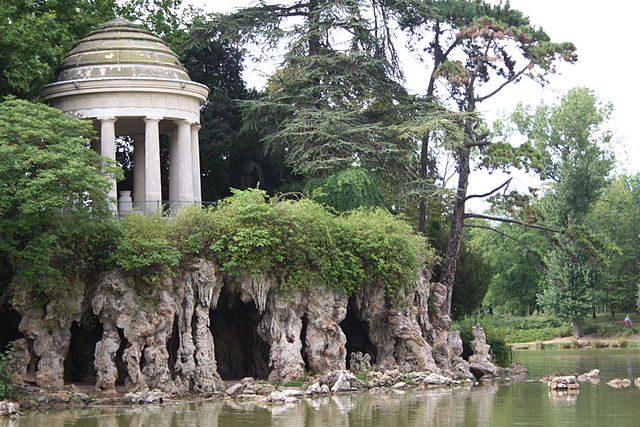
The Temple of Love on Lac Daumesnil in the Bois de Vincennes. Photo: Georges Seguin, Wikimedia commons
What to See and Do
The Bois de Vincennes
The Bois (“Wood”) of Vincennes is one of the lungs of Paris, a large forested park with many trails for nature lovers, eventually leading out of Paris and into the near suburbs. By the Porte Dorée entrance, Lac Daumesnil (Daumesnil Lake) is full of ducks, wild geese, cormorants and other birds. The artificial lake is stocked with fish, and one often sees persons fishing (the fish typically tossed back in). Around the lake is a path that’s now a favorite for runners, and also attracts families, couples, and seniors. The paths crisscrossing the wood are also full of runners these days, which has the effect of making them feel more secure for the general public. There’s a playground suitable for small children near the lake, as well as a gorgeous Buddhist temple, complete with enormous gilded Buddha, which is occasionally (but not always) open to the public for convivial activities organized by Paris’ Tibetan or Cambodian communities. A walkable distance away is the Paris Zoo, as well as the immigration museum housed in the impressive Palais de la Porte Dorée (see below).

southern facade of Palais de la Porte Dorée. Photo: Cyril Sancereau © EPPPD
The Palais de la Porte Dorée: Immigration Museum
The Palais de la Porte Dorée is a fascinating structure built for the International Colonial Exposition of 1931. Its architecture is kitschy, surrealistic, imperialistic, but also majestic. It’s like an ancient Roman temple whose façade is engraved with colonial scenes. For many years the Palais housed the African and Oceanic Museum, until its contents were transferred to the Jacques Chirac Museum on the Quai Branly. It’s now ironically the Immigration Museum, featuring interesting exhibits that explore how minorities and diasporas have enriched France. The glorious façade is matched by enormous colored murals inside (you can also get a drink or sandwich from a snack bar in the lobby). In addition, the esplanade (protected by a natural wall of bamboo and greenery) is a site for food and drink, served by a food truck and stands. There’s also an aquarium containing a crocodile and iguana that never seem to move, as well as the usual sea life that will entertain and edify the proverbial children of all ages.
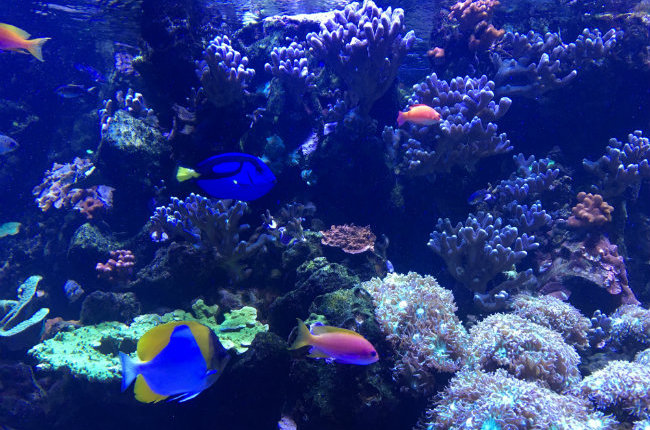
The tropical aquarium at the Palais de la Porte Dorée. Photo: Bonjour Paris
Promenade Plantée (aka Coulée Verte)
The Promenade Plantée, officially the Coulée Verte René Dumont, is a long (5.838 kilometers to be precise) path, planted with flowers, trees, shrubs, and other types of greenery. It used to be the site of an inner-city railway that circulated in eastern Paris right until the 1970s. The path extends from the Bastille, through the 12th, all the way to the Chateau de Vincennes. It’s essentially a pedestrian zone, though there are paths for cyclists, roller-skaters, and skateboarders as well. On warm days, the promenade feels a couple degrees cooler than the rest of Paris. There are exits from the path along the way if one isn’t in the mood for a five kilometer walk.

Running on La Promenade Plantée. Photo credit: advencap/ Flickr
Hotel Paradiso
The MK2 chain of cinemas, which prides itself on being both enlightened and profitable, has created a movie-themed “paradise” at its multiplex on the rue Diderot, just off the Place de la Nation. In addition to the hotel there’s a bar and rooftop café with open-air screenings in the summer. The rooftop is open to the general public with a reservation. The hotel also features a private screening room and even a karaoke bar. The site, well done if on the glitzy side, will be of interest to film buffs out for an amusing time in the evening.
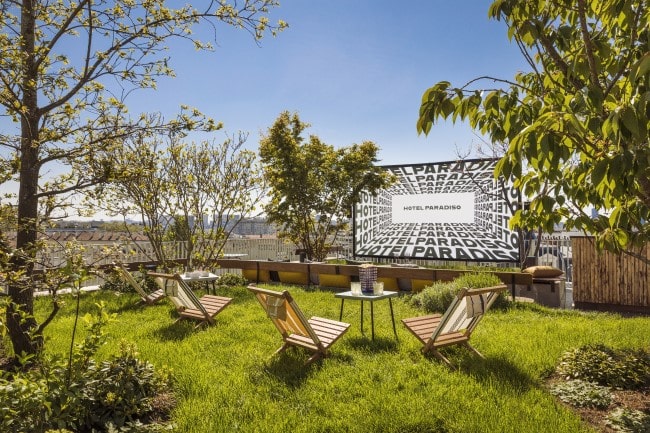
Hotel Paradiso © Romain Ricard
Why would anyone come to Paris to spend time in a darkened room watching an old movie? When you’re tuckered out from touring and want to relax in the evening, or the film you’ve always wanted to see, on a big screen in a real theater, is playing in a retrospective, and it only costs 7 euros. The building is an attractive example of postmodern architecture designed by Frank Gehry (it housed the American Center at one time). The Cinémathèque also features a yuppy-ish café called Lola, a museum, and bookstore, which also sells DVDs of classic films. It often features special exhibits, including a recent one on American director, Wes Anderson (the current one is on Orson Welles). It sits next to the splendid Bercy park, a fine place to chill or picnic. Note: The Cinémathèque is closed in August.

La Cinémathèque Française. photo: Yann Droneaudhttps://www.flickr.com/photos/meuh/384930691
Bercy Arena
The Bercy Arena (or Accor Arena) is the largest stadium within Paris city limits, with a distinctive grass-covered design. It has featured concerts as well as sports events. For music I don’t favor venues that are too big, but my first time at the arena I was impressed that the acoustics were more than satisfactory, the layout easy to navigate, the atmosphere mellow. When the arena features a popular act (or sports event) the ambience in the surrounding area, full of cafés and bistros, turns bustling and electric. Even if you don’t attend an event there, it’s worth a look if you’re in the neighborhood.

AccorHotels Arena, courtesy of Accor Hotels
Bercy Village
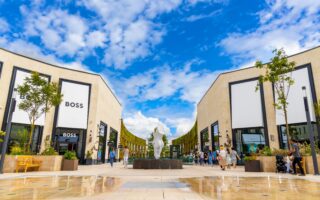
Once upon a time, there were wine warehouses in the Bercy area (the artist Jean Dubuffet worked there at one time as his family was in the wine business). The warehouses were made of stone, and there were rails for ferrying the crates of wine. Those days are done, but now the site is a lively mash-up of food court and shopping mall. The stone warehouses have been converted into restaurants, cafés and boutiques – you can still see remains of tracks on the walkways. There’s a movie multiplex as well. The metamorphosis into what is now Bercy Village, next to the Parc de Bercy, has been remarkably successful, tasteful and youthful at the same time. Not much history is left, nor is there any genuine culture here, aside from the movies at the multiplex. But food shops, gift shops and cafés make this a pleasant (and kid-friendly) place to hang out.
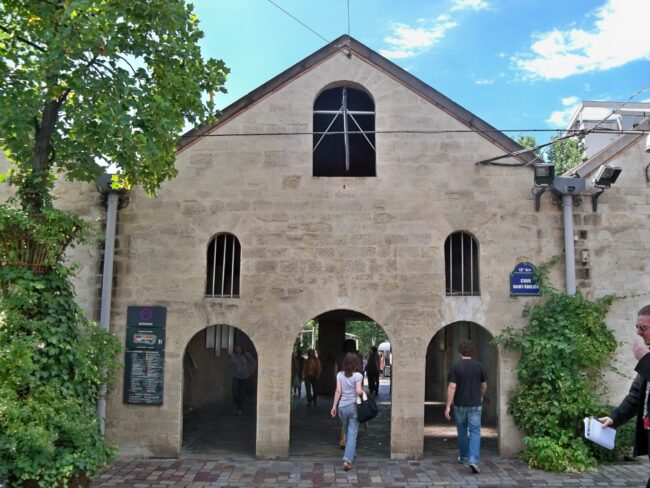
Cour Saint-Émilion at Bercy Village. Photo credit: Véronique PAGNIER / Wikimedia commons
Paris Zoo (Parc Zoologique de Paris)
A number of years ago the Parc Zoologique of Paris (or Paris Zoo) underwent a massive transformation (that also applies to the name, which used to be Parc Zoologique du Bois de Vincennes, commonly known as the Vincennes Zoo). Created in 1934, it had been declining, and there was criticism of the conditions under which the animals were kept. The zoo was closed for six years for renovations, but received rave reviews when it reopened. It now bills itself as a new-style sanctuary where animals live in a more natural environment instead of being penned up in cages. It boasts 255 different animal species. The zoo also has a capacious and well-stocked gift shop, café and restaurant. The zoo can be accessed by tram and metro (Porte Dorée stations, and then a short walk).

Photo courtesy of Parc Zoologique de Paris
Marché d’Aligre
Once I asked a long-time expat what attracted her to Paris. She said it was the culture. “Not the high culture, but the low culture that the French call populaire.” First and foremost the open-air markets selling fresh produce, as well as meat, fish, poultry, and sometimes game hanging in stalls. The biggest, most traditional and I might venture the best market is the Marché d’Aligre. Located at Place d’Aligre and rue d’Aligre, it’s both an open-air and covered market (the covered one is called the Marché Beauvau), and is open every day except for Mondays. The covered market dates back to 1779, the open-air market even further, to 1618. There’s also a second-hand and flea market, which supposedly dates back to the reign of Louis XIV. While it’s one of the most ancient markets in Paris, you can find not only traditional French goods but also products from North Africa, Vietnam, Japan and elsewhere. But the real attraction is observing and interacting with the diverse human circus circulating at the market, whether vendors, shoppers or street performers.

Friendly fruit vendor at Marché d’Aligre. Photo credit: joyousx / Flickr
Opéra Bastille
The Bastille opera house was one of François Mitterand’s so-called Grands Projets (which earned him the moniker Mitterhamses). If you visit the Place de la Bastille, you can’t miss the distinctive building. I must admit having snarkily referred to it as Darth Vader’s helmet, but over the years it’s grown on me. It may not be classically baroque like the Palais Garnier, the other branch of the Paris Opera, but it’s more user-friendly in terms of plush seating, visibility (my first time at Palais Garnier I had to crane my neck around a pillar), and fantastic acoustics. Built in 1989, the opera has a capacity of 2,745 seats, making it one of the biggest anywhere. Aside from classic and contemporary opera, it features concerts, ballet and other dance, and is not just a performance venue but a school to train young performing artists.

L’Opéra Bastille. Photo credit: © Christian Leiber/OnP
Where to Eat
As with any district in Paris, you will never go hungry in the 12th. With one exception, my list is more about quality, charm and affordability than Michelin stars. (Though there are those in the 12th as well.)
Berthillon is the most celebrated ice cream parlor in Paris, but Chez Raimo is the second most celebrated. You can buy cups or cones of delicious ice cream or sorbet in a dizzying array of flavors. Raimo also offers elaborate sundaes if you’re feeling particularly gourmand, and don’t have to worry about calories or cholesterol (or want to take a break from your worries). Raimo, located on the Boulevard de Reully (metro Daumesnil or Bel Air), also features a popular, more traditional restaurant.
View this post on Instagram
Le Borscht is a Ukrainian restaurant in the Daumesnil area. The name might be a cliché that evokes over-rich Eastern European food, but the cuisine offered by the restaurant is hearty and tasty without being heavy. Peculiar but pleasant Ukrainian drinks are also on the menu. With many enthusiastic customers from l’est as well as the local neighborhood, Borscht has a convivial atmosphere. The prices are reasonable, and the service is pleasant. It’s a bit out of the way, but only 10 minutes walk from metro Daumesnil.
Situated at the Porte Dorée, a stone’s throw from both the Palais de la Porte Dorée and the Bois de Vincennes, Varia is a Greek restaurant. Not as upscale as Mavromatis, but not a fast-food kebab joint, Varia hits the sweet spot of good but unfussy Greek cooking, and features delicious Greek wines as well. The prices are fairly reasonable, and the service is polite. The restaurant occasionally features rebetiko music on a Saturday, performed by a Greek trio called Cherchez La Femme (Antonis Nasis, Sergios Dimopoulos and Kostis Papaloukas).
View this post on Instagram
Au Tramway’s decor is plain, giving it the appearance of a neighborhood café, but the atmosphere is convivial, the service friendly and professional. Most of all, the food is very hearty – the specialty is beef from the Salers region. For vegetarians there are fish dishes which aren’t bad and salads, but even the salads tend to have meat in them (when my daughter was in her vegan phase she spent much time sifting through her salad the way other people pick bones out of red snapper). The desserts are very good and the terroir wines decent.
Le Dalou is a large, classic brasserie that overlooks the Place de la Nation. It offers a wide range of traditional French food and drink, but is known for its seafood, especially a scrumptious oyster platter. The bistro doesn’t offer much outdoor seating, but the interior is very spacious, bright and airy. There’s always a large lunchtime crowd, but it’s also a congenial place for dinner. Prices are reasonable, the service cordial.
View this post on Instagram
Overlooking the Place de la Nation is a hostel for young travelers, The People. It might seem nondescript, but on the top floor is a restaurant with a large terrace overlooking the Place. It’s not technically a rooftop, in my view, but the effect is the same. The vista offered of the Place is impressive — what looks from ant level like a busy roundabout is actually an impressively attractive landscaped surface. The atmosphere is friendly, the food decent, prices reasonable.
View this post on Instagram
Chez Victor’s prices are not cheap, but what you get is sublime value for money if you wish to splurge, especially if your inclinations tend to the carnivorous. It’s a meat-oriented restaurant serving mouth-watering (here the word isn’t a cliché, believe me) quality steak. Think of it as the steakhouse of your dreams. Chez Victor also has its own butcher shop (Berbeche) and a kosher deli.
Located just off the Place Félix Eboué, Au Trou Gascon has been a landmark restaurant gastronomique in the 12th for years. The prices are high but so is the quality of the food and service. The restaurant specializes in the cuisine of France’s southwest, so loosen your belt as well as your wallet. It’s definitely worth an exceptional splurge.
View this post on Instagram
Paris’ Best Flan!
Are you a flan fan? Then try the award-winning Le Depôt de Pain de l’Autre Boulange bakery on the Place de la Nation, boasting the finest flan in Paris. They also have a large assortment of fine pastries. Leaving the MK2 Cinema, the bakery has often been a temptation that I’ve defeated the Oscar Wildean way: by giving in to it. I’ve only regretted it since buying a new bathroom scale. For normal folk, they also sell bread.
Where to Shop
Nation’s Big Box Alley: Printemps/Castorama/Darty
For conventional shopping, the Place de la Nation area has three big box stores, one nearly next to the other. There’s a Printemps with the same upscale products as more centrally located department stores but with smaller crowds. A Darty store sits right next to Printemps, selling not only electrical appliances more congenial for residents, but also phone and computer gear. And just a couple stores down is Castorama, a Home Depot-type hardware emporium which sells household products of interest to both residents and sojourners.
View this post on Instagram
Rue Montgallet: A Computer Wonderland
The rue Montgallet, not far from the handsome city hall (mairie) of the 12th arrondissement, is renowned for being a center for all things IT. You can have your equipment repaired here, locate components, or else buy used computers and other tech items, usually at a reasonable price (though once my AI professional son had to explain to his shocked dad why one very, very, very specialized unit was going for 20,000 Euros—used). The service is straightforward and friendly. My own go-to: Inforama. In the middle of this high tech wonderland, you can also find Adria’s Bakery, a tiny American-themed establishment, for a slice of cheesecake, pecan pie, or chocolate-chip cookies.
View this post on Instagram
Atout Livre, on the Avenue Daumesnil, near the Place Félix Eboué, is one of the Douzième‘s jewels. This independent bookstore is elegant, well-stocked with books of many varieties, and also has a small collection of English-language books. It hosts readings, lectures and concerts on a regular basis, sometimes with big-name American authors like Lauren Groff and Ayana Mathis. There’s something for every taste, providing you read French. It’s a fantastic place to buy gifts for Francophone friends: art books, literature, history, cooking. On the Avenue de Reuilly, parallel to Avenue Daumesnil, Atout Livre has a second shop dedicated to BD (comic books and graphic novels).
View this post on Instagram
One of the most original places to shop in Paris is the Viaduc des Arts, which starts at the Bastille area and extends to the Gare de Lyon train station. The site itself is something to behold. The brick viaduct was originally built to support the rails of yet another now-defunct train line, the Vincennes line, going to that suburb and beyond. Instead of dismantling the viaduct, the vaulted spaces underneath were transformed into workshops, showrooms, galleries, and sales outlets of various kinds: fabric, woodwork, picture frames, jewelry, home décor, and more. The settings are charming – you can observe people working at their craft- and the products of sublime quality. As for prices … well, if you have to ask (I tend to limit myself to looking and salivating). There are also spots to eat and drink, one called, unsurprisingly, Le Viaduc.
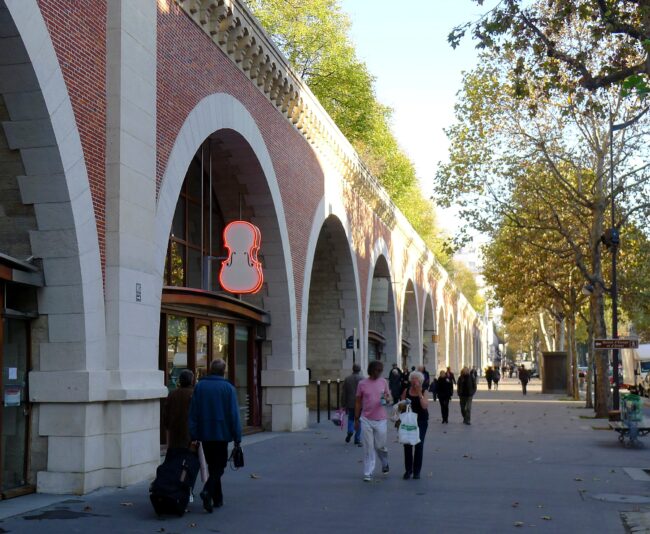
Viaduc des Arts, Avenue Daumesnil . Photo: Mbzt / Wikimedia commons
Where to Drink
There are many cafés in the 12th, as well as innumerable bars in that part of the arrondissement which verges onto the Bastille area (yes, this really is the 12th, not the 11th or 4th, though they all converge here). I’ve given a subjective, partial list of places that have interested me or have found particularly pleasant.
Ground Control is a unique establishment. It was once a mail-sorting center – a huge one: 6000 square meters or 64,580 square feet. It’s now a mix of café, restaurant, gallery, hangout, and much more. When I used to organize the Paris Writers Workshop I occasionally met a colleague there for ersatz meetings and there always seemed to be half-a-dozen activities going on at the same time. The vibe is young, “bobo”, intellectual, progressive.
View this post on Instagram
Thirsty after a stroll (or run) in the Bois de Vincennes? You can have a mojito at La Poisson Lune and drink back the calories you’ve just taken off. You might take a look at the murals inside the Immigration Museum, take in an exhibit, or visit the aquarium. As described above, the Palais de la Porte Dorée has a spacious esplanade, enclosed behind a “privacy wall”, filled with tables and chairs. Patrons can buy food and drink from food trucks. Depending on the day or season there’s also music, usually of the “exotic” variety. Accessible by metro, bus, or tram, you’ll find a lively but relaxed, youthful atmosphere at the Poisson Lune. The terrace itself is open seasonally from May-September.
View this post on Instagram
Not in the mood for alcohol? Recovering from a hangover? Long before smoothies became a normal DIY drink and every bar offered mocktails, the Paradis du Fruit made its name serving up fruit juices. Now it also offers alcoholic beverages if you’re so inclined, as well as quality streetish food. But the fruit smoothies are the best, unbelievably fresh and fragrant, an instant caffeine-less pick-me-up. There are several establishments in Paris, but this is the one I know (and like) best, wedged into the Place de la Bastille. It’s cozy, with polite and prompt service.
View this post on Instagram
To the British, cantine may evoke canteen (ie cafeteria). Perhaps the name actually derives from the Spanish cantina, for La Cantine, a bar-restaurant near the Place Félix Eboué, has a rather Caribbean ambience. The décor is funky and colorful, and on a Saturday evening the place is jumping. Its specialty is rum, with several varieties on offer. You can munch on accras or tapas, or order a regular meal. I can vouch for the fish and chips, a friend for the chicken curry. And among the desserts there is, of course, baba au rhum.
The Troll Café specializes in beer, especially the rich, dark Belgian variety. It features 130 types of bottled beer, as well as nine on tap. It has a hip atmosphere and is open well into the wee hours. True to its name, the café doesn’t offer meals but does serve Basque and Catalan cold-cuts and cheese.
View this post on Instagram
As Parisians love to eat when they drink and drink when they eat, the line between bistro and bar can blur. Technically Chez Gudule is a quality bistro, with traditional food at reasonable prices, but I’ve gone there mainly to drink (I’m not alone). They have both beer and cocktails in a youthful (but not exclusively young) and friendly setting. It’s a great place to watch a big TV screen when there’s a major sports event, when the atmosphere gets boisterous but still civilized, bon enfant as they say. Otherwise, it’s a nice place for people-watching and, of course, drinking. It’s conveniently located near Bel Air metro.
View this post on Instagram
For wine try Ici Même, in an nec plus funky area (corner of Avenue Ledru-Rollin and rue Charenton). It’s a combo wine shop and wine bar, with tables inside and out, as well as a smallish bar. Still going strong after 11 years, Ici Même has an excellent selection of wines, often organic, and also artisanal beers from different regions in France, Europe (Belgium, of course) and even a London brew. There are plancha munchies (sausage, cheese, cold cuts). The interior is woody and warm, and the service is friendly and unpretentious.
For night-time cocktails you won’t go wrong with Le Calbar. In his autobiography Spanish film director Luis Buñuel sang the praises of a genuine bar, as opposed to café: a night-time place, an introspective but still social venue. This establishment evokes that nicely, hipsterish but relaxed rather than jumping. It’s stylish and atmospheric, exuberantly decorated with myriad pictures on the wall, dimly illuminated by elegant fixtures hanging from the ceiling. The staff, aside from being very friendly, is expert at the craft (in their hands, I’d say art) of mixology, and knowledgeable about spirit lore (no, not ghosts). The “clarified” Bloody Mary I had there was marvelously spicy and smooth at once.
Lead photo credit : Photo: Wayne77/Wikimedia Commons
Share to: Facebook Twitter LinkedIn Email
Related Posts