Picasso and Rodin: So Different and Yet So Alike
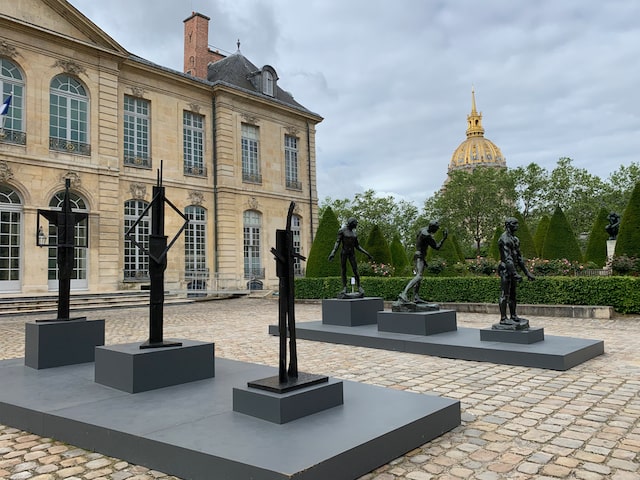
At first sight, Auguste Rodin and Pablo Picasso — born 41 years apart — may seem as different as can be. And yet in Paris, Musée Rodin and Musée Picasso have partnered to offer us a twin exhibition that looks at the many parallels in their work, and also in their personalities.
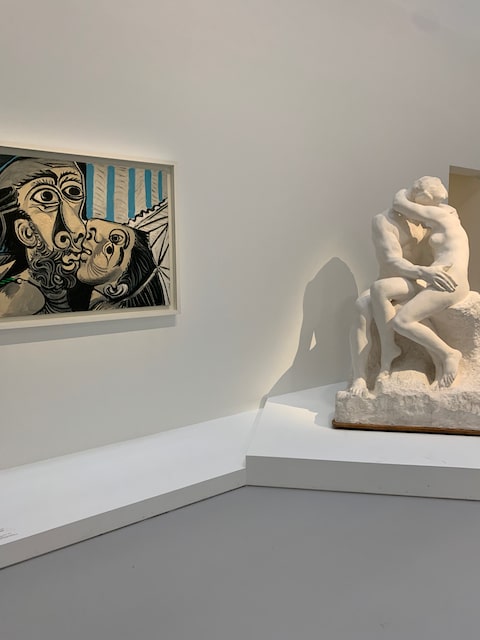
A different take on amorous pursuits. (C) Sarah Bartesaghi Truong
Many museums have been forced to re-center on their permanent collections, the pandemic rendering uneconomical the staging of blockbuster or itinerant exhibitions. But the two Parisian institutions have found an innovative way to circumvent this constraint, pooling their resources to bring us a surprising double show, staged in both locations at the same time.
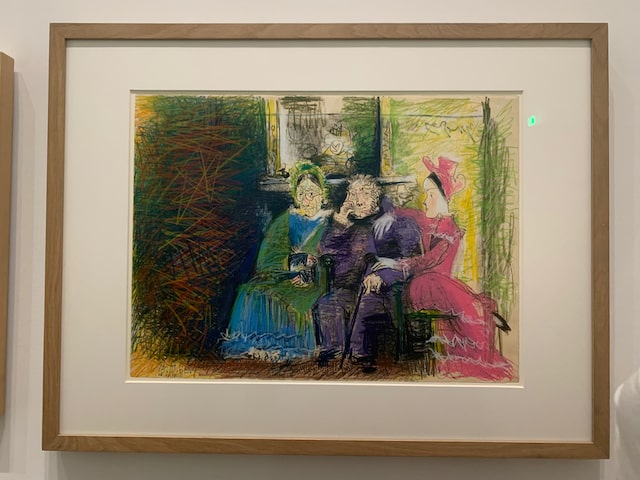
Picasso’s caricatures. (C) Sarah Bartesaghi Truong
The show highlights not only how the two found inspiration in similar themes but also how they had a comparable attitude towards art.
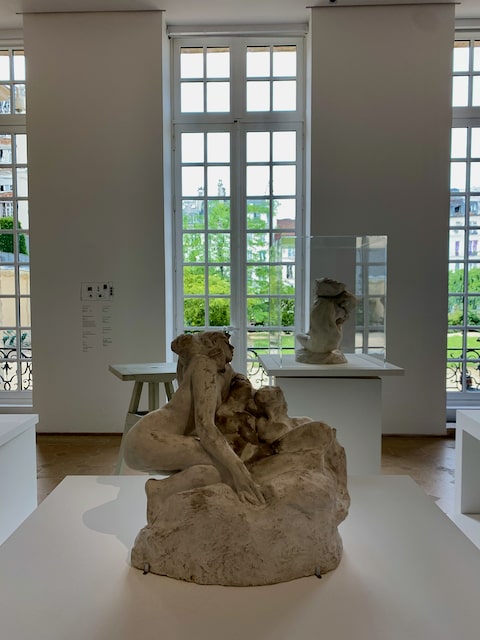
Rodin at Musée Picasso. (C) Sarah Bartesaghi Truong
When Picasso visited Paris for the first time, on the occasion of the International Exhibition of 1900, he visited the retrospective Rodin had put up of his own work, a grand affair where his sculptures were displayed next to pieces from his own art collection. A penniless artist at the beginning of his career, Picasso could not aspire to be introduced to Rodin, then at the height of his fame, but it is certain that what the Spaniard saw deeply influenced his work and his approach to art.
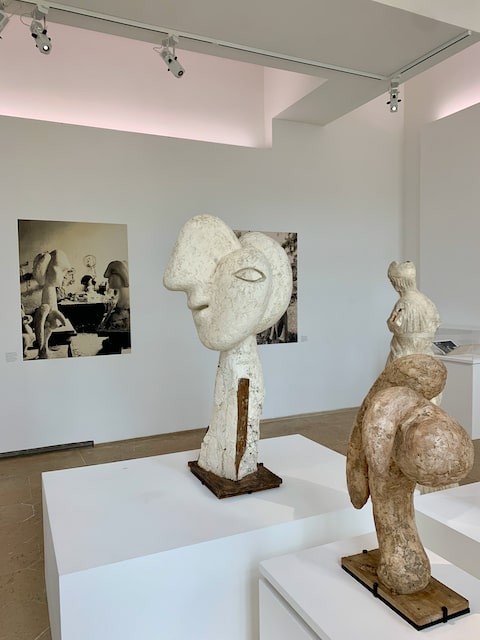
PIcasso’s cubist sculptures. (C) Sarah Bartesaghi Truong
In fact, both artists lived through periods of intense social and political upheaval: Rodin became a public figure after the Franco-Prussian war of 1870 and the Commune, two cataclysmic events that tore the country apart; Picasso did not fight on the front in the Great War but was deeply impacted by it, personally and politically, and of course was one of the most acerbic critics of the conflict during the Second World War.
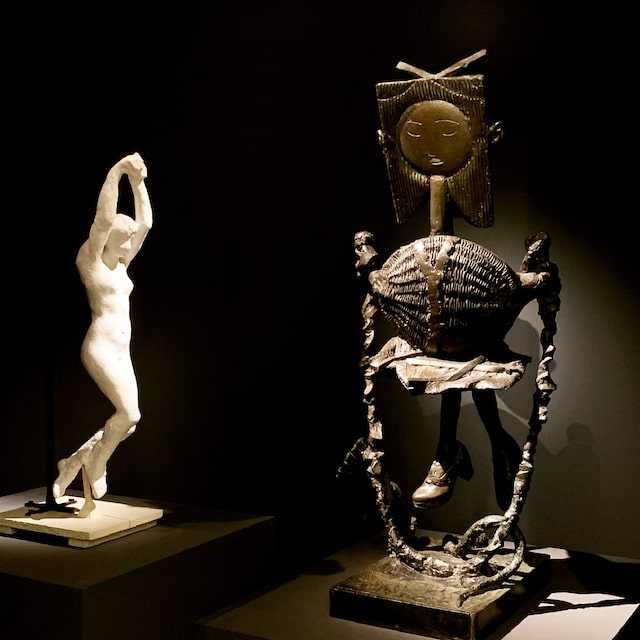
Depicting movement at Musée Rodin. (C) Sarah Bartesaghi Truong
These disruptions pushed the two away from a naturalistic representation in their work. Rodin’s expressionism and Picasso’s cubism were different yet similar ways to apprehend a world that had become more and more complex and fragmented.
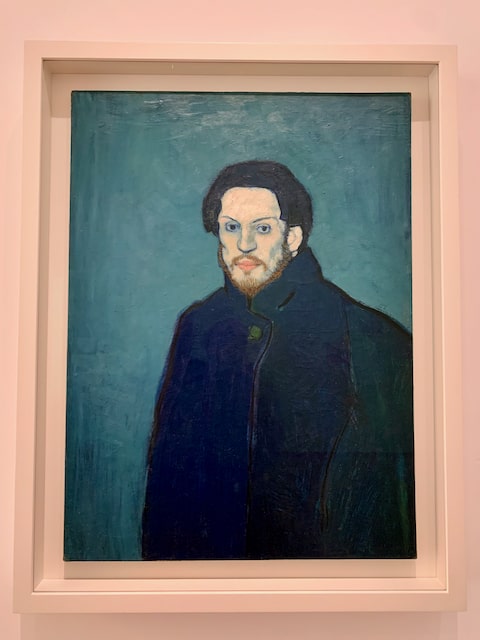
Picasso’s self portrait. (C) Sarah Bartesaghi Truong
The influence of the famous sculptor on the young Spaniard extended beyond sculpture, and is evident also in his two-dimensional work, for instance in this self-portrait from the Blue Period, or the caricatures illustrating an edition of Balzac’s novel Le Père Goriot, the writer considered by both artists a model.
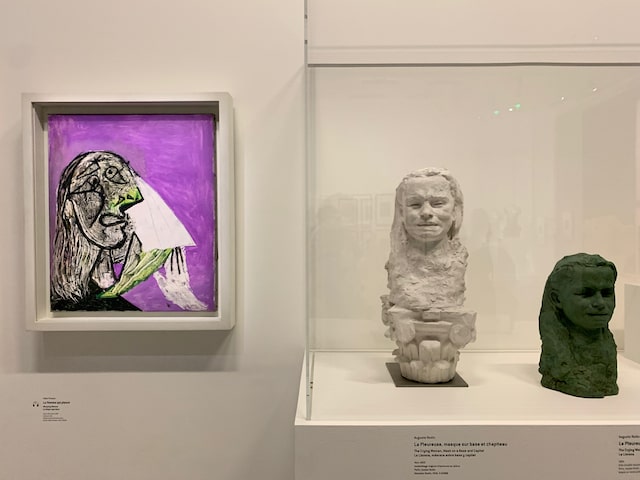
Weeping women according to Picasso and Rodin. (C) Sarah Bartesaghi Truong
While the Musée Rodin portion of the double show is divided into the common themes that bring the two artists close (nature, the female body, ready mades, non-Western artifacts), the corresponding half at Musée Picasso delves into the theoretical art approach they shared, and looks at their personalities, larger than life, most likely very difficult to live with for their entourage, and strikingly similar: their work ethos, endless time spent in their ateliers, surrounded by a creative chaos where their pieces coexisted along works by other artists but also with found objects; their boundless egos that never doubted their own talent; the fraught relationships with the women in their lives, left to suffer on the altar of their lover’s fame.
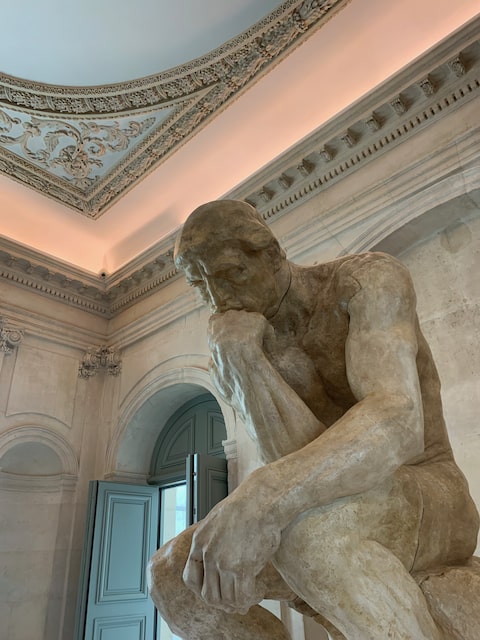
Plaster version of Rodin’s “Thinker” at Musée Picasso. (C) Sarah Bartesaghi Truong
The curators have done an outstanding job at suggesting how much the two artists had in common, despite being so different. For a wanderlust-addict like me, the exploration of the genius of the two artists brought us by this twin exhibition is the next best thing to traveling because for Picasso and Rodin, the process, the journey, was more important than the destination.
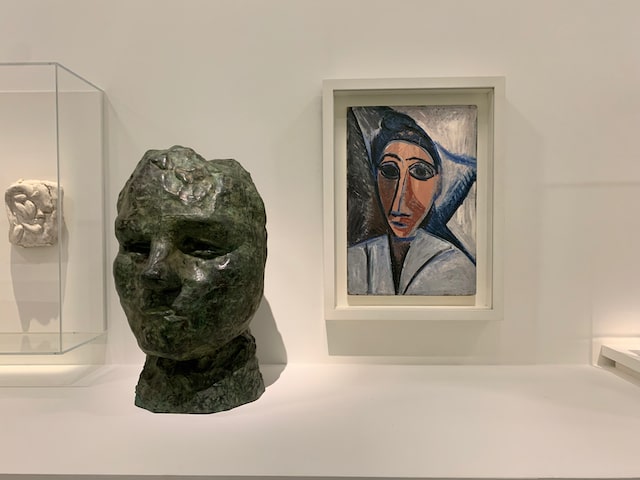
Female portraits at Musée Rodin. (C) Sarah Bartesaghi Truong
Picasso-Rodin is on jointly at Musée Picasso Paris and Musée Rodin until January 6, 2022.
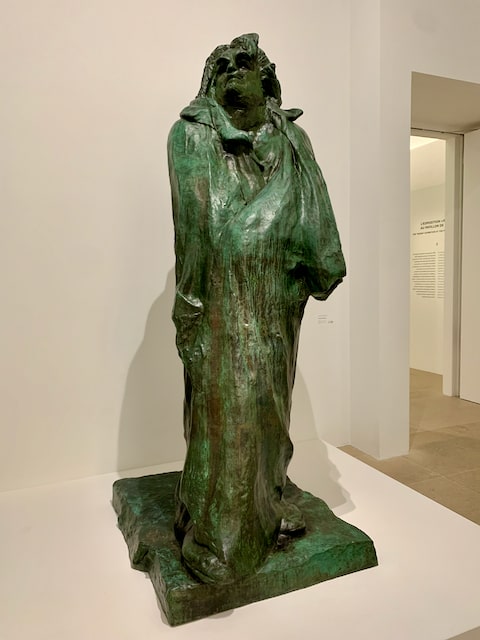
Rodin’s tribute to Balzac. (C) Sarah Bartesaghi Truong
Lead photo credit : Picasso and Rodin side by side outside Musee Rodin (C) Sarah Bartesaghi Truong
Share to: Facebook Twitter LinkedIn Email
More in Art, exhibition, museum exhibitions, picasso, rodin, sculpture
Related Posts