
Follow the Threads of Made in France, a Textile History
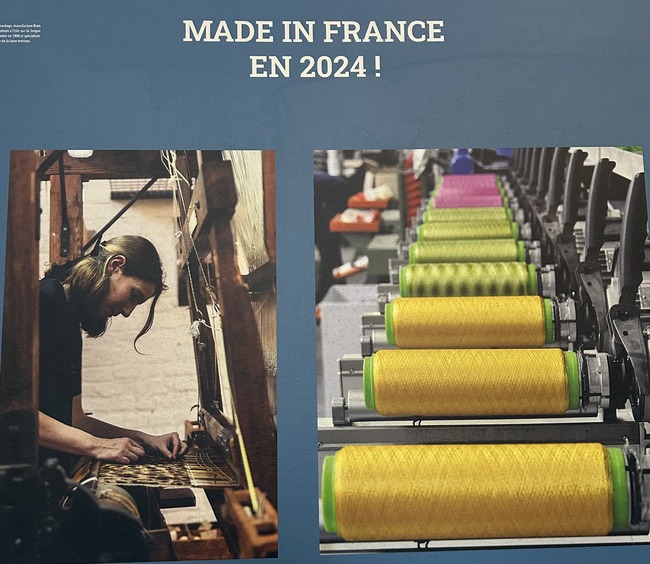
The story of France’s leadership in the textile industry is like the ups and downs of many trades. A driver of the industry for three centuries, the times and technologies changed and France is now more of a fashion influencer than textile provider. But France’s textile history is rich and varied. From manufacturing regulations that defined French quality, to the technological innovation of the Jacquard loom which made weaving faster and simpler, to addressing today’s environmental pollution issues, France’s textile industry continues to make an impact.
The story of this industry is told in “Made in France: A Textile History.” The exhibit is at the Archives Nationales and showcases a rich collection of fabrics from the archives that have never been seen before. Cotton, linen, silk, lace, synthetics and more visually illustrate the beauty and quality of popular fabrics but the importance of politics and technology that drove France’s leadership is also a key part of the story.
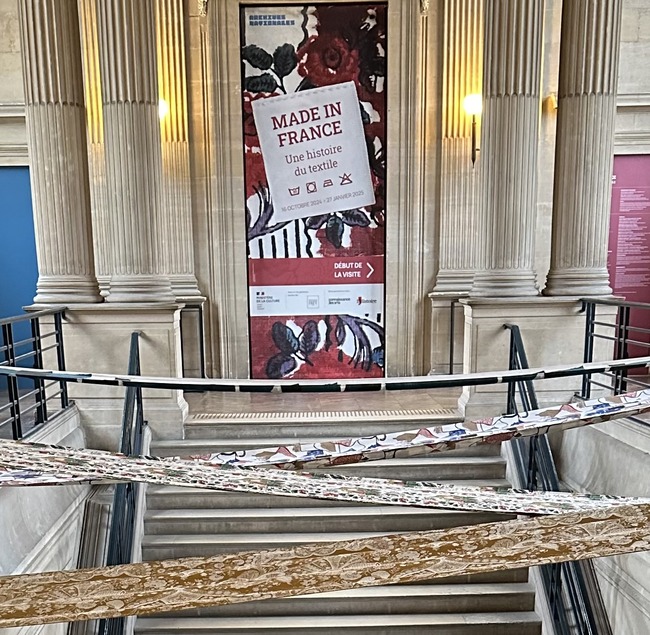
The entrance of the Made in France: A Textile History exhibit. Photo: Martha Sessums
Anyone who enjoys sewing will appreciate the history of France’s textile industry. I grew up making my clothes on a Singer machine although my sewing today tends to be hemming pants. My sister was a fashion designer in Los Angeles, CA in the 1970s when the Prairie style was popular so the house was full of yards of fabric plus patterns she was working on. We didn’t know that the intricate weaving and design of the fabrics we worked with happened because of an automatic weaving loom invented by Frenchman Joseph-Marie Jacquard in 1801. We just enjoyed designing, cutting and sewing fabrics into clothes we loved to wear.
The exhibit is in four parts starting with how France became an international leader in producing textiles. It began with the requirement of quality when French fabric production laws were first systemized in 1669 by Jean-Baptiste Colbert, one of the principal ministers of Louis XIV. Regulations included the dyes used, quality of raw materials, thread count and finishes. Inspectors were sent to factories to ensure regulations were met. Cotton, linen, wool and silk factories grew to worldwide success due to the known quality of French fabrics.
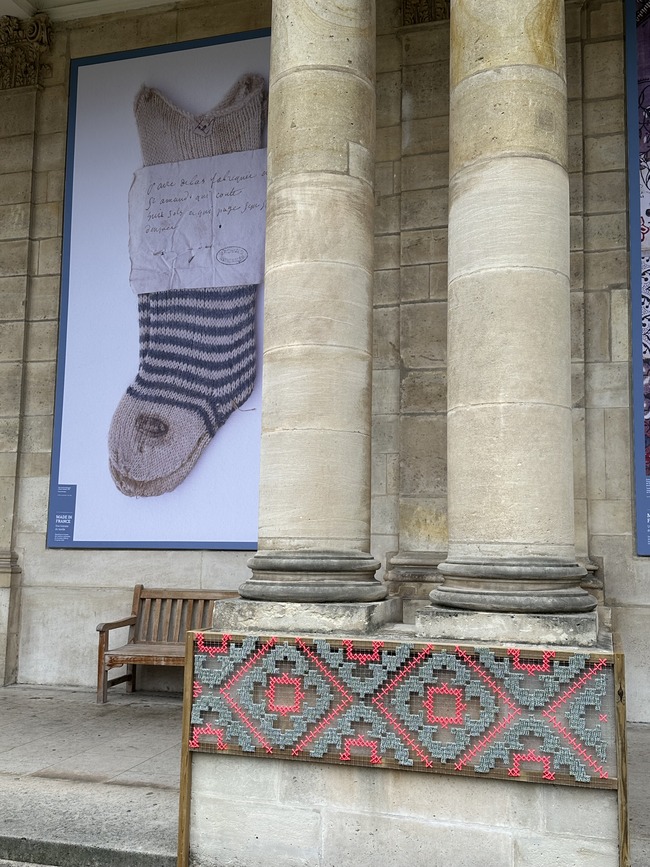
The courtyard of the Archives Nationals illustrating new textile design against ancient woven socks. Photo: Martha Sessums
The second and third sections are about how technology and factory workers drove and changed the industry. Guilds were abolished in the Revolution allowing workers to choose their own profession but there was also the impact of wars which limited labor and raw materials. The French textile industry was hit hard, but encouraging technical innovations helped steady and drive France’s success.
Small looms were developed to simplify the process but it was the Jacquard automatic weaving loom that revolutionized the industry. Warp threads were selected using a program written on punch cards which automated weaving so it took only one worker to operate the loom. The loom gained international success and is considered to have helped drive the beginnings of the Industrial Revolution. It is the oldest programmable machine and was the inspiration for Charles Babbage who invented punch card computers.
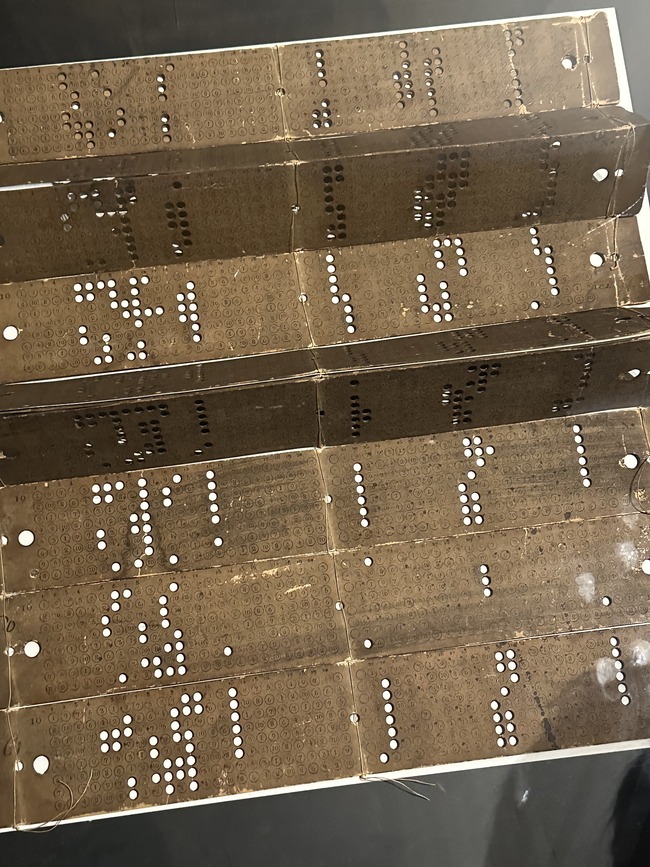
A punch card from an automatic weaving loom invented by Frenchman Joseph-Marie Jacquard in 1801. Photo: Martha Sessums
France’s textile industry grew during the Industrial Revolution due to mechanical weaving looms and spinning machines. Also, working conditions improved including regulating child labor and working hours. Marketing of French products in universal exhibitions globally expanded the industry. Artificial textiles of rayon and silk created from cellulose were invented by Frenchman Count Hilaire de Chardonnet and accepted worldwide.
The fourth section is how globalization challenged and changed the French textile industry which led to both good and bad results. The free trade of products worldwide was good because of a wide variety of imports, but cheaper fabrics notably made in China affected the industry and France lost its leadership in the textile industry. The 1970s and 2000s economic crisis also hit hard despite France’s attempt to provide financial support. In the 20th century, synthetic fabrics made from chemical hydrocarbons became more popular but they made the textile industry highly polluting. France and the world responded by requiring labeling the fabric composition of clothing along with refocusing on natural or plant-based fabrics.
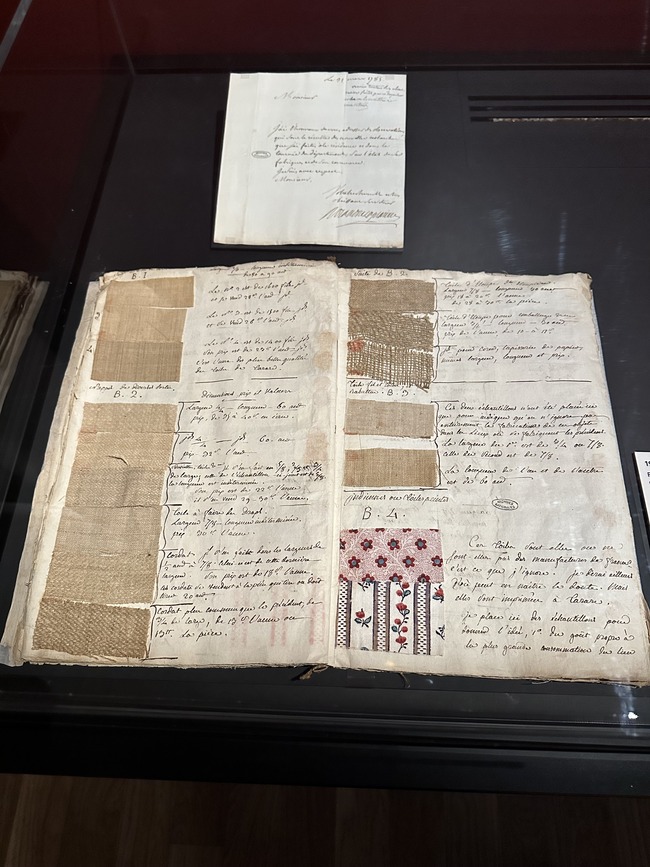
Sample fabrics from the Archives Nationales that have never been displayed before. Photo: Martha Sessums
Today, India, Pakistan and China dominate the textile industry worldwide. France’s textile industry is focusing on the environmental impact of the clothes we wear and the fabrics we buy for creative sewing. A section of the exhibit explains the impact of the amount of clothes each person throws away each year and calls for change. “All of us have a part to play: consumers through making informed purchases, manufacturers via their efforts to maintain a French textile industry and the state in its recent involvement in environmental labeling,” says the final exhibit display.
The exhibition is both educational and inspiring. The next time you’re shopping for clothes, look at the fabric content and where it was made to help make the buying decision. When shopping in France, look for “fabrication française” which may cost a little more, but supports an industry that was the first to drive the success of textiles including the invention of automatic weaving machines and artificial fabrics that are used to make many of today’s clothes. Once again, France’s technology and production leadership have made a difference.
DETAILS
Made in France: A Textile History
Archives Nationales
60 rue des Francoise Bourgeois, 3rd arrondissement
Métro : Hôtel-de-Ville (ligne 1), Rambuteau (ligne 11), Arts et Métiers (ligne 3).
From October 16, 2024 – January 27, 2025
Free entry.
Closed Tuesdays. Open from 10 am – 5:30 pm, Monday- Friday, and from 2 pm to 7 pm on Saturday and Sunday.
Lead photo credit : A worker creating fabric and today’s threads in an automatic loom are part of today’s textile industry in France. Photo: Martha Sessums
Share to: Facebook Twitter LinkedIn Email
More in Made in France, Museum, textiles
Related Posts



REPLY
REPLY
REPLY