
The New Popularity of the Beret in Paris

When my family and I visited Paris in the dark ages of the early 21st century, my husband brought his beret. His Basque beret was part of his personal style, so his accessory naturally came with him. However, he was the only person we saw during our week in Paris wearing the iconic hat. It was a little laughable for him to be the only example.
Fast forward to 2023 and everyone’s wearing a beret, and wearing it with gusto. Bins of these colored pancakes are found in the tourist-driven boutiques that line the Seine. What could be reason for this switch in the beret’s popularity? Love her or hate her, Emily in Paris has turned a multitude of French visitors into fashion victims. A cursory Google of Lily Collins/Emily Cooper shows she must have a hat rack brimming with red, black, and yellow berets. During the show’s first season, there was a surge of online searches for red berets.
To me it seems these acorn toppers are a stereotype of Frenchness that has travelled across the Atlantic and back again.
View this post on Instagram
Like a striped Breton jersey, a bicycle and a baguette, the basic beret is emblematic of the French. Credit is due to 17th-century shepherds in the Basque and Pyrenees regions of France for creating the beret. Shepherds were long aware that the fleece of their flocks kept the sheep warm and dry. They started lining their shoes with tufts of wool, which soon became matted and felted, to say the least! Their country wisdom led them to knit a simple saucer-like hat knitted from the wool of their sheep. The hat shrunk instantly when exposed to rain. However, the shrinkage served to naturally felt the wool into an impermeable fabric. Soon the shepherds’ têtes were as water repellent as their woolly charges.
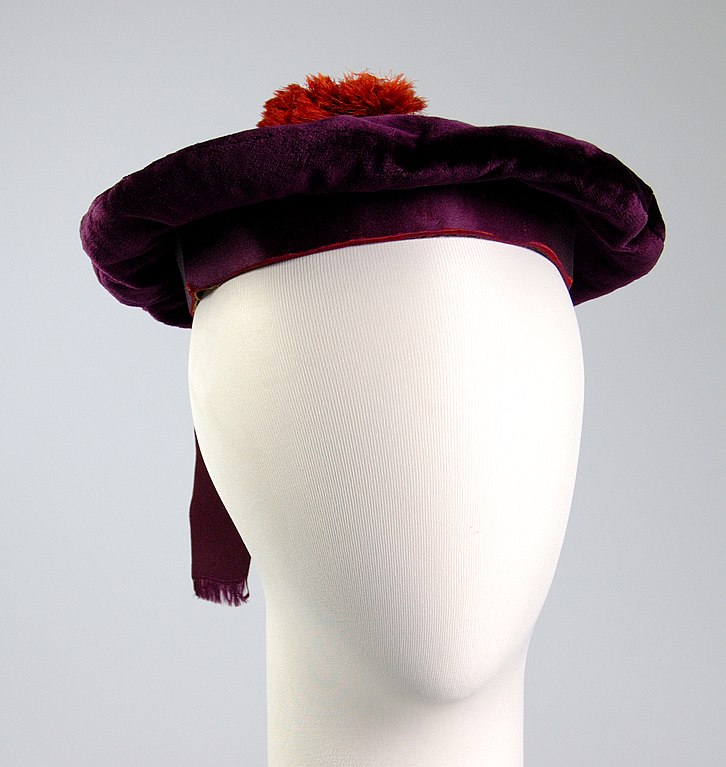
The popularity of the beret carried forward. Since the 1800s, the beret has been seen as the headgear of creative types. There is pictorial evidence of artists such as Cezanne, Monet, Rousseau, Rodin and Gauguin wearing berets with a great amount of French je ne sais quoi. Were they making a fashion statement, copying the old master Rembrandt, or like the shepherds – merely keeping their heads warm in their icy studio spaces?

Portrait of Paul Cézanne, by Camille Pissarro, 1874. National Gallery
Speaking of icy, the Chasseurs Alpins, the elite mountain infantry of the French Army, have been flaunting a floppy French beret as part of their uniform since 1889. The onion sellers of Brittany, who frequently crossed the English Channel to sell their produce, faithfully wore black berets, adding to the stereotype of Frenchmen.

César PAYAN. Chasseur alpin au 6e bataillon territorial de Nice en 1914. Unknown author. Public domain
Shepherds, Belle Époque painters, soldiers and legionnaires – at one time, all male. Schoolboys who influenced the films of Louis Malle and Maurice Pagnol donned berets. It was practically a rite of passage to present a young man with his first one. Unsurprisingly, it was Coco Chanel who modified the traditional men’s beret for women, and put it on her runway models. Greta Garbo, Marlene Dietrich, and Brigitte Bardot all adopted the look. American Faye Dunaway really rocked the beret in the 1967 film Bonnie and Clyde. It seemed that the infamous Bonnie Parker was a devotee of the saucy beret as far back as 1933. Thanks Coco.
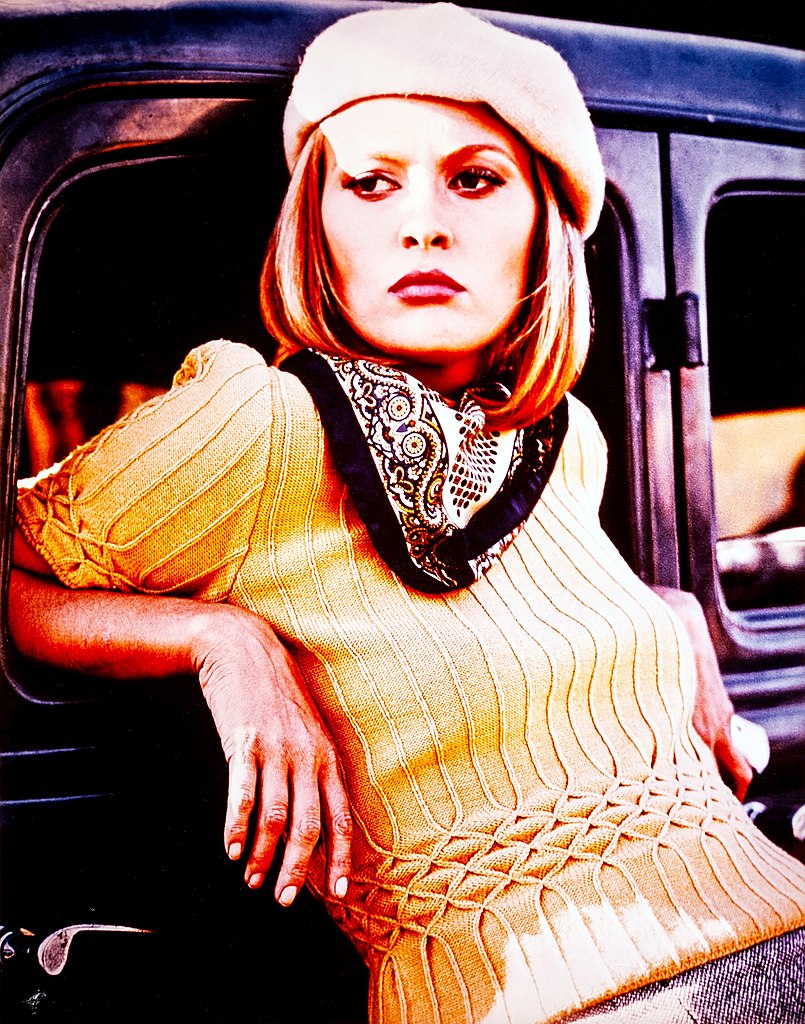
Faye Dunaway in Bonnie and Clyde. Distributed by Warner Bros.-Seven Arts. Wikimedia commons
The beret turned into a symbol of the French resistance when fighting against the Nazi occupation of France during World War II. Apache dancers, chewing up the scenery, served to make the beret a rather arch accessory. Gauloises-smoking beatniks wore it to their existential events. Beret-wearing mimes served to reinforce the image of the beret as a French motif. The beret became such a cartoon cliché it seemed to mock the French. Then the French beret fell out of fashion with its own citizens. A Bonjour Paris article dating back to 2004 was titled, “The French Don’t Wear Berets.”
Once there were dozens of beret factories in the Basque, Bérnaise and Pyrenees regions of France, but they closed operations, one after the other. Nearly all berets are manufactured in Asia. Today, there three companies in France that still make a traditional beret. One, located in Orthex, is the La Manafacture des Bérets. Another newish company is Le Béret Français, established in Bayonne in 2012. One company that must be very pleased with the increase in beret wearers on both sides of the pond is Laulhère. After purchasing what was formerly the oldest beret manufacturer, Blancq-Olibet, Laulhère has taken the title of the oldest French woolen mill to still make berets.
Alas, today my husband’s L’Aiglon is found only in retro shops. Therefore, those bins of berets you see on Paris street corners might just not be made in France.
View this post on Instagram
Laulhère has been making berets since 1840 in Oloron-Sainte-Marie, a town in southwestern France. Their product is historical yet incredibly au courant. Combining unique expertise with tradition, a genuine Laulhère beret is created by a team well versed in the arts of knitting, felting, and dyeing wool.
At all three beret manufacturers, every step has to be scrutinized by eye. After the original hat has been expertly knitted, the result is much larger than we’d expect. However, the hat shrinks up once it has been felted in special machines that subjects the product to mechanical pressure in warm, soapy water. This felting process is quite specific and must be monitored every 15 minutes to ensure that the desired thickness is achieved. The felting gives the beret its softness and tightens its stitches. What the beret loses in size it gains back as a thick, dense, waterproof fabric.
View this post on Instagram
After felting, the berets are immersed in dye baths, then the hats are shaped, and trimmed. Stitchers complete any finishing details. The three companies offer a spectrum of colors and a large range of wool, including merino and cashmere.
The beret is perhaps Paris’s most enduring motif. The popularity of the hat, once so rooted in the peasant lifestyle, has trickled up through the centuries to be the iconic look of a Netflix fashionista. If you’re going to wear Emily’s beret, please do it up right and buy one made in France.
Share to: Facebook Twitter LinkedIn Email
More in Beret, emily in paris, fashion, La Manafacture des Bérets, Laulhère, Le Béret Français
Related Posts



REPLY
REPLY
REPLY