
Metro Magic: A Literary Tribute to Saint-Germain-des-Prés
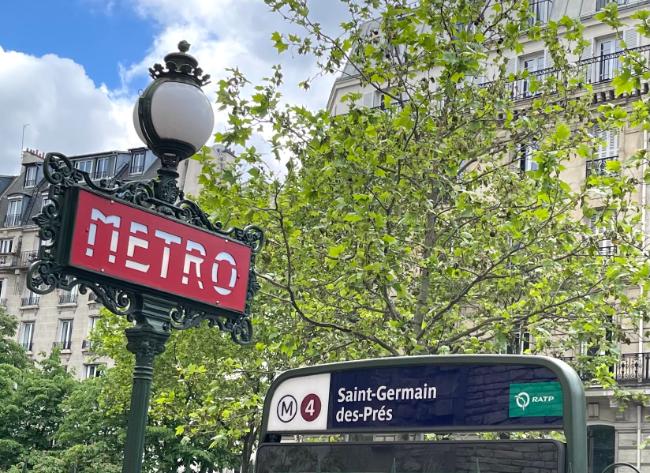
This is the ninth in a series of stories about the wonders of the Paris Metro System.
Sometimes letting a metro train (or two) pass you by is not a bad thing. Especially when there are stories unfolding around you.
The Saint-Germain-des-Prés metro station is one of those stations where you wish the metro schedule weren’t so efficient. Here, the underground walls offer much to learn about the bohemian spirit of the quartier.
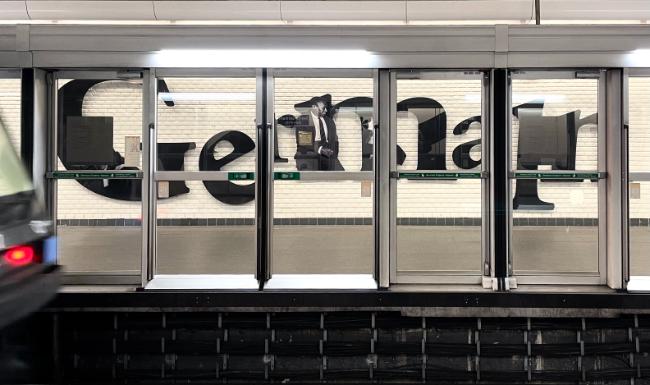
© Meredith Mullins
The “S” in Saint pays tribute to Simone de Beauvoir and Françoise Sagan.
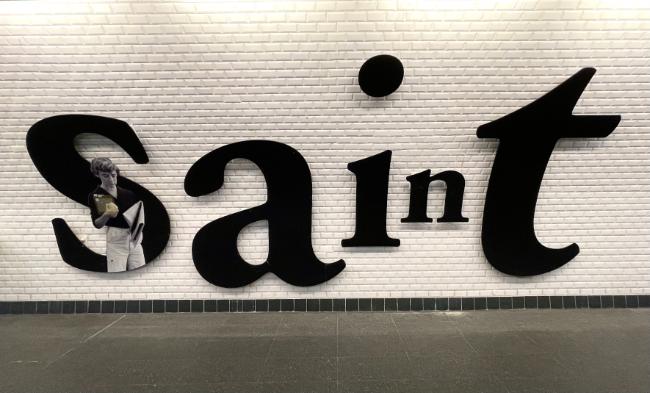
Françoise Sagan. © Meredith Mullins
The “G” in Germain gives us Romain Gary and George Hugnet.
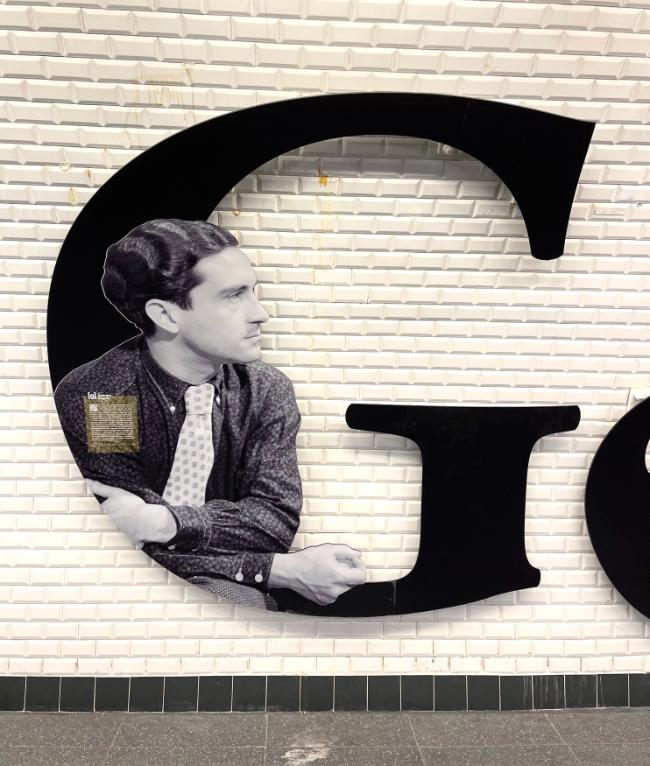
George Hugnet. © Meredith Mullins
Find the “D” in Des and you’ll discover Marguerite Duras and Sonia Delaunay.
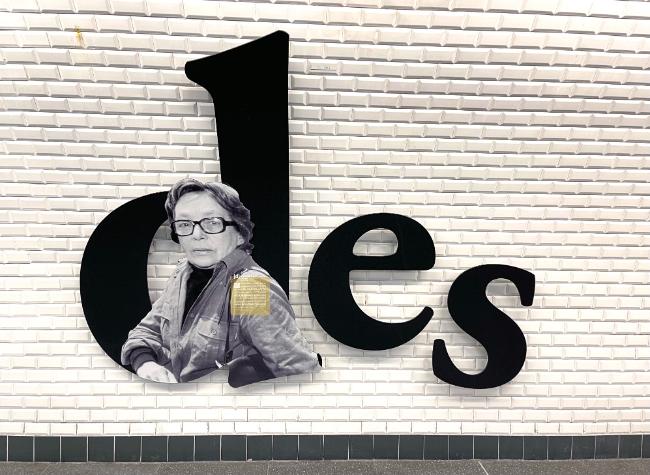
Marguerite Duras. © Meredith Mullins
The “P” in Prés introduces Jacques Prévert.
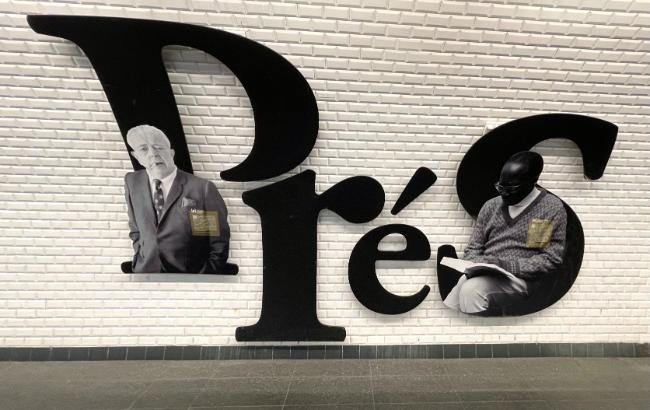
Jacques Prévert. © Meredith Mullins
These were some of the key figures of the 20th century arts and culture of the district. Today, in the metro station, their brief stories come alive amid the dancing typography that spells Saint-Germain-des-Prés.
You can feel heartbeat of the quartier — past and present — imagining the soulful improv blues of Miles Davis, or the balance of dawn tranquility and midnight exuberance in the life of the writer Françoise Sagan, or the “blank page with no limits” for writer Roland Topor.

Roland Topor. © Meredith Mullins
The captivating metro exhibit The Legend of Saint-Germain was installed in the station in 2021 — a tribute to those who helped write the story of this unique area. We meet a cast of characters who embodied a literary, sophisticated, free-spirited, and creative Paris: Boris Vian, Jacques Prévert, Marguerite Duras, Amélie Nothom, Roland Topor, Sonia Delaunay, Romain Gary, George Hugnet, Simone de Beauvoir, Françoise Sagan, Juliette Gréco, Miles Davis, Léopold Sédar Senghor, and Sonia Rykiel.
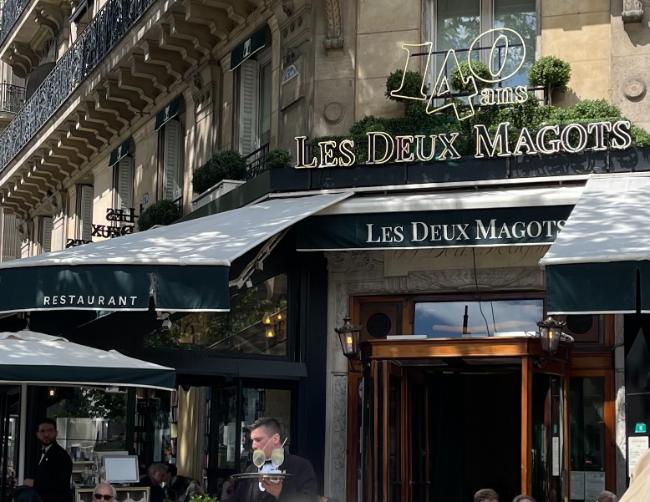
Café des Deux Magots. © Meredith Mullins
The neighborhood of Saint Germain is colorful, with its well-known literary cafés and vibrant nightlife. But once you are underground in the metro station, you enter a world of high-contrast black and white.
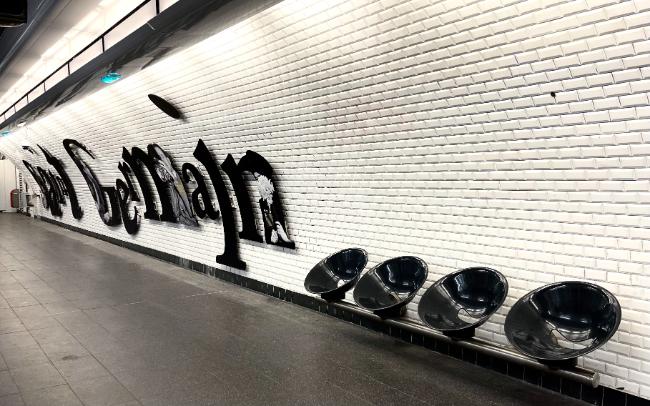
Stories from the quartier. © Meredith Mullins
The metro chairs are black, the tiled walls are stark white, and the platform installations display only B&W photos … adding to the nostalgia of an era. You must find color in the personalities of the quartier: Sonia and Simone, Jacques and Juliette.
Here are a few of their stories, although the metro vignettes are just a teaser into the extensive life chapters of these iconic personalities. A literary stroll through the station makes you want to know more, to read more, to see more. (New personalities will be added to the gallery in the future.)
Sonia Delaunay
Sonia Delaunay, an artist known for her vibrant colors and geometric abstraction in painting, textiles, and fashion, met Blaise Cendrars through their friend Apollinaire. In 1913, they collaborated on an artist book Prose on the Trans-Siberian Railway and of Little Jehanne of France, where text and rich color came together in what some have now called “one of the most beautiful books ever created.” The poetry and visuals fused powerfully in a two-meter long format —”part reading and part contemplation.” As the station text shares: Cendrars said, “My poem is more bathed in light than my life.”
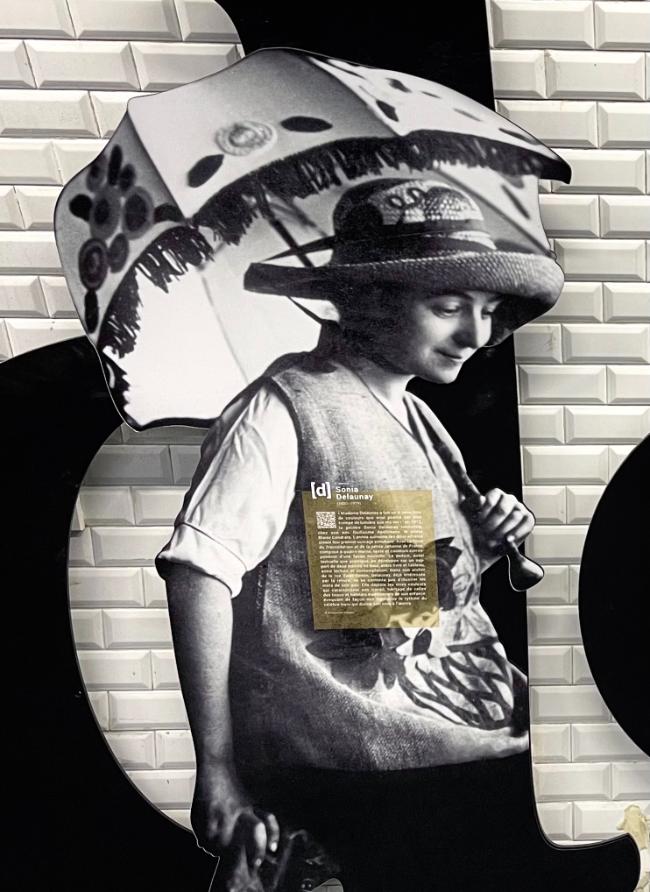
Sonia Delaunay. © Meredith Mullins
Romain Gary
Romain Gary (Roman Kacew, Émile Ajar) had many identities and noms de plume. He was a diplomat, war pilot, and writer. He won the Goncourt literary prize twice, under two different names (since the Goncourt is only given once to a single author). He settled in Saint Germain, a neighborhood full of stories and creative characters. Work and life were intertwined. “I have always been a stranger to myself,” Gary said. He wrote to invent himself and re-invent himself and died by suicide, leaving a note that let the world know: “I have at last said all I have to say.”
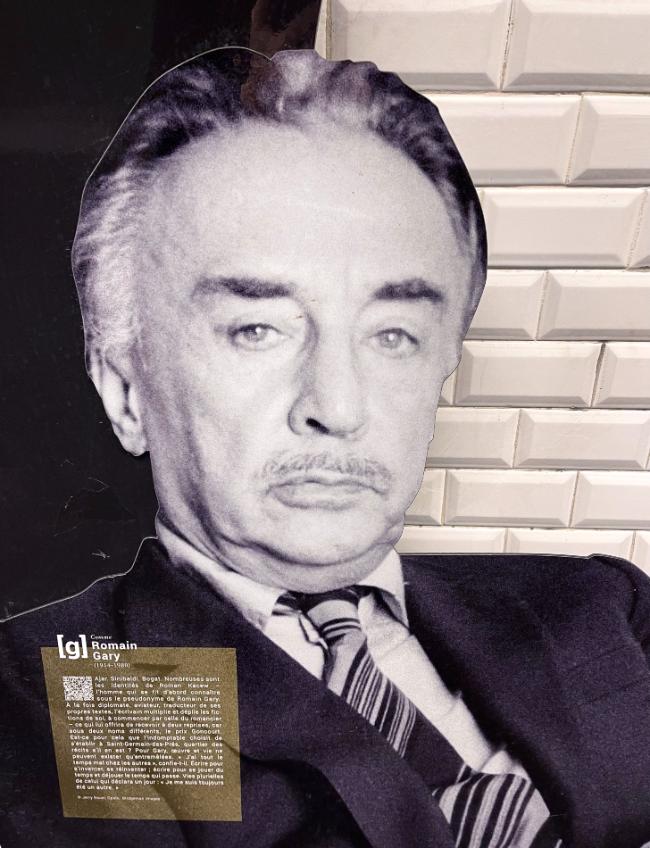
Romain Gary. © Meredith Mullins
Miles Davis and Juliette Gréco
Jazz pioneer Miles Davis and singer/poet Juliette Gréco had an intense love affair in Saint Germain in the early 1950s embodying the spirit of Paris. People danced and debated until dawn. Poetry was set to music. Music allowed literature to reinvent itself, with rhythms. And a love like theirs could be free.
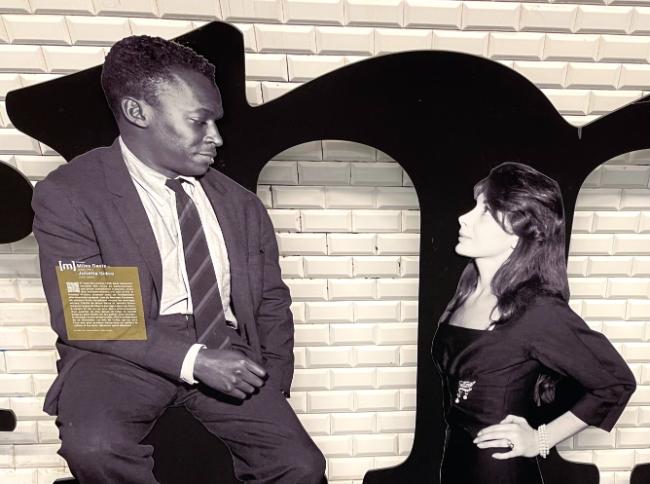
Miles Davis and Juliette Gréco. © Meredith Mullins
Amélie Nothomb
In 2007, Belgian Amélie Nothomb was awarded Le Prix de Flore for her 16th novel, Ni d’Eve ni d’Adam — not even a part of the official competitor list that year. Although older than the usual young and emerging authors for which the prize was initiated, she joined the special circle of winners, who, since 1994, receive a glass inscribed with their name entitling them to a free glass of wine at the Café de Flore every day for a year. The Café des Deux Magots began giving a literary prize in the 1930s, creating a tradition that linked the literary history of the quartier to the bistrots of the left bank.
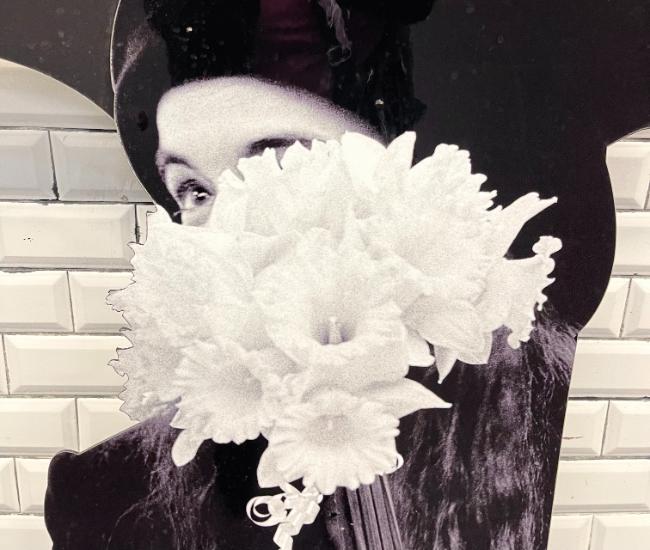
Amélie Nothomb. © Meredith Mullins
Jacques Prévert
Jacques Prévert, poet and screenwriter, was unmistakable in the streets of Saint Germain as he walked his dog. He was always recognizable with his ubiquitous cigarette and a black hat rammed down on his white hair. He was as timeless as a Robert Doisneau photograph. Prévert captured poetic “snapshots” of daily life in Saint Germain from the Luxembourg Gardens to zinc-countered bars to cafés and bookshops. He wrote: “Poetry is one of the truest and most useful descriptions of life.”

Jacques Prévert. © Meredith Mullins
Sonia Rykiel
Sonia Rykiel, sometimes called the “Queen of Knits,” opened her first boutique in Saint-Germain-des-Prés in 1968, offering comfortable yet stylish clothes and accessories, and, later, fragrances. As the exhibit story says, she “allowed the softness of knit fabrics to rub shoulders with the poetry of words,” proclaiming her love of literature. As a novelist and writer of children’s stories, the designer “espoused a type of fashion that was intimately interwoven with literature and the arts and that reflected the bohemian spirit of the streets of Saint Germain.” With her striking red hair and liberated attitude, she was as bold, elegant, sensual, unconstrained, and real as her designs.
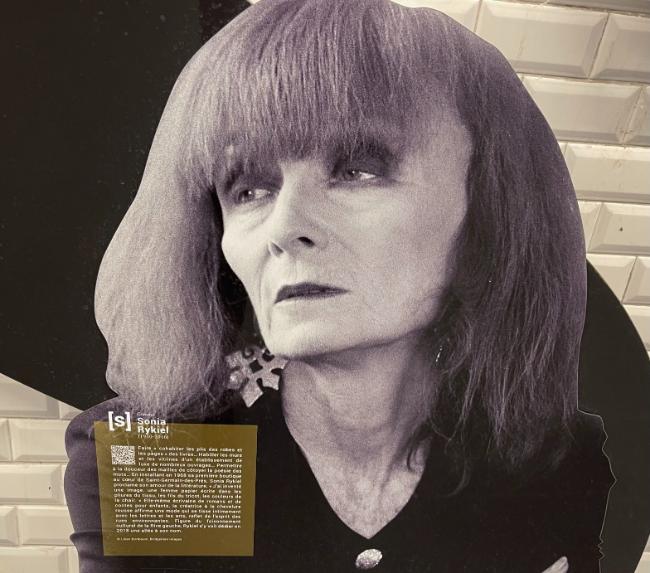
Sonia Rykiel. © Meredith Mullins
Simone de Beauvoir
Simone embodies the myth of Saint-Germain-des-Prés, with her fascination with existentialism and her intellectual rigor, which still have the power to inspire even today. Her essays, novels, and autobiographical works, such as The Second Sex and Memoirs of a Dutiful Daughter, were guided by her fight for women’s rights. In humbly summarizing her work, she said, “As for me, what I basically wanted was to talk to people by word of mouth, so to speak, in such a way that the readers could see themselves perhaps deriving some benefit.”
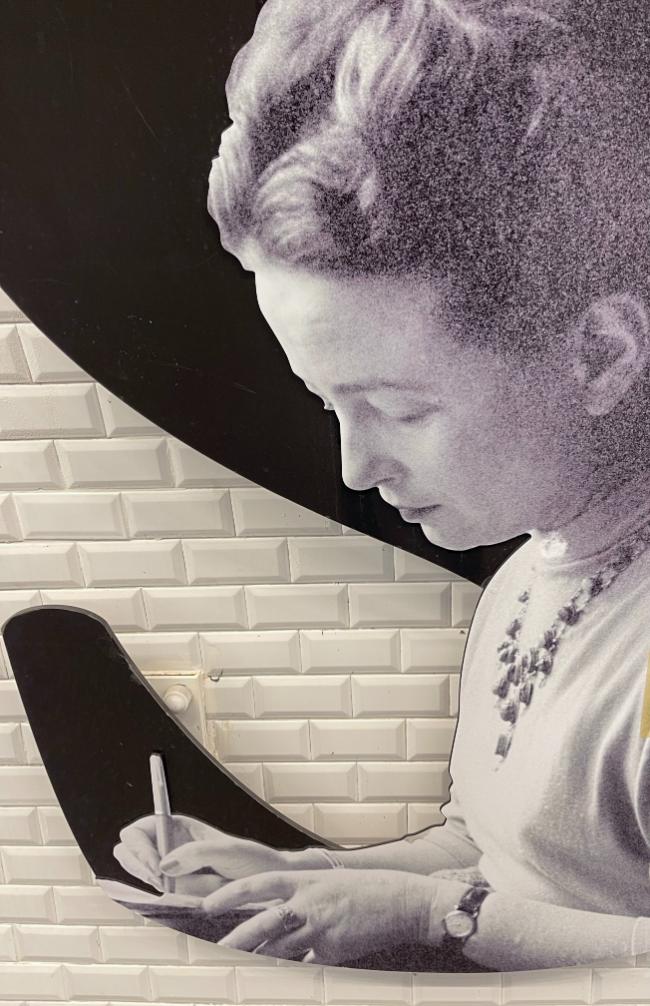
Simone de Beauvoir. © Meredith Mullins
The History of the Saint-Germain-des-Prés Station
The metro station (on Line 4) was opened in 1910 and was named after the Place de Saint Germain and the Eglise Saint-Germain-des-Prés, which was dedicated in 558, making it the oldest church in Paris. The station platforms were modernized in 2019, with automatic doors to the trains.
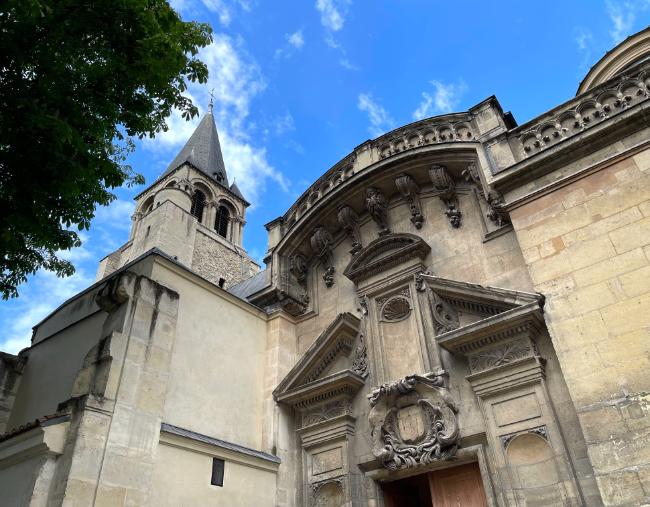
The Saint-Germain-des-Prés church rises next to the metro entrance. © Meredith Mullins
The church is a dominant feature next to the station, as is the timeless cobblestone street between the church and the neighboring Café des Deux Magots, a magnet for literati past and present (as well as hordes of tourists!). Just a little further west on the boulevard Saint Germain are three other famous literary cafés — the Brasserie Lipp (once frequented by Hemmingway, Cocteau, Verlaine, and Apollinaire), the Café de Flore (a haven for writers, publishers, artists, and politicians, including Picasso, Camus, Vian, and Bataille), and the more modest Café Rouquet (once a hangout for writer/artist Ted Joans, among others).
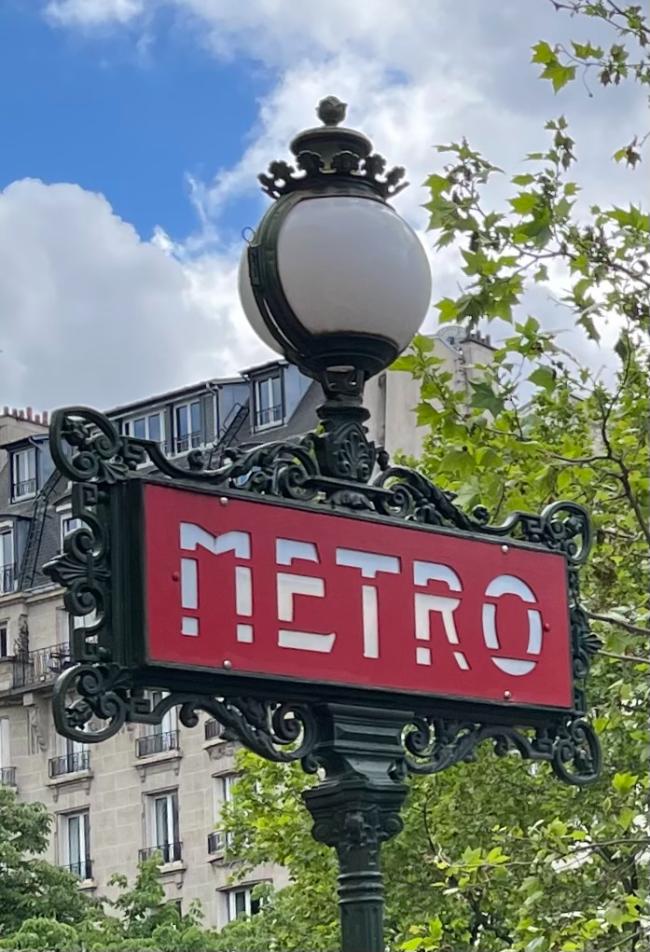
One of the last remaining cast iron metro signs by Val d’Osne foundry with candelabra lamp by Dervaux. © Meredith Mullins
The elegant cast iron sign at the metro entrance by the Val d’Osne foundry with lamp designed by Dervaux is one of a few remaining in Paris. And the gardens around the church are perfect for a quiet moment in this bustling arrondissement.
Whether you’re above ground or below, you can feel the history of this area. You may even believe that you could walk past Prévert and his dog at any moment or see Miles Davis stepping out into the dawn light after an evening playing from deep inside his soul to his lover Juliette in his favorite jazz club. The moments are easy to imagine.
For RATP’s French audio and English translation of the Legend of Saint-German-des-Prés exhibit, click here.
Lead photo credit : Saint-Germain-des-Prés metro. © Meredith Mullins
Share to: Facebook Twitter LinkedIn Email
More in Metro, Metro magic, st germain des pres
Related Posts
REPLY
REPLY