
19th Century French Women Photographers

This is the latest in a series of photo essays on early French photographers
While 19th-century British women photographers like Julia Margaret Cameron and Anna Atkins generally confined their work to domestic scenes and botanical subjects, albeit imaginatively so, French women photographers shot a broader range of subjects in this era.
Three in particular held their own in a profession dominated by men.
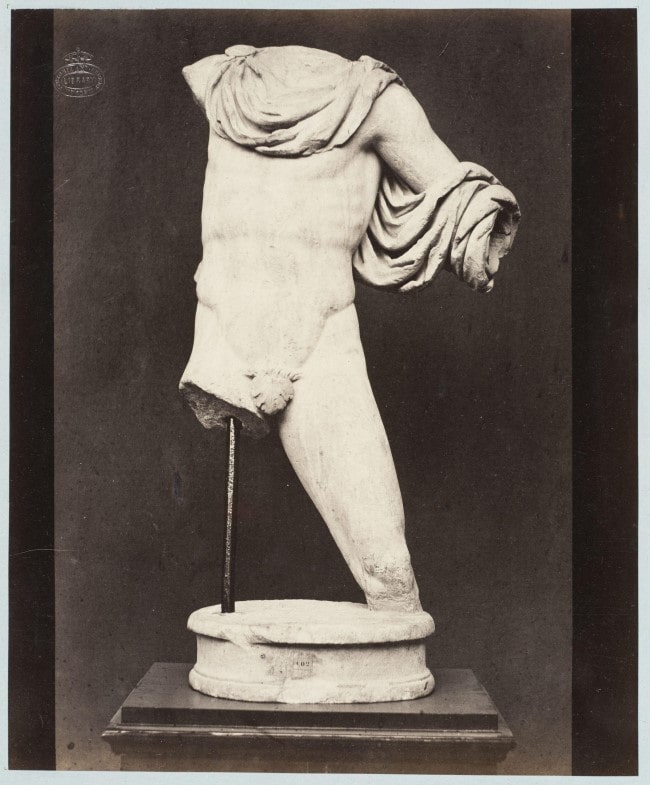
Louise Laffon (1828–1885) was one of the first female professional photographers in France. She had a studio in Paris between 1859 and 1876. Her focus was on sculpture but her photographs read more as portraits than still lifes. The play of light and shadow on her subjects seems to bring them to life.
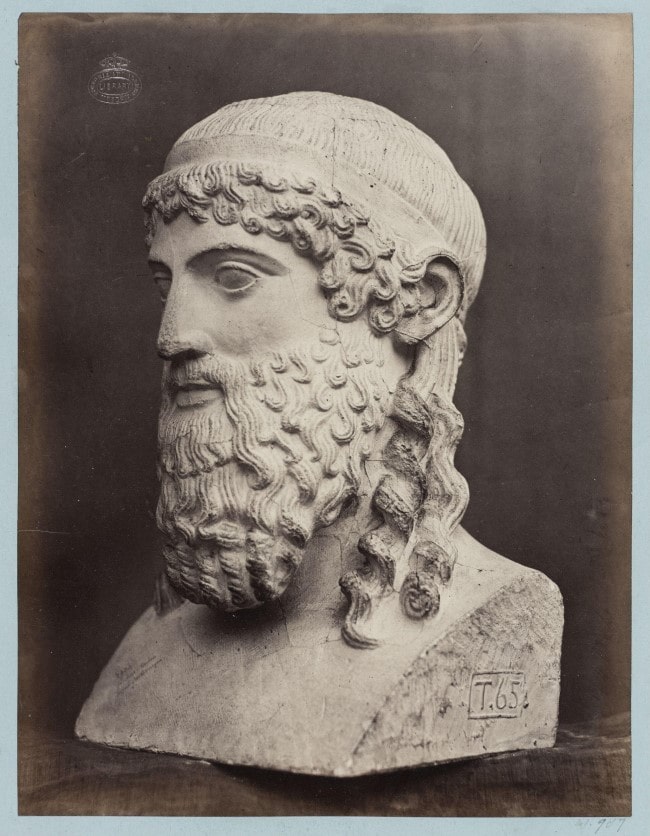
A stone bust photographed by Louise Laffon
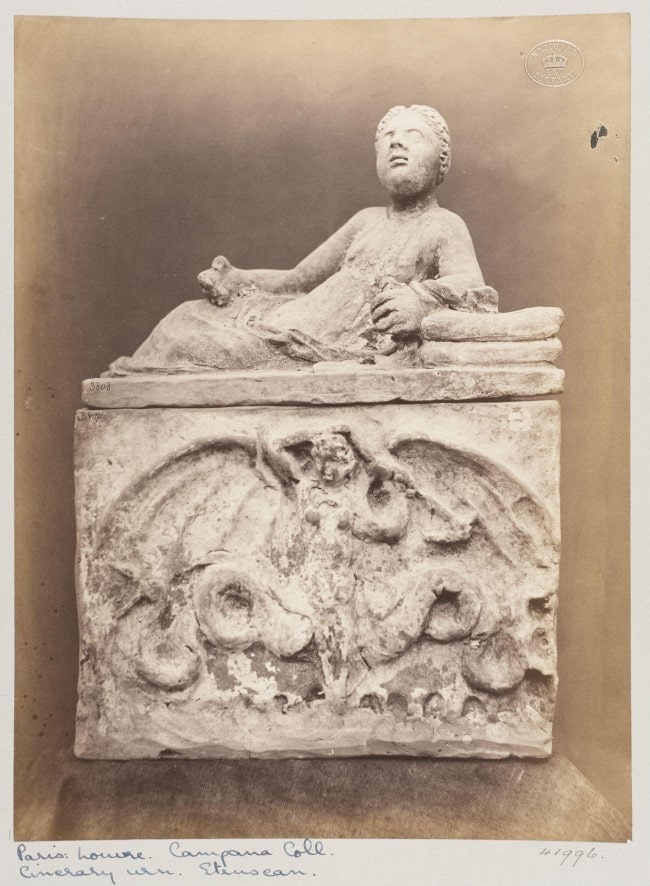
Child posing on a block of stone, photographed by Louise Laffon
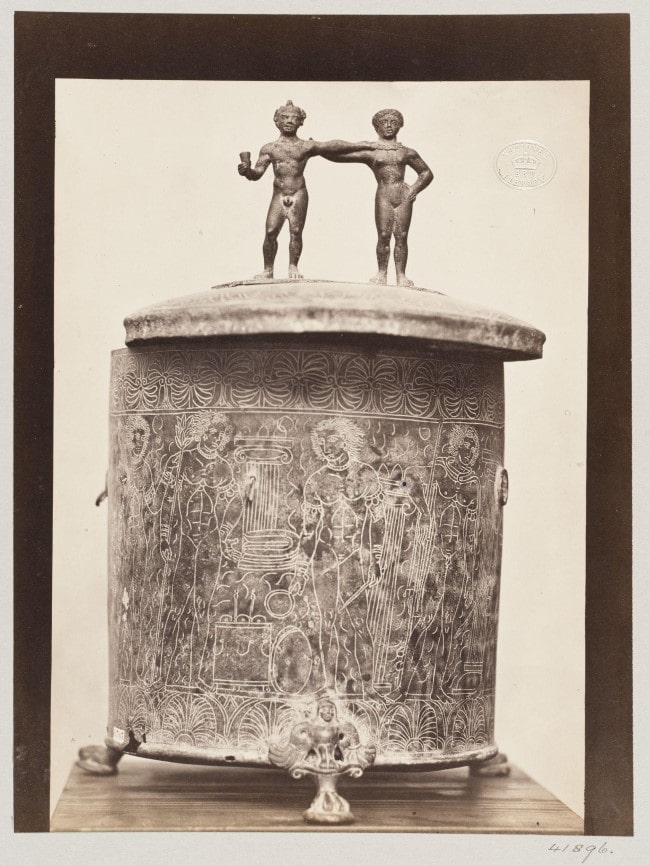
Stone container statue, photographed by Louise Laffon
Geneviève Disdéri learned photography from Nicéphore Nièpce. She shared a photo studio with her husband in Brest from 1842-52 but then established her own studio in Brest until 1872 and in Paris thereafter. Disdéri’s studio portraits supported her business but her main interest was in architectural photography. Her architectural images are strongly rendered and utterly memorable. She can take in a capacious scene while, at the same time, finding the anomalous detail that makes it come alive.
The photo below is the perfect example of Disdéri’s talent. It combines three groups: the sculptures at the top, the three in the niche, and the group of six people that pose in front of them. Each group is complemented perfectly by the other and contains an apparently random cross-selection of humanity: old and young, female and male, solemn and playful. Capturing all three groups in one image heightens the humanity in each group and, despite the cemetery setting, results in an image that is full of life.
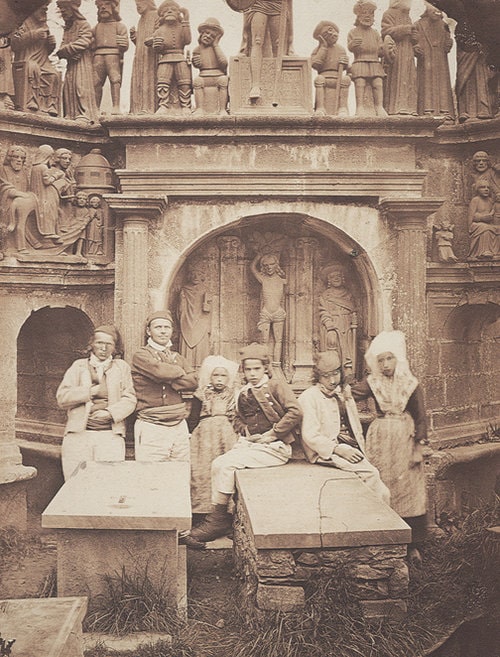
Picture of a group of men and children, photographed by Geneviève Disdéri
Lydie Bonfils (1837-1918) opened a photographic studio in Beirut in 1867 with her husband Félix. From Beirut, they traveled together to Egypt, Palestine, Syria, Jordan, Greece, and Turkey, producing tens of thousands of studio portraits and landscapes, and compiling one of the most extensive visual anthologies of the Middle East. Félix died in 1885 but Lydie continued to photograph in Beirut until 1916 when the onset of the First World War forced her to return to France.
Most of the Bonfils Studio’s landscapes have been attributed to Felix, although contemporary accounts indicate that Lydie shot many of them. But the studio portraits of native women were hers, since native women were not permitted to pose for men.
These portraits are Lydie’s triumph. Intimate and masterful, the women’s personalities come through clearly, even though they are masked. In my opinion, her portraits rival those of Nadar.
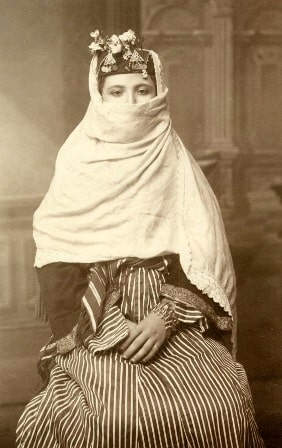
A young woman’s portrait by Lydie Bonfils
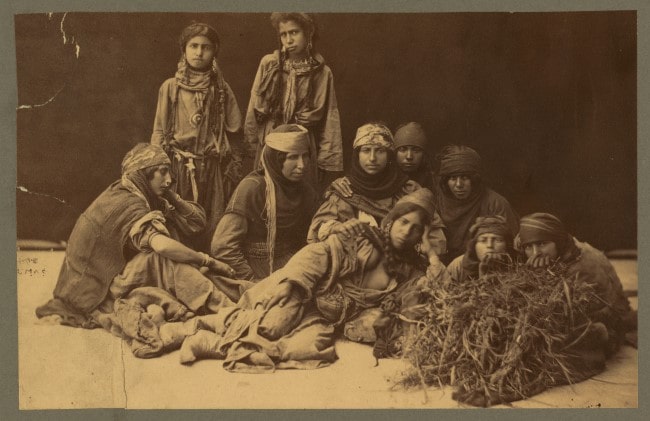
Group of bedouin women huddled together, photographed by Lydie Bonfils
Lead photo credit : Sculpture photographed by Louise Laffon
Share to: Facebook Twitter LinkedIn Email
More in 19th century, Art, artist, French photographers, French photography, Gallieries, photography, photography in Paris
Related Posts
By Fern Nesson