
Metro Magic: You Say Potato, I Say Parmentier
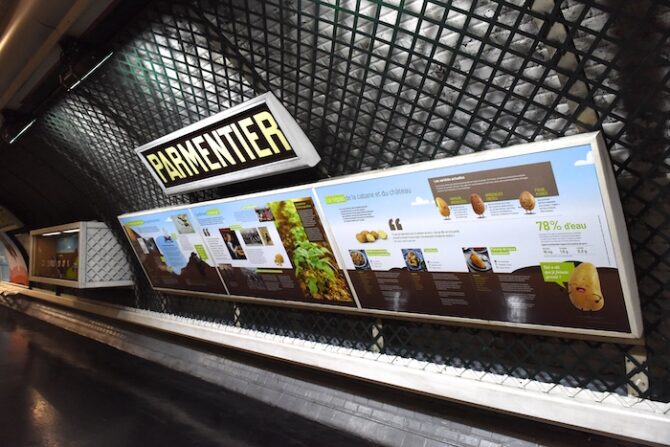
This is the first in a monthly series of stories about the wonders of the Paris Metro System.
You might have rumbled through the underground stop Parmentier on Métro Line 3 and caught a blurred glimpse of a potato or two — an odd decorative change from the graceful antiquities, tile frescoes, and riveted copper plates of more famous stations.
Or you might have stopped at the station to explore the neighborhood in this corner of the 11th arrondissement and lingered to study the displays featuring pomme de terre lore on the station quais.
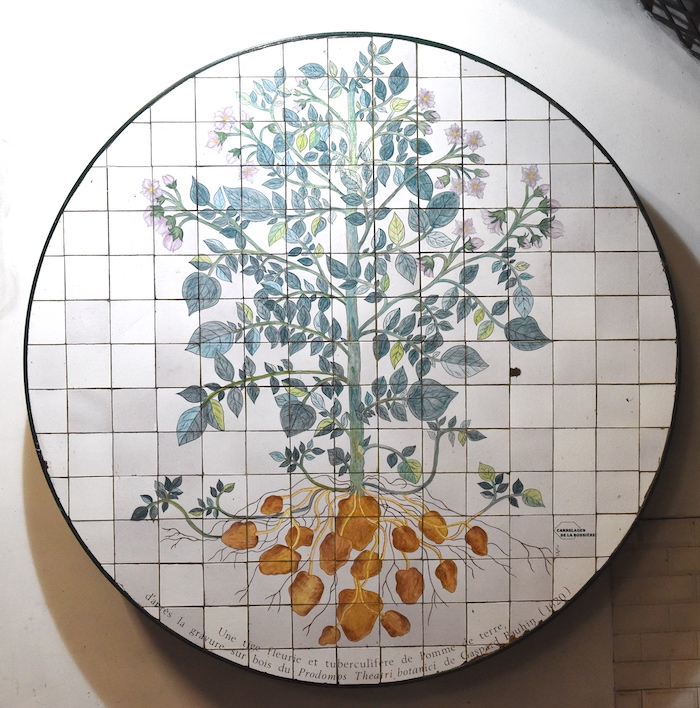
A botanical tribute to the remarkable potato. Photo © Meredith Mullins
Ah, potatoes… that amazing staple of French cuisine. All this potato talk may prompt visions of French fries or mashed potatoes dancing in your head. But perhaps you’re wondering — what do these tubers have to do with this particular metro station? How did this station get its name?
The Potato Man: Parmentier
Who was Parmentier?
- A health food promoter
- A serious scientist
- A hobnobber with celebrities and royalty
- A master marketer
- All of the above
The answer for such a complex character is, of course, “All of the Above” … and more.
August-Antoine Parmentier (1737–1813) was curious about all things scientific. He learned Latin by age 13 and had a passion for botany, agronomy, and nutrition. He became a pharmacist by trade; but, while in the army, he was captured by the Prussians during the Seven Years War.
During his imprisonment, his diet consisted almost solely of potatoes. To his surprise, he realized the tuber must be nutritious because he stayed healthy. Also to his surprise, he discovered that they were pretty darn tasty.
When he was released and returned to Paris, he made it his mission to alert the French to the benefits of the potato.

Statue in the metro station of Parmentier spreading the potato word (by Albert Roze). Photo © Meredith Mullins
Potato History
The cultural heritage of the potato in France did not have an auspicious beginning.
Potato-less cuisine was the norm for the French prior to 1785. While some parts of the world had been introduced to potatoes for many years (or thousands of years in its homeland Peru), the French did not embrace the potato’s virtues.
Potatoes were considered, at best, food for farm animals. At worst, people believed the underground tubers caused leprosy.
Parmentier did research and wrote papers, with seductive titles such as “Inquiry into Nourishing Vegetables that in Times of Necessity Could Be Substituted for Ordinary Food.”
When the papers didn’t quite convince the public, he used his master marketing skills.
He planted a field of potatoes and posted guards so that people would think the plants were valuable. He was also clever enough to give the guards a night off so that people could steal the plants and begin to grow them as the valuable treasures they were.
He hosted sumptuous dinner parties for the Paris notables (including Benjamin Franklin) that featured potato dishes for their dining pleasure.
For his final marketing push, he gave bouquets of potato blossoms to the king and queen (Louis XVI and Marie Antoinette). He won their favor, resulting in a royal decree that the potato was now an acceptable vegetable in France.
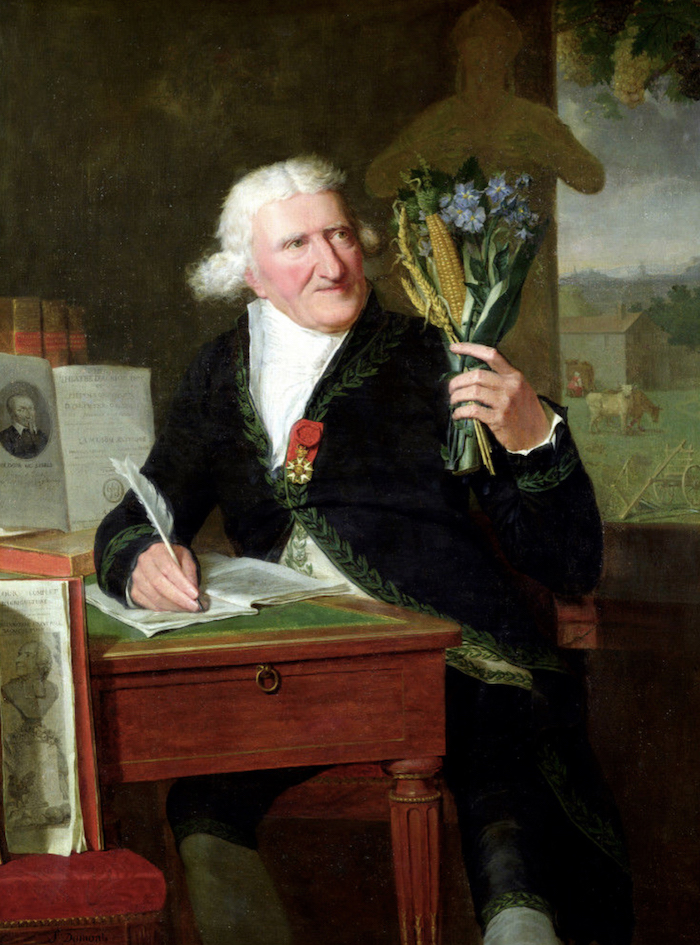
A master marketer and passionate scientist. Painting by François Dumont hanging at Château Versailles. Photo © Meredith Mullins
A Rich Resource
Annabelle, Amandine, Belle de Fontenay, Charlotte, Chérie, Ratte, Roseval, Bintje, Caesar, Manon, Marabel
These are not starlet stage names. They are the names of just a few of the varieties of potato grown in France.
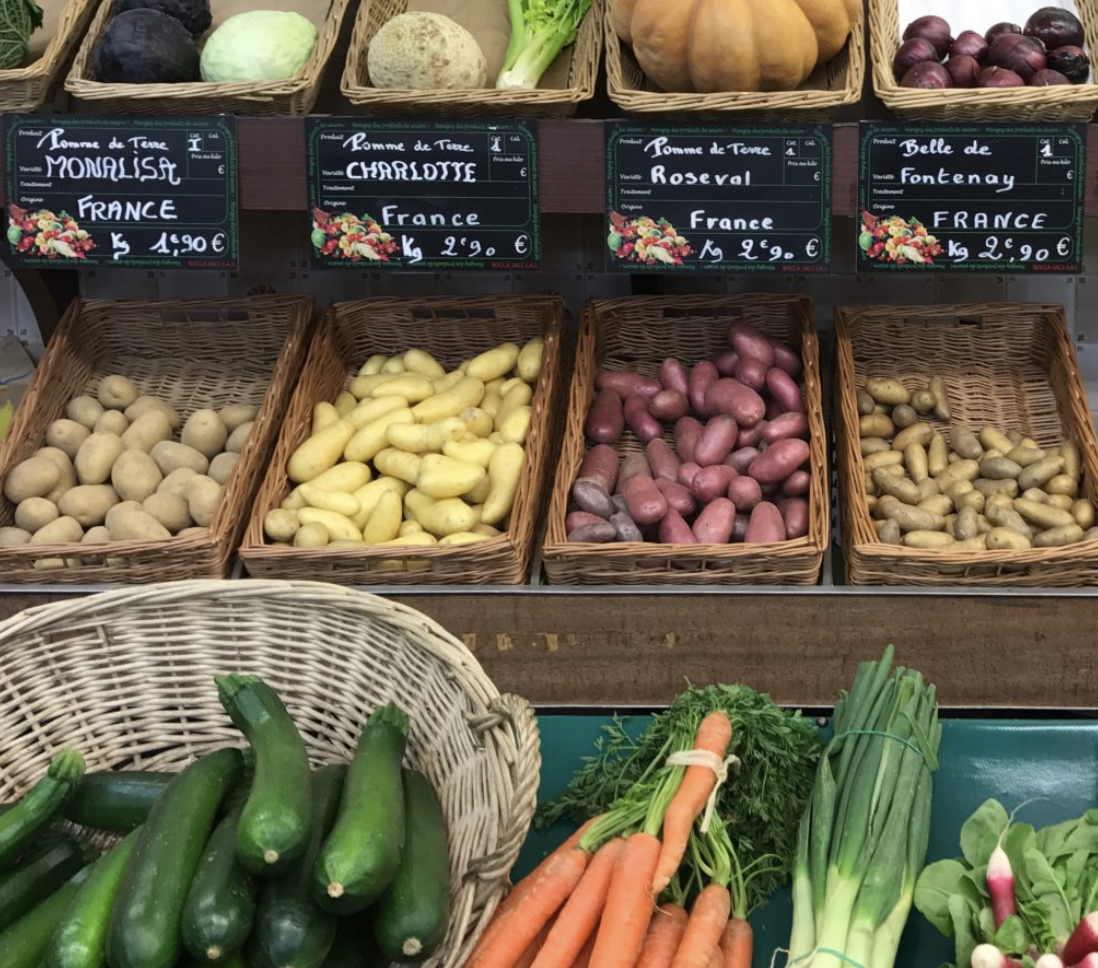
Potatoes take their rightful place in French markets. Photo © Meredith Mullins
Thanks to Parmentier’s research, we now know that potatoes are rich in vitamins and minerals, particularly Vitamins B and C, magnesium, and potassium.
And because of Parmentier’s tireless work on behalf of the potato, France now produces 5-6 million tons of potatoes each year and exports more than 2 million tons to the world.
His grave in the Père-Lachaise Cemetery is ringed with potato plants and, almost always, has a few potatoes placed on the ledges of the stone as a tribute.
Friends with the Potato
“The potato has now none but friends,” Parmentier wrote in one of his last books.
The friendships are lasting. Today, most everyone in France (and beyond) is a friend of the potato, as we munch our French fries, new potatoes bathed in butter and herbs, and Parmentier dishes (such as Hachis Parmentier).
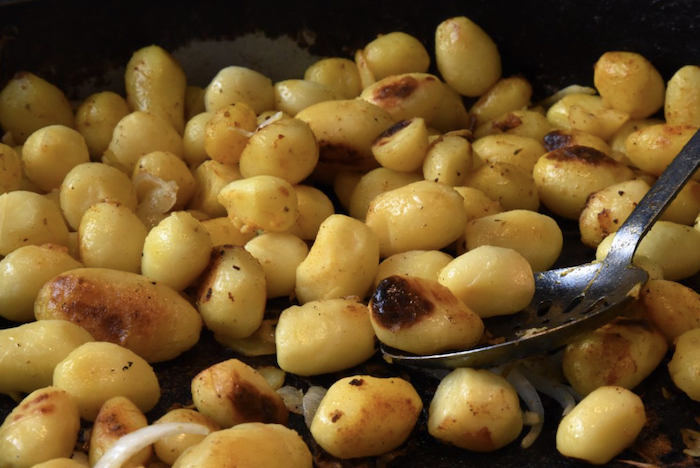
Who can resist roasted potatoes? Photo © Meredith Mullins
The metro displays at Parmentier provide a fascinating history, full of potato facts.
Five Fun Metro Potato Facts
- A potato is 78% water
- The potato is in the same family as the tomato and the eggplant.
- A potato plant can produce between 10 and 20 potatoes.
- The Incas stored their potatoes from two to 20 years.
- There are more than 6000 varieties of potatoes in the world; France grows more than 220 of those.
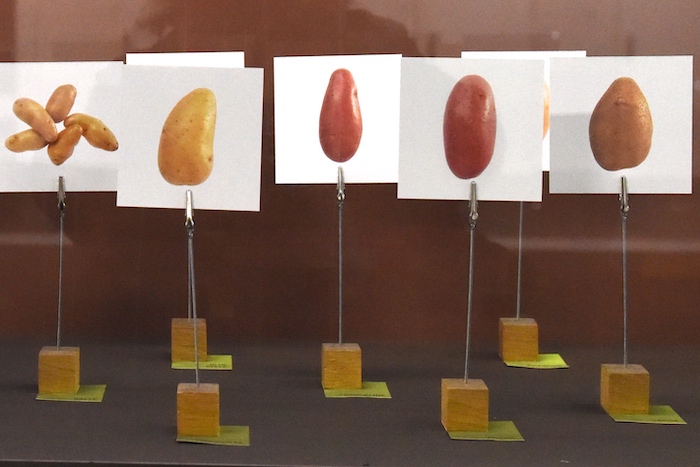
Some of France’s potato varieties on display at Parmentier metro. Photo © Meredith Mullins
In the metro display, you will also find recipes for traditional French potato dishes such as Salade aux pommes de terre croustillantes, tartiflette (a delicious, cholesterol-challenging combination of potatoes, cheese, bacon, onions, white wine, and butter), and pommes de terre hasselback (a marriage of potatoes, herbs, and spices).
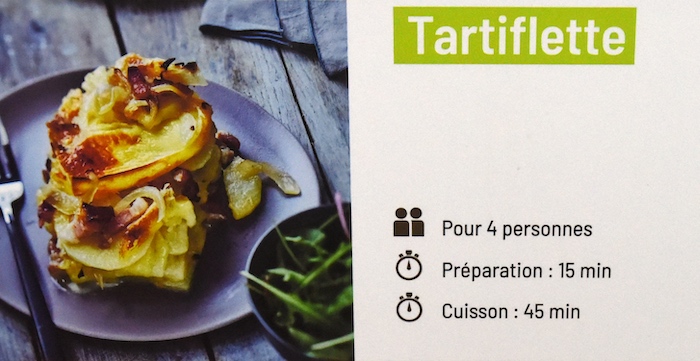
Tartiflette recipe at the station. Photo © Meredith Mullins
And you’ll get the definitive answer to the age-old question: Is the potato a vegetable or a starch?
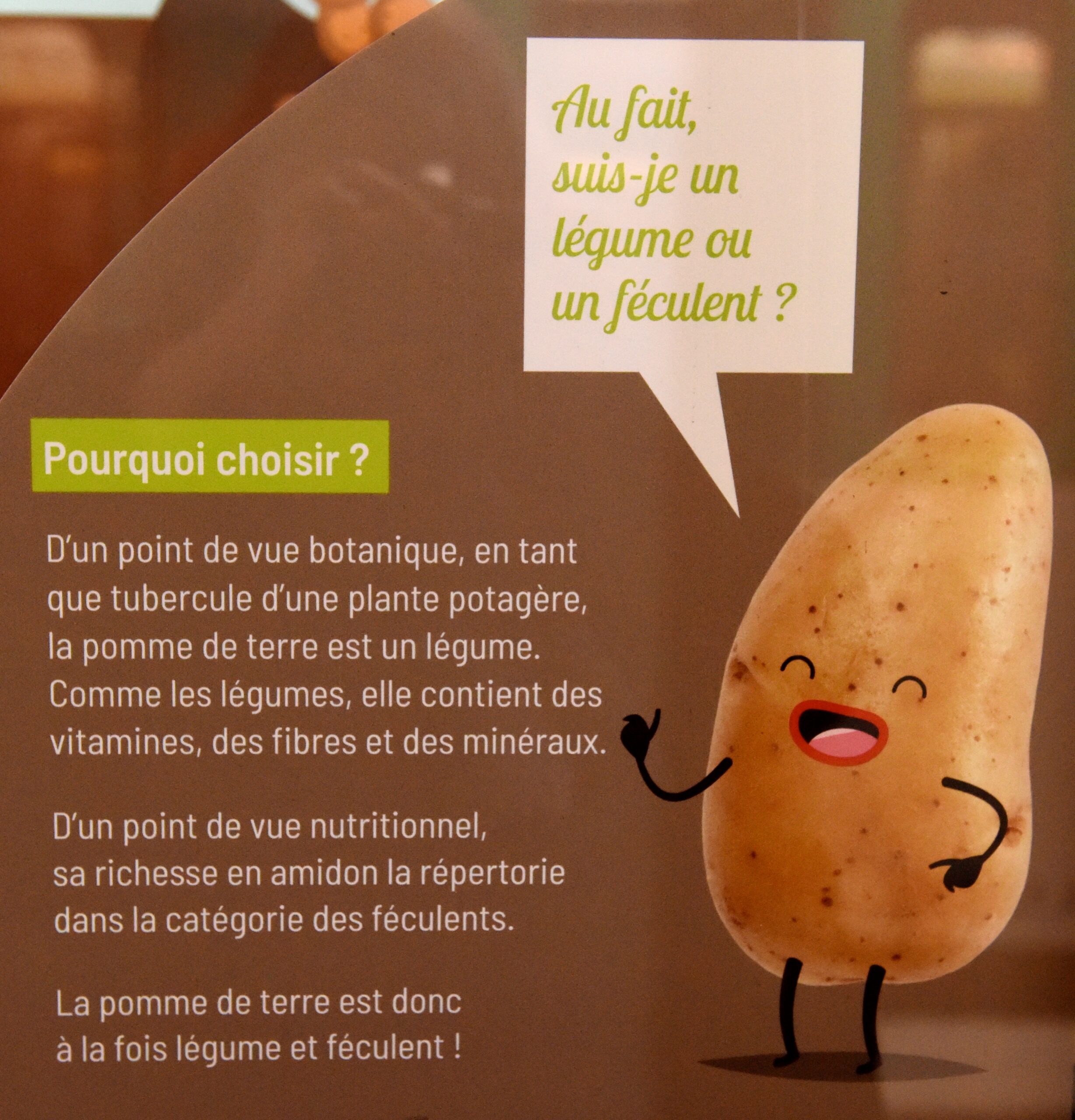
Photo © Meredith Mullins
What better reason to discover the metro magic of Parmentier.
Lead photo credit : Caption: Métro Parmentier—the potato station. Photo © Meredith Mullins
Share to: Facebook Twitter LinkedIn Email
More in Metro magic, Paris metro, train
Related Posts



REPLY
REPLY