
Metro Magic: Château Rouge, A Cultural Crossroads
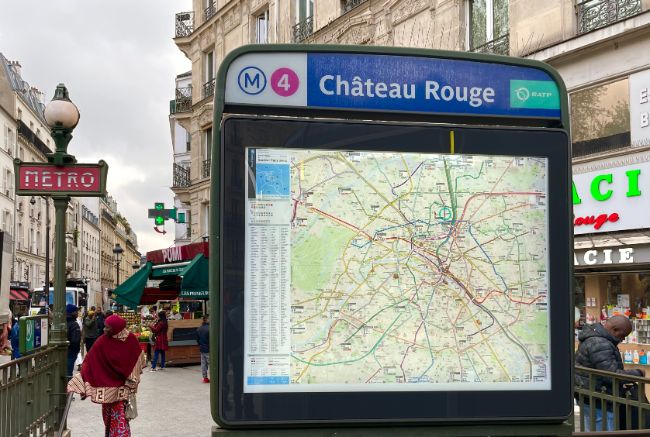
This is the eighth in a series of stories about the wonders of the Paris Metro System.
You don’t need a passport to travel to this crossroads of diverse cultures. An expanded world awaits at Château Rouge for just the price of a metro ticket.
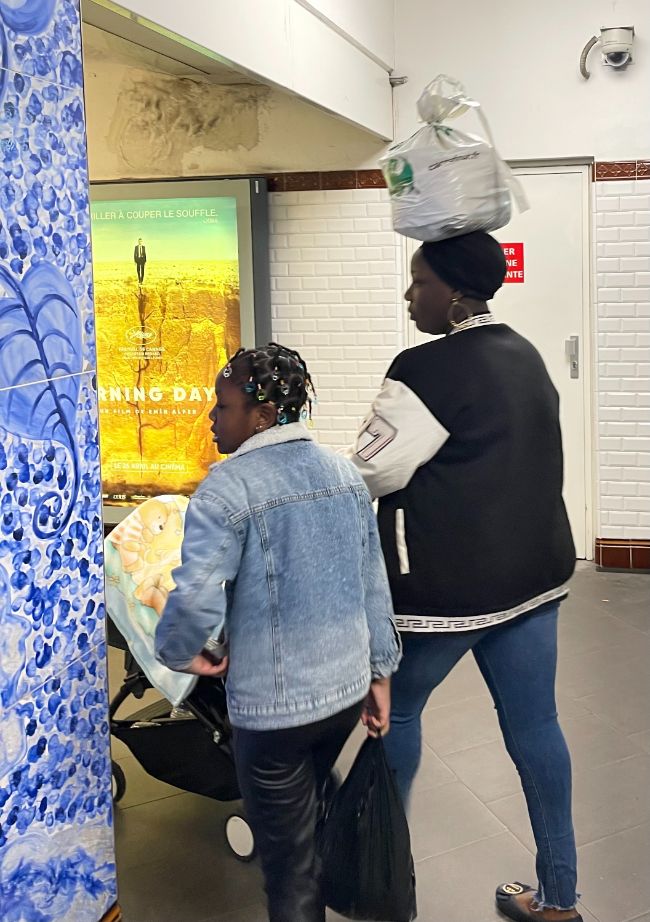
A multicultural flow of voyagers in the Château Rouge metro station. © Meredith Mullins
The red brick château built in 1760 — for which the metro station (and the area) was named — no longer exists. But vibrant moments of rouge still abound — in the vivid red chairs in the metro station and in the colorful African dress of the Goutte d’Or neighborhood locals and in the African wax cloth shop windows.
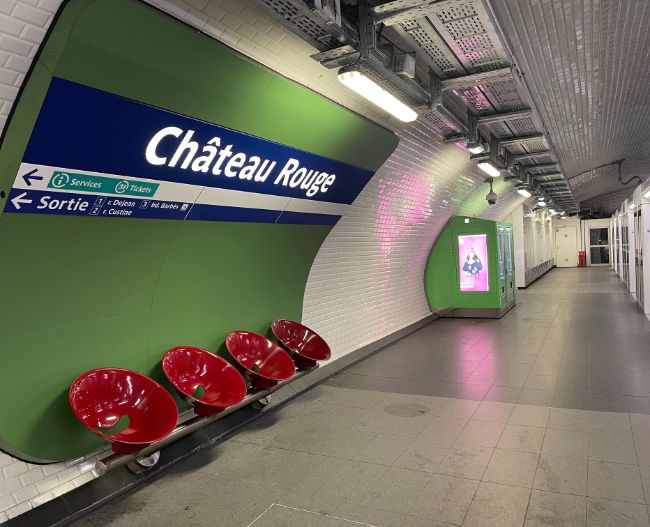
The Château Rouge station pays tribute to its namesake rouge with its colorful brick red station chairs.
The Château Rouge metro station — opened in 1904 in the 18th arrondissement as part of Line 4 — is worth visiting for many reasons. It has been called the most African of metro stations and offers highlights such as the dynamic ceramic fresco in the station ticket level and the lively Rue Dejean African market just outside. The neighborhood is called “Little Africa” for good reason.
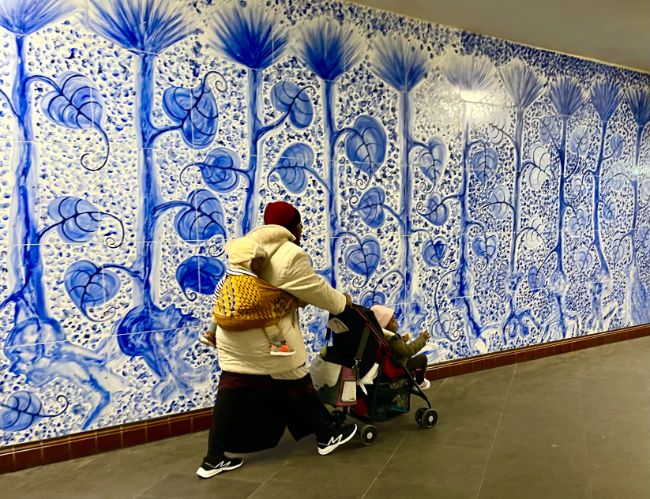
The fresco “Célébrations” in the station ticket hall. © Meredith Mullins
The Station Fresco
The station was modernized by RATP with a renovation in 2016–17. But the 2017 addition of a wall-size fresco in the ticket hall makes the station truly unique.
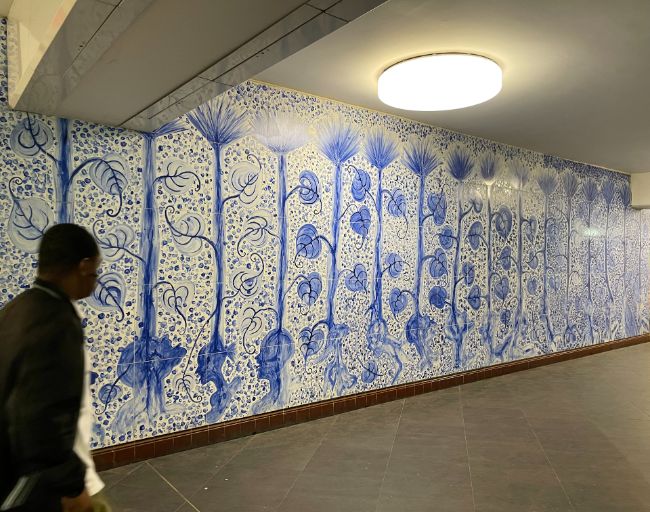
More than 20,000 travellers each day are greeted by the lively fresco. © Meredith Mullins
The blue-tiled work, entitled “Célébrations,” was created by contemporary Cameroonian artist Barthélémy Toguo, who lived for four years in the Château Rouge neighborhood after his art studies in Côte d’Ivoire, Grenoble, and Germany.
The organic coalescence of faces and vegetation symbolizes the emergence of a new world through growth — a tribute to the multiple roots of the thriving community of the quartier.
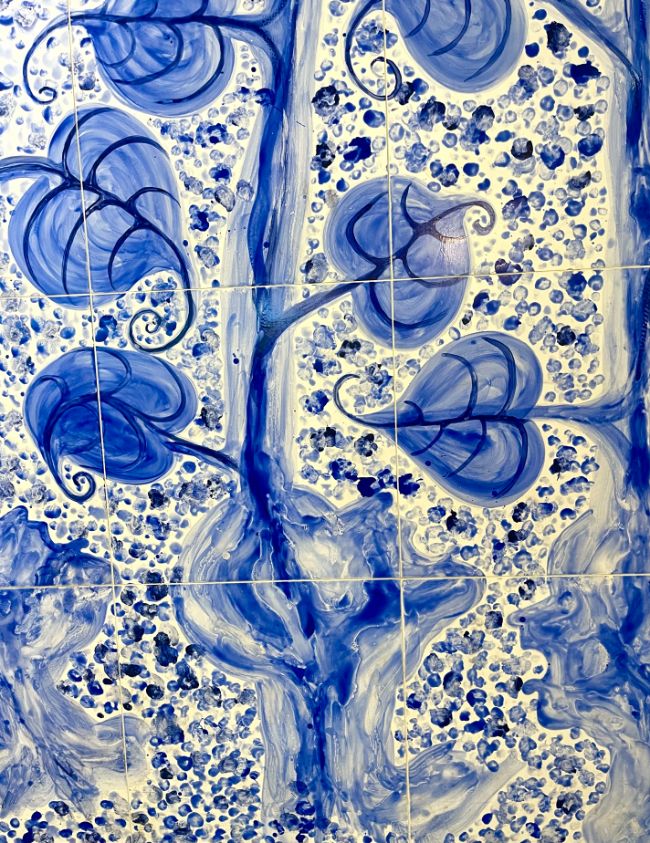
From multicultural roots, there is growth into a new world. © Meredith Mullins
Toguo was struck by the ability of the neighborhood working-class people from different backgrounds and environments to live together but maintain a connection to their countries of origin.
The blue of the 110 tiles in this 10m by 3m work is called Toguo blue and is a special paint formula created for Célébrations. The tiles were made in the Sèvres ceramic factory in the suburbs of Paris and had to be fired at 1,050 degrees centigrade to reveal the brilliance of the blue.
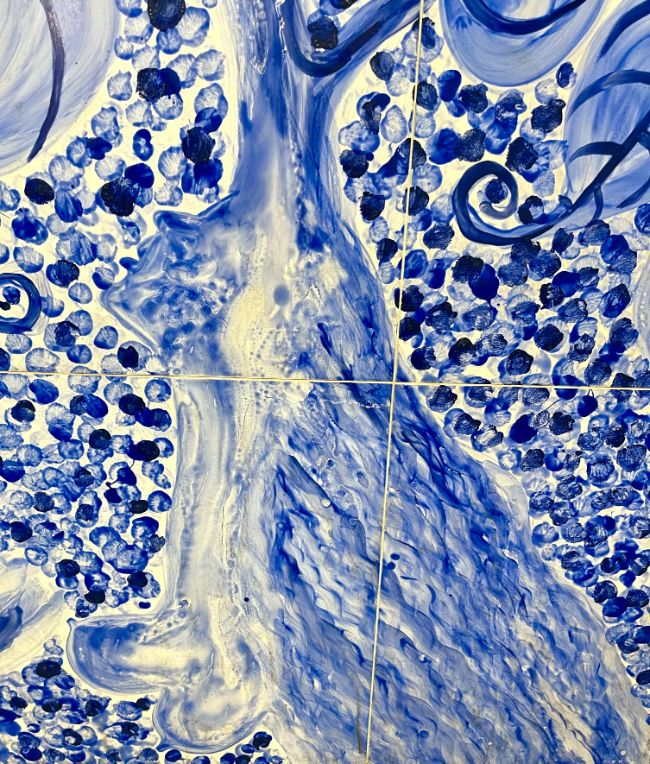
Multiple shades of Toguo blue. © Meredith Mullins
Toguo’s concept was chosen by the Marie of the 18th arrondissement from five proposals and was commissioned for 120,000 euros. The finished work now serves as an artistic gateway to an expanded world.
You can watch Toguo work in the video below.
The African Market
The Rue Dejean market is just around the corner from the metro station. It bustles with multicultural flavor, as shoppers seek out specialty food items from Africa, fresh produce, meat, and fish at very low prices.
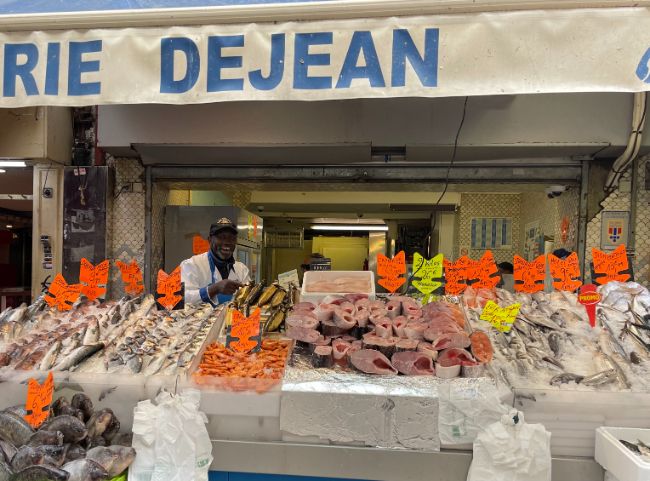
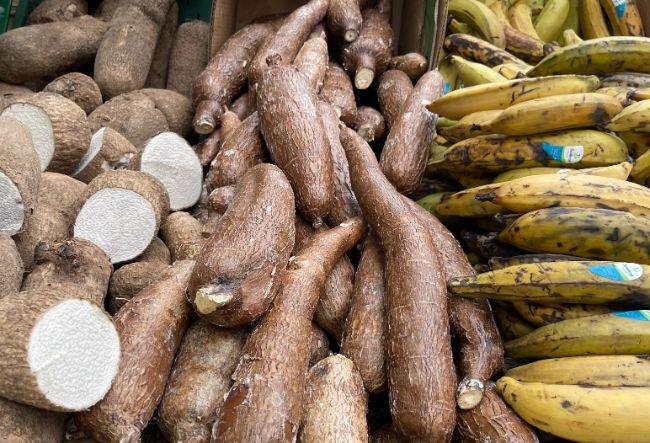
You’ll find whatever you’re looking for at this multicultural market. © Meredith Mullins
If you’re searching for okra, manioc (cassava), yams, plantains, mérou rouge, tilapia, pigs’ feet, tripe, or lamb heads, look no further. You will find them here.


Wander a bit further and you will find fabric and fashion shops, with a decided African theme. The specialty shops feature wax-batik fabrics exploding in vivid color. The designers in the area stay true to the African diaspora.
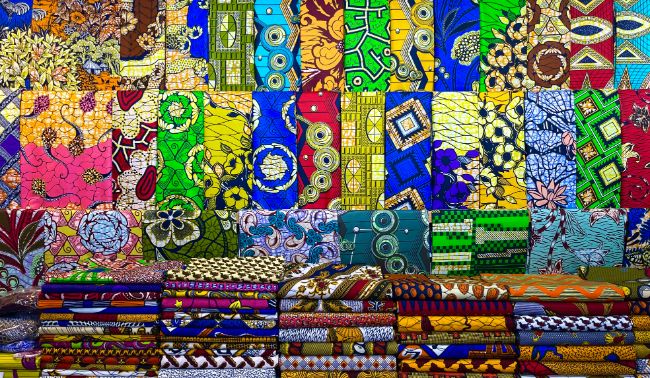
The colorful wax-batik fabric of Africa. © Meredith Mullins
If you are able to spend some flâneur time in Château Rouge, check out the following:
- Maison Château Rouge at 40bis Rue Myrha for trend-setting African fashion design
- The Institut des Cultures d’Islam for language lessons, tours, and art exhibits (56 Rue Stephenson)
- The La Louve nonprofit food co-op located at 116 Rue des Poissonniers, offering quality products from planet-friendly producers at low prices. Members work for three hours per month to keep overhead low and participate in the decisions made by the co-op.
- The headquarters of the Little Africa and Little Africa Village at 6bis Rue des Gardes—a cultural hub and creative village focusing on the African diaspora. (See also the Bonjour Paris article about the City Guide to Black Paris, a resource for restaurants, shops, artists, and interesting neighborhood venues.)
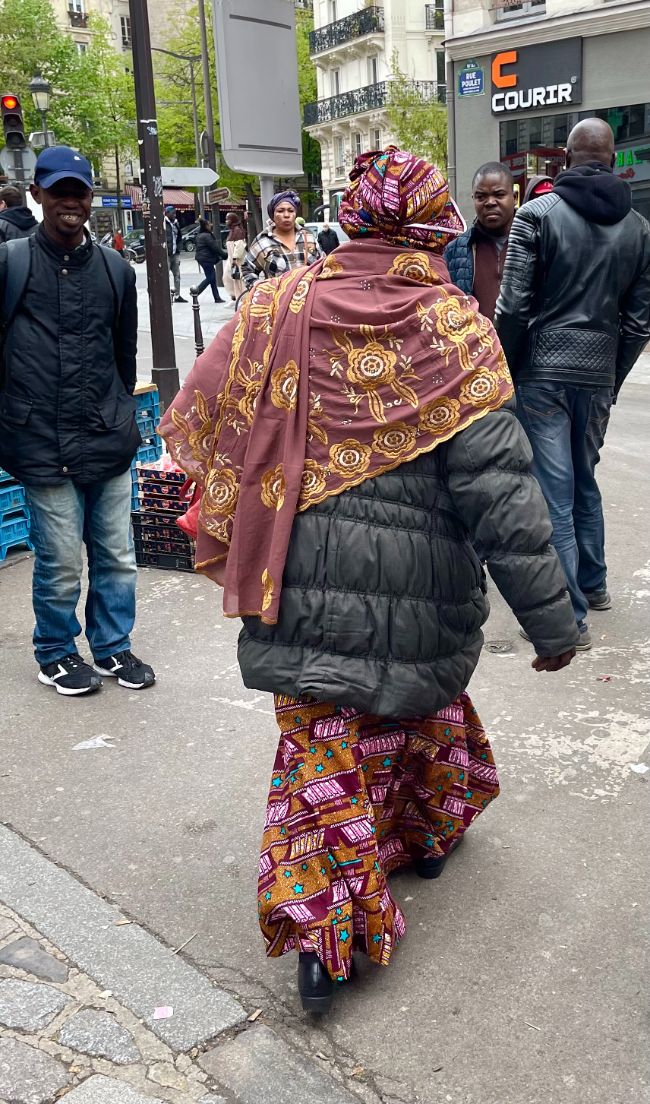
Travelling the world in one corner of Paris. © Meredith Mullins
As you experience the many countries within the small area of Château Rouge, be aware that, although the area is safer than in the past, there are still active pickpockets and mobile phone grabbers. Practice your usual city vigilance. But also take in the beauty of so many cultures living, working, and visiting this bustling neighbourhood… keeping Paris excitingly multicultural.
Lead photo credit : The Château Rouge Metro Station. © Meredith Mullins
Share to: Facebook Twitter LinkedIn Email
More in Metro magic, Paris metro
Related Posts

REPLY