
Maison Picassiette: A Mosaic Marvel in Chartres
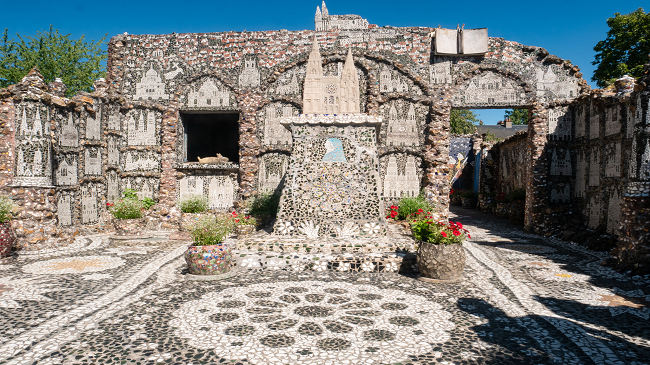
Just three kilometers away from the iconic Chartres Cathedral, you’ll find a hidden gem called the Maison Picassiette. It’s both a museum and a piece of art at the same time.
The brainchild of Raymond Isidore, this house is a portal into a universe that could’ve only been built by an artist with a unique interpretation of the world, outside of the restraints of genres, mediums or institutionalized rules. Even crazier, the tapestry for the presentation of Isidore’s artistic oeuvre was his own home, where every inch and cranny bear his artistic imprint.
Stepping into the house, visitors are welcomed with a remarkable view: a tiny single-story structure that looks like it has been dipped into a smorgasbord of colors. The walls of the house and its porch, courtyard, windows, and even the garden in the back, are awash with mosaic creations displaying a variety of motifs, textures, and scenes. What’s more, paintings, sculptures, and ceramics dot the whole property.
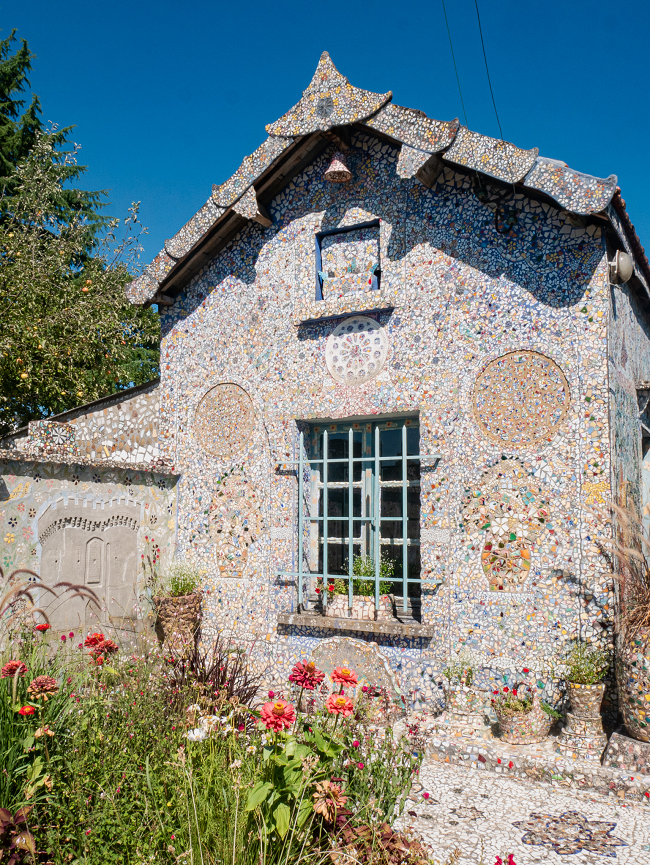
Maison Picassiette. Photo credit: Pronoti Baglary
History of the House
For a large part of his life, Isidore was employed as a sweeper at the Saint-Chéron Cemetery in Chartres, working there from 1949- 1958. In 1929, Isidore brought the piece of land where he eventually constructed a modest dwelling for himself and his wife, Adrienne Rolland, with just a living room, kitchen and bedroom.
The seeds were sown for this mosaic wonder when he began brainstorming the decor for this humble house. Isidore acquired a strange penchant for collecting pieces of glass and earthenware while out and about on his walks. He would use these to create stunning mosaics to decorate his house. He gradually became a recognizable character in the city, where people knew him for being a “Picassiette,” a portmanteau made with the words pique (meaning to take or to steal) and assiette (meaning plates in French). His side project grew into a house completely covered with his mosaics.
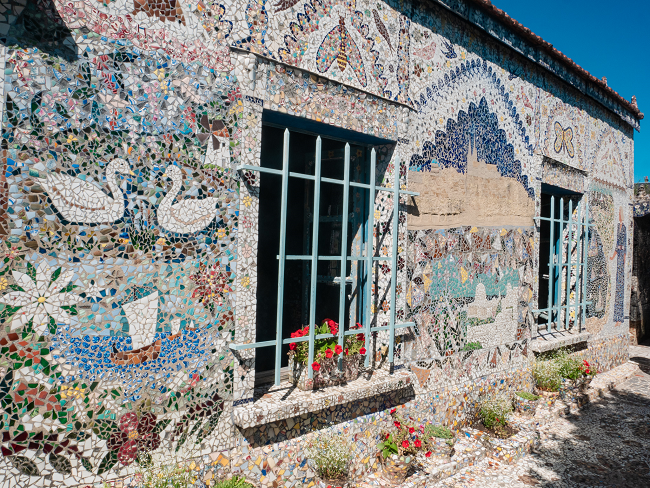
Maison Picassiette. Photo credit: Pronoti Baglary
While the idea of up-cycling broken crockery or pieces of terracotta might not appear that novel to many of us today, you can imagine how strange it might have seemed to people back then. However, both Isidore’s vision and execution were so compelling that soon it earned him a steady trickle of visitors and admirers.
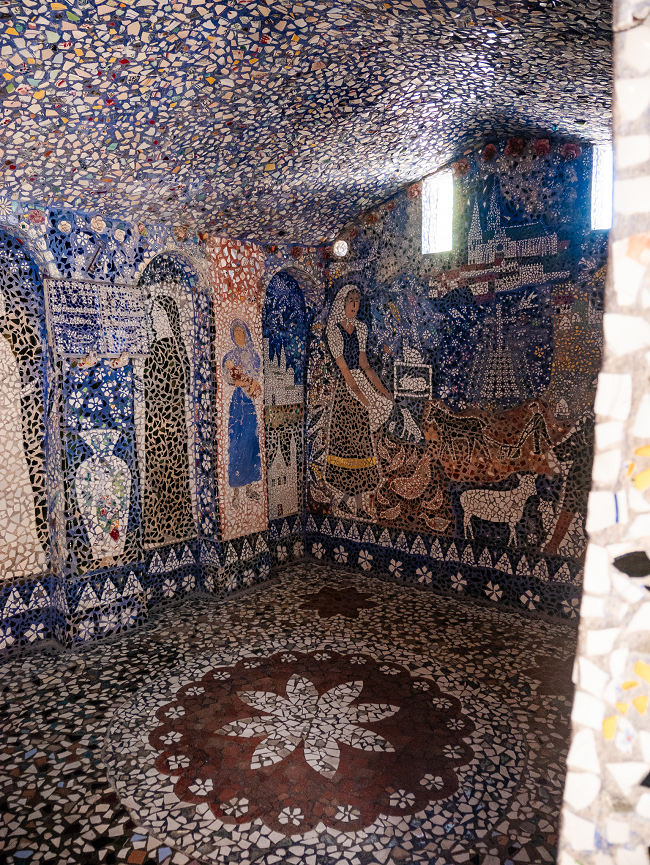
Isidore’s mental health took a dark turn during the Second World War. By then, word had already spread about his house and its unique mosaic interiors, and he started to gain fame for his creativity. From 1956, he started a renewed phase of building which saw him construct a mosaic chapel, add a garden, as well as focus more on decorating the external walls of his house. His mental health deteriorated further, and in 1964 he had to seek psychiatric help. Later the same year, he passed away.
Maison Picassiette. Photo credit: Pronoti Baglary
The Art Brut influence
Isidore’s creations were inspired by his relationship with religion, and adorned with images of Christian symbols, characters, and animals. The nearby cathedral of Chartres was a big focus. Colors and materials have been combined in unexpected ways, creating art that’s both beautiful and one-of-a-kind.
While some might find his creations quirky, and others might be struck by the brilliance of shades, sizes and diversity of materials, what’s undeniable is the artist’s dedication, and the way he related his creations to his own life. This is perhaps the most apparent in the many portraits he made of his wife. However, it’s unknown what his wife thought of her husband’s artistic endeavors.
Maison Picassiette is considered one of the foremost examples of the Art Brut movement in France. This term was coined in 1945 by the French artist Jean Dubuffet (1901-85). It roughly translates to “outsider art,” referring to art made by individuals who might not be operating within the established academic or institutional avenues of creating art – outside of the established mainstream.
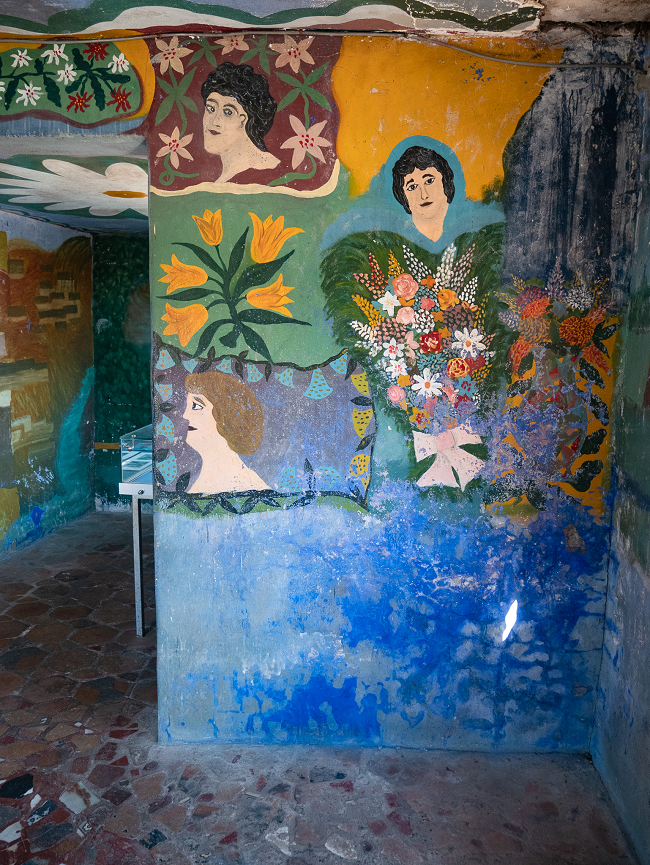
Maison Picassiette. Photo credit: Pronoti Baglary
How to Visit Maison Picassiette
Maison Picassiette was acquired by the city of Chartres in 1981, and today the site is classified as a monument of historical and architectural significance by the French Ministry of Culture.
There are regular trains between Paris’s Gare Montparnasse and Chartres, and the trip takes about 1 hour and 15 minutes. From the Chartres station, Maison Picassiette is about a 30-minute walk. The city of Chartres is well worth a visit for its beautiful architecture and history, and this mosaic marvel just outside the city center makes for a worthy stop-over during your visit.
Tickets to Maison Picassiette cost 9 euros. Booking on the Chartres Tourism website. Open from Tuesday-Sunday. Seasonal closure in the winter.
Address: Maison Picassiette , 22, rue du Repos, 28000 Chartres
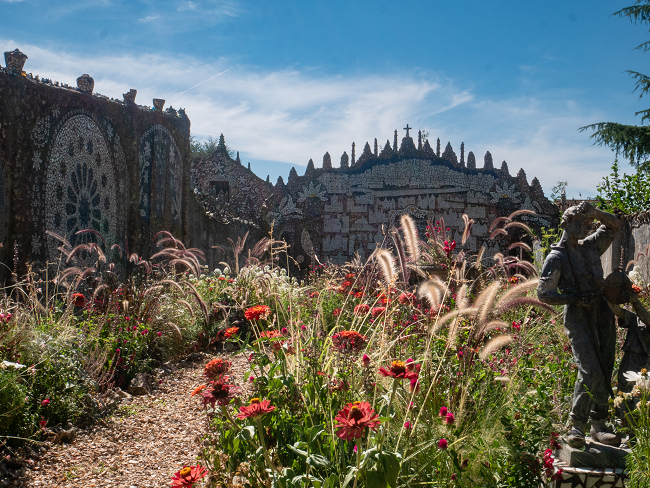
Maison Picassiette. Photo credit: Pronoti Baglary
Lead photo credit : Maison Picassiette. Photo credot: Pronoti Baglary
Share to: Facebook Twitter LinkedIn Email
More in Art, Chartres, history, Museum
Related Posts

REPLY
REPLY