
The Wallace Fountains Fete 150 Years in Paris
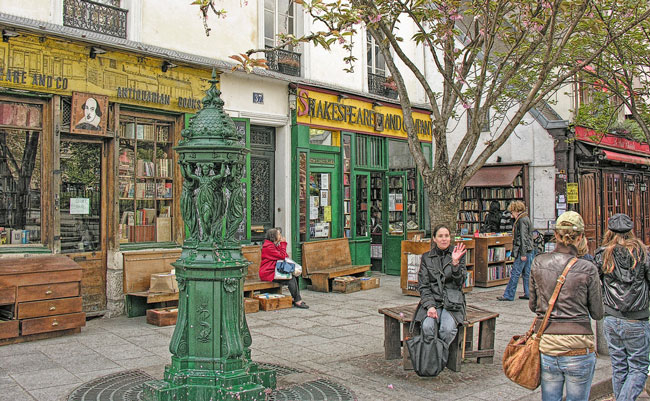

What better anniversary to celebrate after this summer of heatwaves than 150 years of the iconic and beautiful Wallace Fountains which provide refreshing drinking water to Parisians and visitors alike all over the city? And Paris will be doing just that with a number of events planned for this September.
Earlier this year, to mark the anniversary, one of the city’s 150 or so Wallace Fountains was moved from its original spot in the Place Denfert-Rochereau (14th arrondissement) to the courtyard of the Musée Carnavalet, the top history museum in Paris. Its prominence in this prestigious location will serve a historical purpose, but it will also be practical, dispensing drinking water to all who need it. Juliette Tanré-Szewczyk, from the museum’s heritage and conservation section, is keen to stress that the museum will remain true to the wishes of Richard Wallace, originator of the whole idea, that they should be both “utilitaire” and “décoratif.”
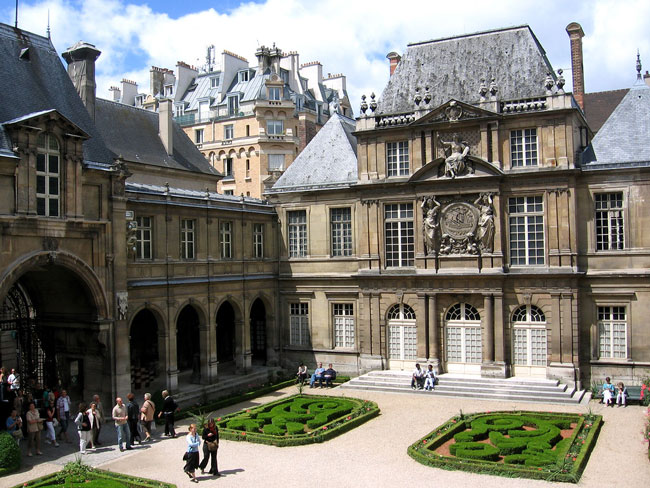
Musée Carnavalet © OliverN5 at Creative Commons
When Richard Wallace first conceived the idea in 1870, he was responding to a great need. During the Siege of Paris, aqueducts had been destroyed and ordinary Parisians were forced to pay high prices for dirty water drawn from the Seine. Wallace, a wealthy English baronet living in Paris, felt a moral obligation to provide safe, clean drinking water freely to all who needed it. He knew too that this would make the poor less reliant on alcohol, deemed safer to drink than river water, and so have health and social benefits. The first Wallace Fountain was installed 150 years ago this summer, on July 30th, 1872.
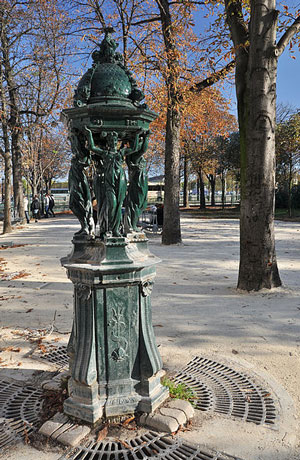
Wallace took a personal interest in the design of the fountains; they should be tall enough to be seen from a distance, easy to maintain, low enough in cost to mean that a good number could be installed and, above all, practical. A steady stream of water should flow from them, thus ensuring it would never stagnate; the water should flow at a height dogs could not reach and the caryatids – sculpted female figures – holding up the basin should be close enough together to mean that horses could not use the fountain as a water trough.
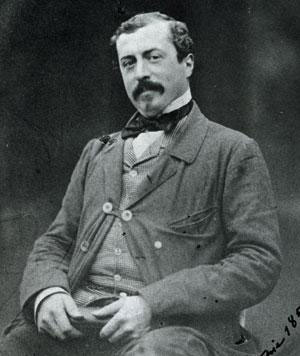
Photograph of Sir Richard Wallace (1818-1890) (Sir Richard Wallace, 1st Baronet) © Chantepie, The Wallace Collection, Public Domain
He was determined that the fountains would be not just practical, but beautiful too. They should embellir la ville, that is, embellish the city. In fact, they should be works of art and to that end he asked his friend, the sculptor Charles-Auguste Lebourg, who had worked on the Palais du Louvre and the Hôtel de Ville, to design them. Lebourg came up with four versions and the main one seen in Paris today has four caryatids holding up the dome from which the water flows into a basin, representing four virtues in keeping with Wallace’s philanthropic mission: kindness, simplicity, sobriety and charity.
Have a look next time you pass a Wallace Fountain and you will notice that each of the four figures is slightly different. You may also see two of Lebourg’s other designs around the city, a slightly smaller version, intended to be cheaper to produce and a push-button version which is found in the city’s parks and gardens.
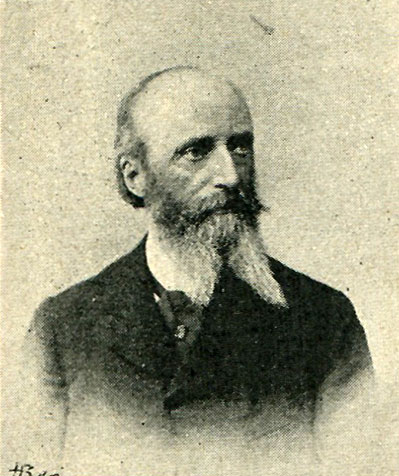
Charles-Auguste Lebourg, Public Domain, Wikimedia Commons
And, crucially, these cast-iron sculptures are almost all painted dark green, to blend in with the rest of Parisian street furniture, such as railings, lampposts and park benches. Today, the fountains are an integral part of the Paris “streetscape,” just as typical as the wide boulevards, cobbled streets, red café awnings, 19th-century lampposts and Art Nouveau metro entrances. You can spot them in every one of the 20 arrondissements, from grand settings like the Avenue des Champs Élysées to the outer edges of the city, where, because these were the poorer areas where clean water was most needed, there tend to be more of them. There is only one in the first arrondissement – in the gardens of the Palais Royal – but more than half a dozen in each of Montmartre and the 19th and 20th arrondissements.
An excellent way to enjoy the fountains, while also discovering corners of Paris, is to try one of the 22 walks published on the Société des Fontaines Wallace website, where they are available in English. Walk No. 2, for example, starts at St-Germain-des-Près, and guides you past a fountain just near the Deux Magots café, posing the question did Ernest Hemingway himself ever stop by for drink of water? (My guess is he went straight to the café for something stronger!) The walk then takes you past fountains at the Place St-Sulpice and the Rue Vavin, through the Jardin du Luxembourg, up past the Panthéon and on to one last fountain on this route at Rue de l’Estrapade in the 5th arrondissement. At each point in the itinerary, the notes point out places of interest and give fascinating background details. Among the other itineraries are tourist favorites – Montmartre, the Arc de Triomphe – and also areas you might not discover for yourself, such as Mirabeau and La Villette. It’s an absolute treasure trove of ideas for Paris-lovers and would-be flâneurs.
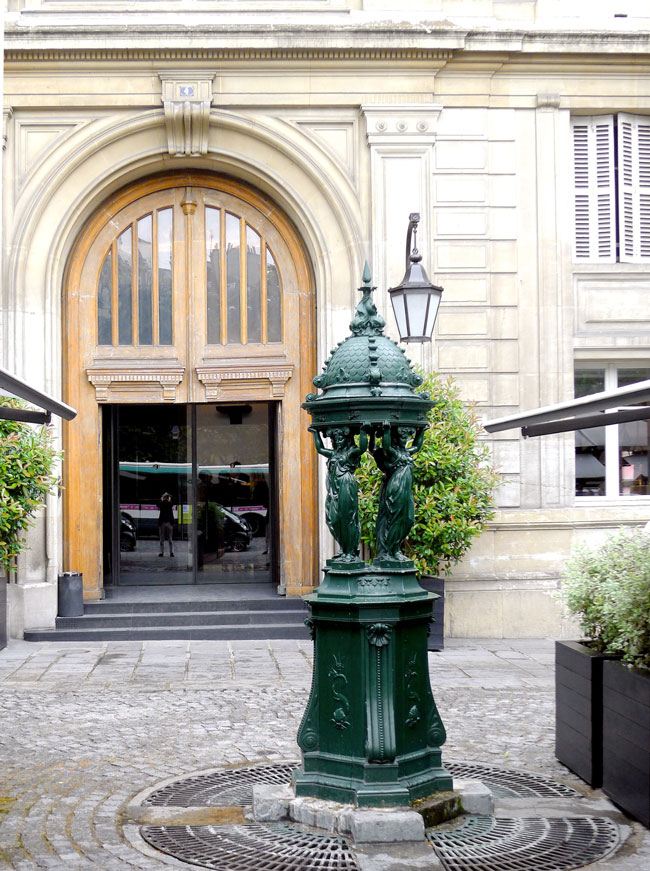
Paris VI Place Saint-Germain Wallace Fountain © Mbzt at Creative Commons
Paris is planning a number of ways to mark this anniversary, organized jointly by the city of Paris, Eau de Paris (the Paris water company), the British Embassy and the Société des Fontaines Wallace and centering on the weekend of the 24th and 25th of September. There will be an exhibition, Les 150 ans des fontaines Wallace, in the Champs Élysées gardens, near Place de la Concorde, telling the history of the Wallace Fountains and underlining their importance in the city’s heritage. And on the 22nd and 23rd of September, the Musée Carnavalet is organising four half-day talks in its Orangerie on Wallace, his philanthropy and the way his fountains stress utility and beauty in equal measure.
Paris is rightly proud of its Wallace fountains. Their beginnings were rooted in a social need and still today they provide a reliable source of clean water to everyone, including the homeless, every year from mid-March to mid-November. In recent decades they have taken on a key environmental role. The Paris water authority, Eau de Paris, recently ran an awareness campaign designed to encourage the use of the city’s public fountains in order to cut down the number of single-use plastic water bottles in circulation. In this anniversary year, we should celebrate these Parisian monuments, remembering that the fountains fulfill both of Richard Wallace’s aims. Useful? Definitely! But also a beautiful ornament in so many little corners of Paris. Have a drink to Richard Wallace next time you pass one!
Lead photo credit : Wallace Fountain in front of Shakespeare and Co © Eric Parker at Creative Commons
Share to: Facebook Twitter LinkedIn Email
More in Fountains in Paris, French fountains, Richard Wallace, Sights in Paris, wallace fountains
Related Posts

By Marian Jones
REPLY
REPLY
REPLY
REPLY
REPLY
REPLY
REPLY
REPLY
REPLY
REPLY
REPLY
REPLY