
Discover the Grand Mosque of Paris
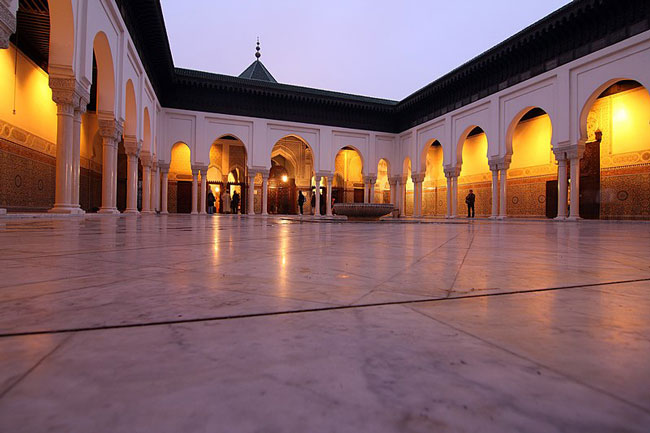

The little square in which the Paris Mosque stands is romantically named La Place du Puits de l’Ermite, or “The Square of the Hermit’s Well,” but you would never guess from standing outside the relatively plain white walls of the building what a garden of delights lies behind the entrance. Maybe word is spreading though, for the mosque, used daily as a place of Muslim worship and teaching, also attracts some 60,000 visitors a year who are keen to see inside and find out more.
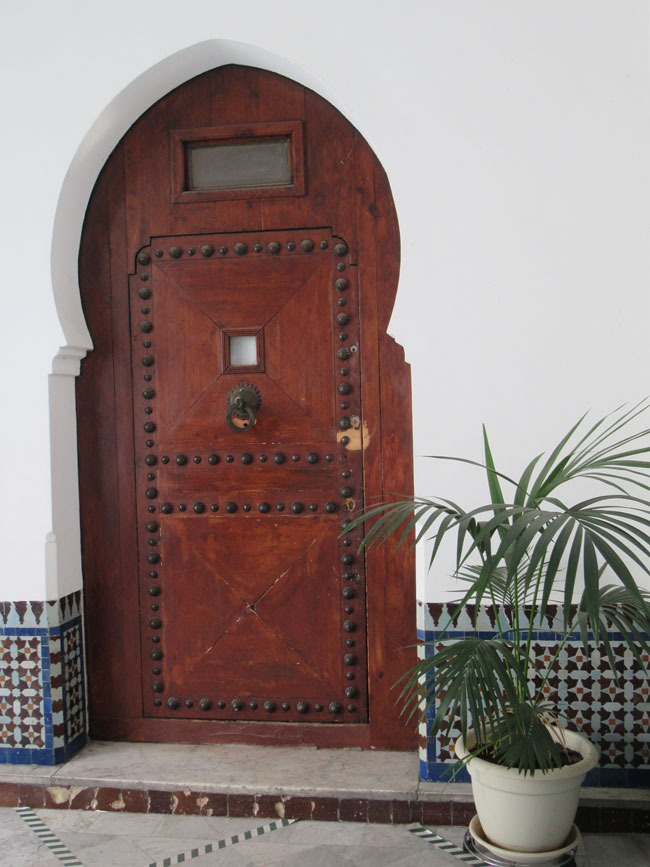
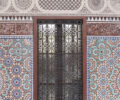
Mosque door © Marian Jones
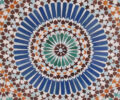
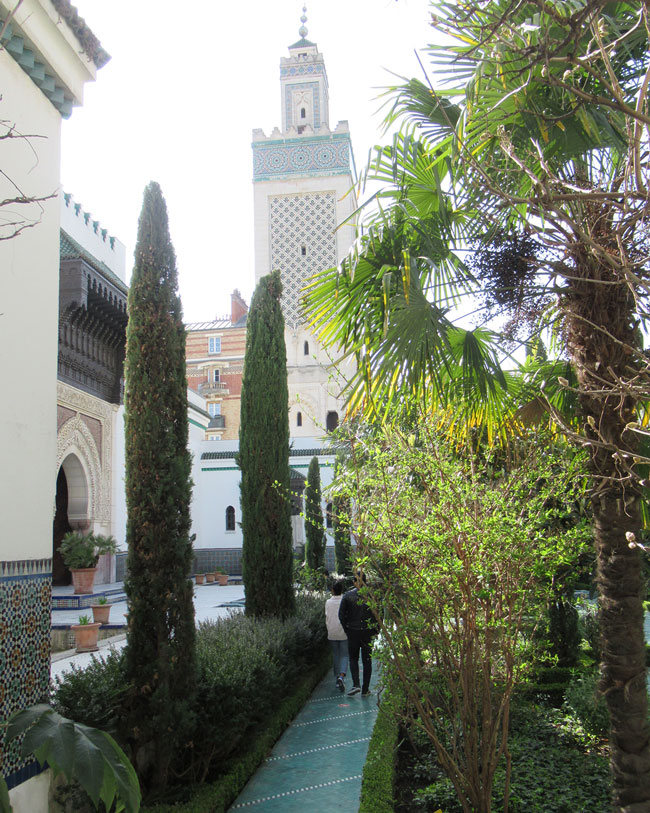
At the entrance is a heavy cedarwood door, decorated with verses from the Koran in Arabic script and the floral designs so typical of Islamic artwork. As you step inside, a vista opens up which speaks of faraway places, Moorish Spain and North Africa. The central courtyard is a little haven: white walls and archways on all four sides, enhanced by panels of decorative mosaics in calming greens and blues, their geometric patterns echoed in the decorations at the base of the many pillars and on the minaret, 33 meters tall, which can be glimpsed from various vantage points.
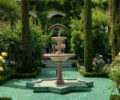
Plants create tranquillity: five palm trees symbolize the five pillars of Islam and carefully shaped fir trees provide structure. The pink marble of the pillars is echoed in the central marble basin with its fountain of water, an integral part of Islamic garden design, but functional too. Traditionally, worshippers would cleanse themselves in the courtyard before going inside to worship.
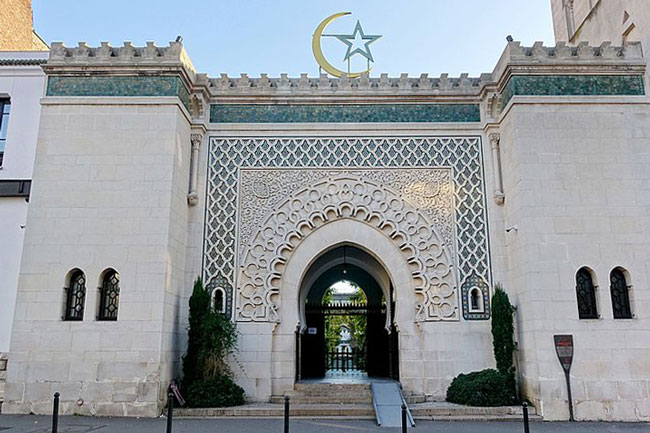
The inside of the mosque is a suite of rooms around the courtyard and the public can visit on any day but Friday or Muslim Festival Days. There is a small entrance charge – currently €3 – and then, perhaps unexpectedly, the first thing you will see is an electronic noticeboard, giving the date and time in both Arabic and Latin script and the five exact times for mandatory prayers that day, along with their names: Fajr is the dawn prayer, Dhuhr the one around midday, followed by Asr, Maghrib and Isha. Along the bottom is the mosque’s website link, used by worshippers to access the times for each day’s prayer remotely. The board sets the tone for a visit – this building is actively used on a daily basis for worship.
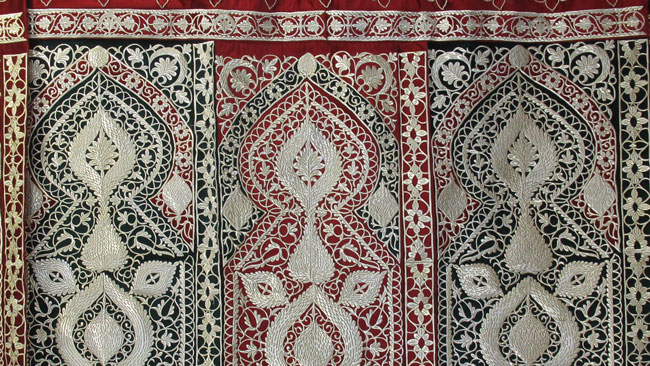
Visitors can walk around the whole complex, although they are asked not to enter the prayer hall. The library is particularly attractive, an ornate room lined with bookcases fashioned from rare woods where volumes of the Encyclopedia of Islam are kept, along with many copies of the Koran, some of them antique, many of them donated by worshippers. The overall effect is understated, much simpler and less ornamented than most churches for example, but there are precious things to be found, many of them donated at the time the mosque was built, sent by fellow Muslims from around the world. A carpet with Persian motifs running through it, lace wall-hangings with repeating geometric designs and floral patterns displayed against a dark red background, heavy, heavy doors carved from the finest cedarwood.
Out in the courtyard is a plaque which hints at the story of how the Grande Mosquée de Paris came into existence. It is in memory of the Muslims who died for France, listing their names and regiments in both Arabic and Latin script. After World War One, many felt strongly that recognition should be made of the loyalty so many Muslim soldiers had shown to France and the idea of building a mosque in Paris took hold. The authorities donated the land and 500,000 francs for the construction, an amount then augmented by donations from Muslims around the world. French architects were engaged, including the Algerian-born Maurice Mantout and a host of Moroccan craftsmen to work on the decoration. The mosque was officially opened on July 15th, 1926, in a grand ceremony attended by President Gaston Doumergue and the Sultan of Morocco, Moulay Youssef.
During World War Two, the mosque and its Muslim community played a little-known, but vital role, becoming a center for resistance during the German occupation. Si Kaddour Benghabrit, the mosque’s rector, was later awarded the Grand Cross of the Legion of Honor for leading the mosque’s actions in support of Jews fleeing the Nazis. They were given sanctuary in the little-known tunnels under the mosque, provided with false identity papers identifying them as Muslims and helped to escape to the Free Zone and beyond. In addition, a number of stranded British pilots and escaping resistance fighters were spirited to safety via the mosque. There is uncertainty about the exact numbers involved, but historians believe that at least 500 people were helped in this way.
A visit to the mosque is certainly recommended – to look around and to linger in the gorgeous little courtyard – and there are two ways to extend your visit. For women only, the hammam is available and here you can indulge in a massage, a steam bath or a range of other treatments. In fact, there are eight different packages available, all detailed on the website. Also, for everyone, there is a restaurant and tea room which you can visit after looking round, or indeed separately – there is an entrance at the back where Rue Geoffroy St-Hilaire meets Rue Daubenton. In addition to the inside room, there is a pretty little courtyard where you can enjoy a range of delicacies like mint tea, oriental pastries and couscous. Expect such delicious flavors as honey, almonds, mint and orange flower.
The Grande Mosquée is used to visitors and makes them welcome. Just remember to dress modestly, for example by choosing a long dress or loose trousers in hot weather, rather than shorts or a revealing top, and bear in mind that this is a functioning place of worship, not a museum. In fact, it is the oldest mosque in mainland France, a place to recall the sacrifice of previous generations of Muslims, but also to see how today’s Muslims are very much part of the French society in which they live. It’s somewhere to enjoy an especially beautiful little corner of Paris and perhaps to learn about a faith which is not so familiar to you. As the words of welcome on the mosque’s own website put it, here you can go on a journey, both spiritual and culinary. And I would add that you will also journey into history and into another culture, one which is key in modern Paris.
DETAILS
Grande Mosquée de Paris
2bis Place du Puits de l’Ermite, 5th
Tel: +33 (0)1 45 35 78 17
Email: [email protected]
Open to visitors every day, except Friday and Muslim holidays, from 9 am to 6 pm. The entrance fee is 3 euros.
Lead photo credit : Paris Mosque at night © Murat Çeven, Wikimedia Commons
Share to: Facebook Twitter LinkedIn Email
More in Grand Mosque, Islam, La Place du Puits de l’Ermite, Place of Worship, The Grand Mosque of Paris
Related Posts
By Marian Jones
REPLY
REPLY
REPLY
REPLY