
A New Sparkle for the Fountains of Paris
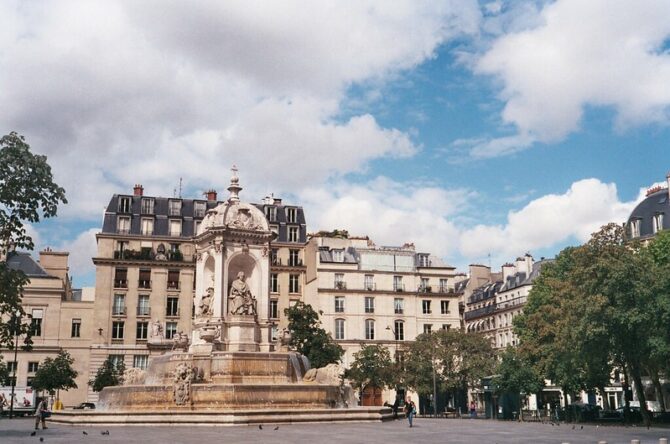

Do you use the Saint-Michel Fountain as a handy meeting place which no one can possibly miss? Do you refill your water bottle when passing a Wallace Fountain? Or pause on a hot day in the Place Saint-Sulpice to admire the water splashing down onto the lions surrounding its central fountain? Fountains are an integral part of the Parisian streetscape and currently some of the most iconic are being cleaned and renovated in the Plan Fontaine devised by the City of Paris in order to return them to their sparkling best.
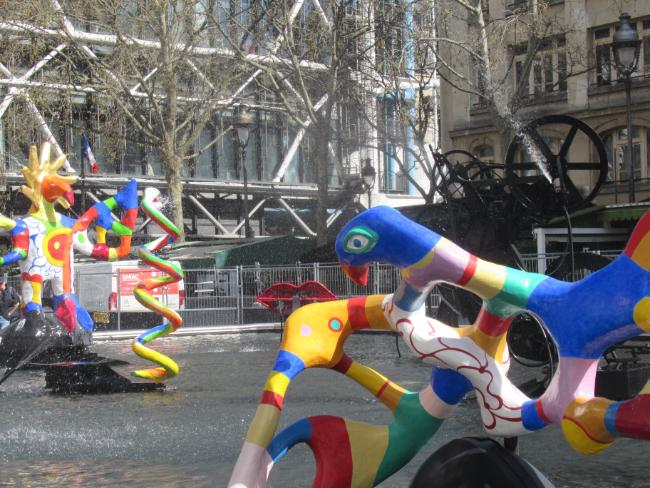
The Stravinsky Fountain next to the Centre Pompidou, for example, reopened last November after a two-year restoration and clean-up, the first in its 40-year history. The colorful models – a bright blue clown’s hat, a pair of scarlet lips, a twisting snake, an elephant with a striped trunk – had been looking a little jaded, but now, refurbished, they sway and turn over the water and are especially jaunty whenever the sun is shining and the ripples in the 33-meter basin glisten. The sight is both an appropriate extension to one neighbor, the Centre Pompidou, and an intriguing contrast to the other, the 16th-century Saint Merri Church. Some come especially to see it, others pause as they pass by.
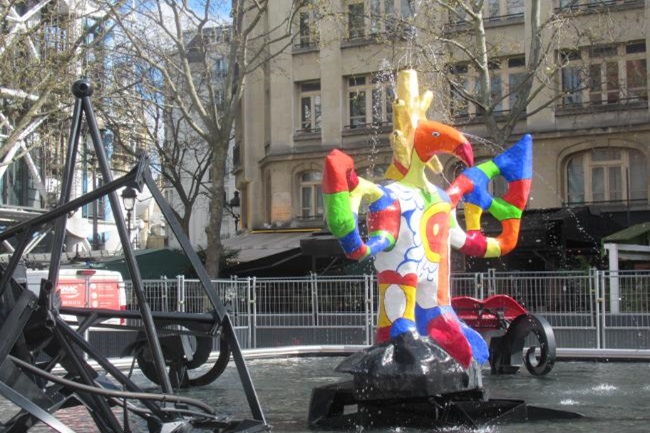
Stravinsky Fountain. Photo: Marian Jones
The fountain dates from 1983, not long after the modernistic Centre Pompidou had been erected in place of some of the old streets of Les Halles. Next door to the bold new art and culture center was IRCAM, a music and acoustics research institute, whose first director, Pierre Boulez named the square, and hence the fountain, after the composer whose Rite of Spring had outraged many Parisians in 1913. Perhaps the idea was to cause another stir here? The designers certainly aimed to be eye-catching, placing their mix of brightly colored and black sculptures in a walled rectangular basin where they sway when animated by the wind or jets of water. The idea, they said, was to bring color and joy to an urban environment and to create a talking point.


A careful, year-long restoration has been carried out on the Fontaine des Innocents, another landmark in the old Les Halles area. The project has cost over 4 million euros and involved a whole team of masons, sculptors, electricians and hydraulics experts who have repaired the damage done by weather and pollution. Much was done in situ, but the five well-known 16th-century nymphs were removed to a workshop for a delicate cleaning operation. The top scaffolding has just been removed, the water will flow again from May and by June the fountain will be lit up at night, just in time to be admired by the visitors who will flock to Paris for the Olympics.
The Fontaine des Innocents dates from as far back as 1549, when it was built to mark Henri II’s royal entrance into Paris. It was originally next to the cemetery of the Saints-Innocents church – which no longer exists – and was moved in the 1780s, forming the centerpiece of a market. Embellishments were added and in 1862, by which time it was the centerpiece of the Les Halles market, it was classified as a monument historique. The restoration of this beautiful piece of old Paris has created such interest that an exhibition on the work will be shown at the Carnavalet Museum and this will include the chance to watch some of the craftsmen at work on models cast from the originals.
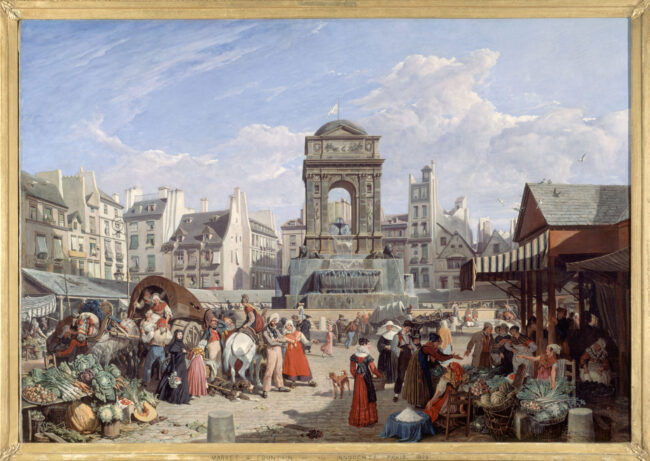
John-James Chalon (1778-1854). “Le marché et la fontaine des Innocents”. Huile sur toile, 1822. Paris, musée Carnavalet.
Equal care has been lavished on the two fountains in Place de la Concorde, where restoration was completed in March this year. The majestic pair are part of one of those triumphs of planning which makes Paris so elegant: they sit on the line which leads from the Madeleine Church, down the Rue Royale, across Place de la Concorde and over the river to the Assemblée Nationale. Their matching bronze basins are decorated with sea nymphs, tritons and dolphins spraying water, but each also has its own theme. One, the Fontaine des Mers, celebrates the sea, with statues representing the ocean, the Mediterranean and aspects of France’s maritime history, such as navigation, fishing and trade. The second, the Fontaine des Fleuves, celebrates France’s great rivers, the Rhine and the Rhône, along with the agriculture – grapes, wheat, flowers – which flourishes along them.
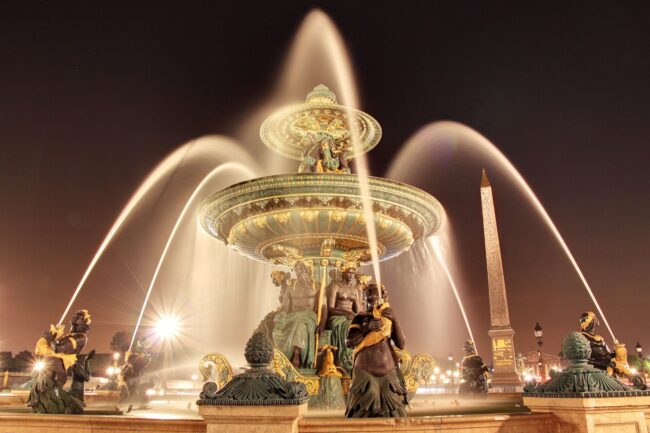
La fontaine des Fleuves, Place de la Concorde. Photo credit: Pierre-Louis FERRER / Wikimedia commons
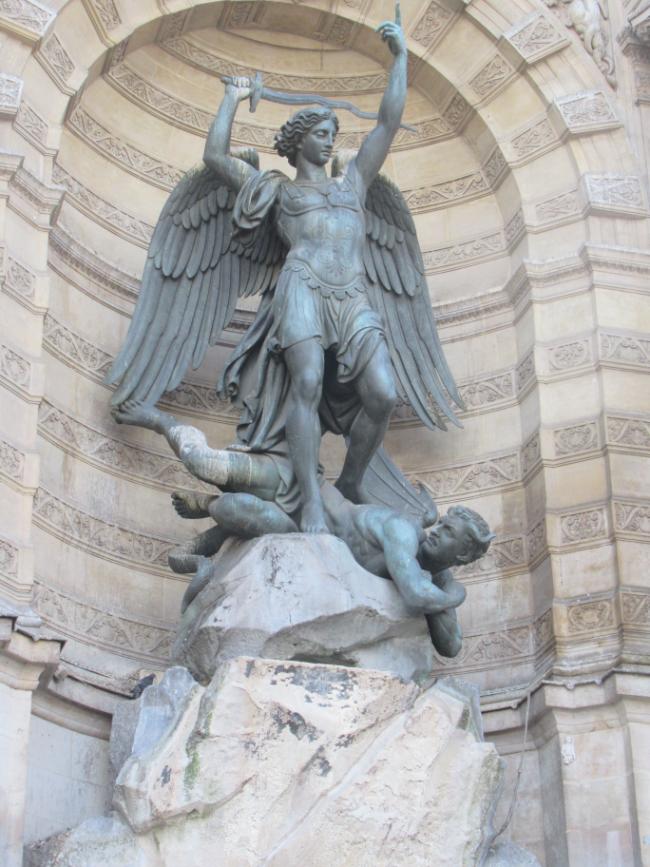
A deep clean is planned for three of the city’s other major fountains, including the Latin Quarter’s Fontaine Saint-Michel which will be smartened up in time for the Olympics. It was installed in 1860 as part of Baron Haussmann’s ambitious plans for Paris, fulfilling the need for something appropriately grand in this prominent new square built just back from the river. The idea of a statue of Napoleon was rejected in favor of one of the Arc Angel Michael, Patron Saint of Warriors, who had not only helped David defeat Goliath, but had appeared to Joan of Arc before her victory over the English at Orléans.
Saint Michael stands in a niche set on a high rock in the center of the monument, dressed as a Roman and brandishing his sword. He is flanked by four columns of red marble from Languedoc Roussillon, each topped by a statue representing Prudence, Temperance, Power and Justice, further adding to the sense of awe. At the top of the fountain sits the emblem of Paris and statues representing Might and Moderation. The messages of national and civic pride could not be clearer.


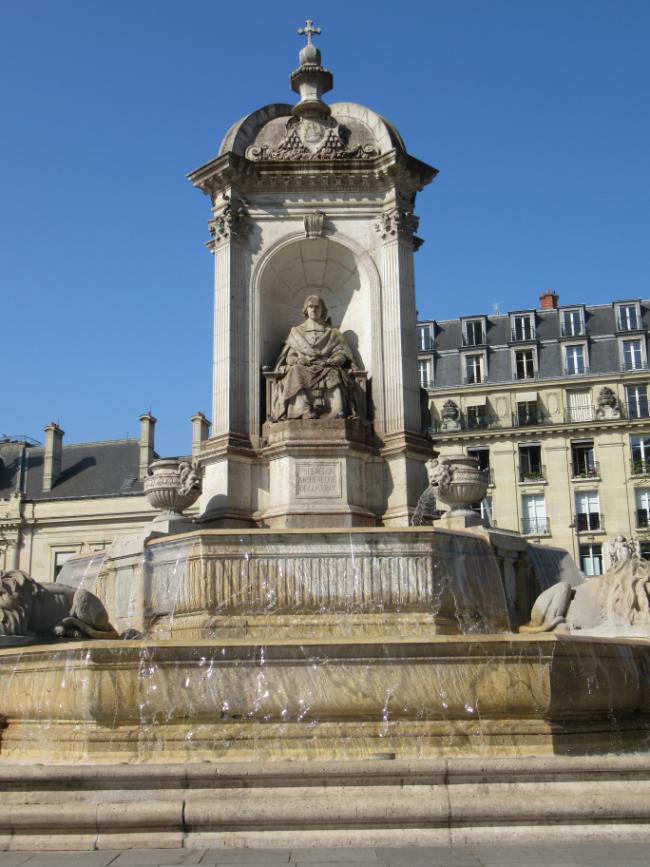
The Fontaine Saint-Sulpice will also be deep-cleaned. It dominates the Place Saint-Sulpice and was designed in the 1840s to celebrate the success of the project, led by Préfet Rambuteau, to bring clean drinking water to the streets of Paris. He had overseen the installation of new water mains, along with 1700 small fountains where Parisians could safely drink the water and when the practicalities were in place he commissioned this monumental fountain purely for decoration. It’s a three-tiered beauty, recognized mainly for the huge ornamental lions decorating each corner. You’ll also see four figures, each in its own niche, of former bishops of Paris who were all admired for their eloquence.



The Fontaine des Quatre Saisons in Rue de Grenelle in the 7th arrondissement is the final fountain on the “Project Fountain” list and will also be deep-cleaned. It’s another show-off edifice, over 11 meter tall, but squeezed into rather too narrow a road. It was designed by Louis XV’s sculptor as a symbol of the king’s largesse to his subjects. The central figure, a richly-dressed woman, represents the city of Paris. Bas-relief designs on the monument’s two wings feature the fruits of the seasons, depicting France as a land of plenty, ruled over by a benevolent monarch. Its 16-line Latin inscription, engraved in golden letters, refers to Louis as an “excellent father” who was loved by his people and admired for restoring peace to France.
In fact, the fountain’s reception was mixed. There were only two water-spouts amid the carvings and the eulogy, so people complained that it didn’t adequately fulfill its main purpose, the provision of plenty of water for the citizens of the quartier. The writer Voltaire asked pointedly, “What kind of fountain has only two taps where the water porters will come to fill their buckets?” He too found it badly sited, squashed into far too small a space and compared it unfavorably with the beautiful fountains he had seen in Rome. French taste was, he sniffed, “gross and shabby” by comparison.
Let’s dismiss Voltaire’s carping. The six fountains being restored or deep-cleaned all add to the beauty of the city. Some were statements of royal power, others celebrate France and its history, all were meeting places for the people of Paris to find drinking water if they had none at home. From the fun and color of the Stravinsky Fountain to the stately elegance of the Fontaine des Innocents, they all embellish their surroundings and are worth pausing at when you are passing by.
DETAILS
The Fontaine des Innocents Exhibition
Musée Carnavalet
23, rue de Sévigné (3rd arrondissement)
24th April – 25th August, 2024
Tuesday – Sunday 10.00 – 6.00
Full-price ticket is 13€
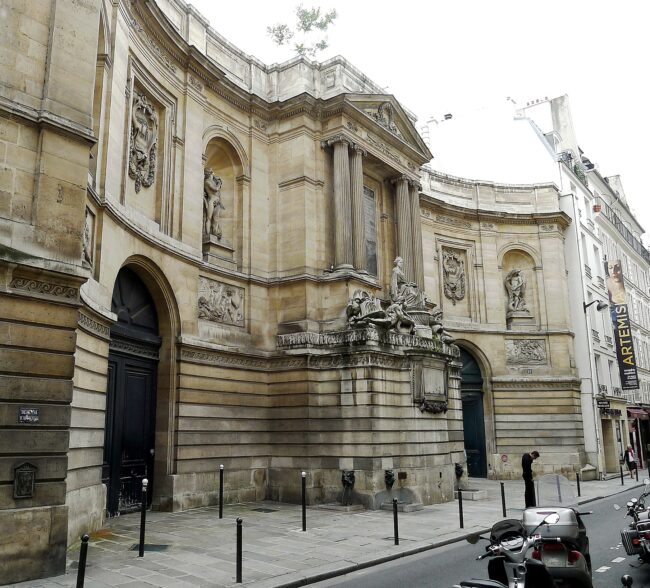
Fontaine des Quatre-Saisons, Rue de Grenelle. Photo credit: Mbzt / Wikimedia commons
Lead photo credit : Saint Sulpice. Photo credit: o / Flickr
Share to: Facebook Twitter LinkedIn Email
More in Fountains, Paris Fountains, saint-sulpice
Related Posts
By Marian Jones
REPLY