
Flâneries in Paris: A Stroll Through Paris Plages
This is the 41st in a series of walking tours highlighting the sites and stories of diverse districts of Paris.
It’s more than 20 years since Bertrand Delanoë, then mayor of Paris, decided to bring the beach to the city each summer and I’ve been intrigued to explore Paris Plages ever since. Would the term “Paris Beach” prove little more than a sad contradiction in terms, I wondered, or would I really find the mid-summer relaxation the mayor had hoped to offer all those who couldn’t leave for the coast when the weather warmed up?
I started on the right bank, springing down the steps just past the Pont Marie to find the riverside path and, almost immediately, a large sign alerting me to the dangers of the river. The Brigade fluviale (river police) warned of passing boats, of currents, of plants which could entangle swimmers who should not, anyway, be entering the water except in three designated areas and they threatened a verbalisation for non-compliance of any sort. When I checked, this turned out not to be a verbal warning, as any anglophone would surely assume, but rather a written record of an offense. I was struck anew by how the French language ambushes me just when I think I’m nearly fluent.
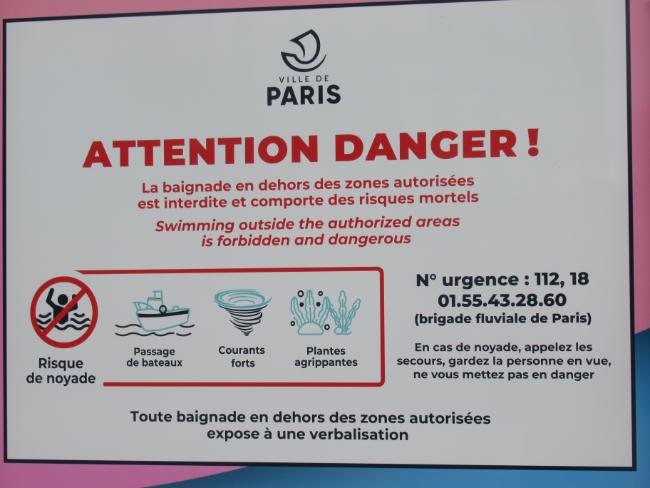
Sign on the riverbank. Photo: Marian Jones
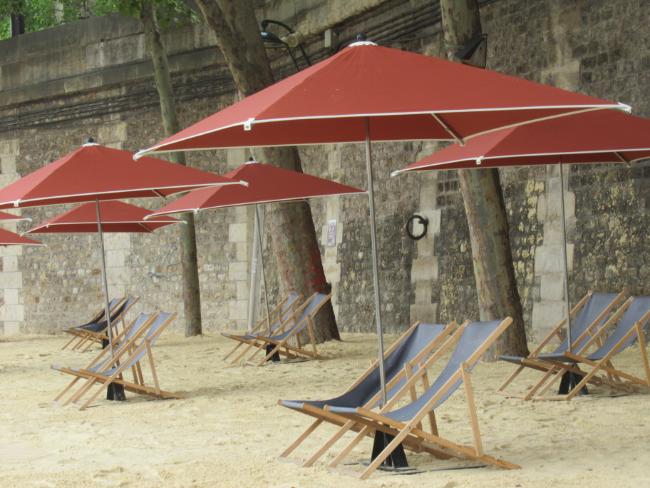
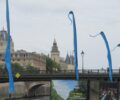
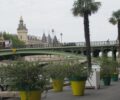
Cheerful sights were soon in view. A jumble of colored chairs announced the first café, where hot dogs, nachos and ice creams were on offer. In a roped-off area, preparations were being made for free play sessions organized by the Ville de Paris, and plagistes in blue and orange fleeces were setting up a giant chess game among the swings, hammocks and babyfoot tables. The right bank plage stretches up to the Pont Neuf and en route I passed sandy areas with deckchairs and parasols, one of them covered in case the weather should sometimes be more Parisian than Mediterranean. A giant board announced a Brazilian theme for Paris Plages this year, explaining the huge yellow planters, palm trees and blue flags fluttering in the breeze against the backdrop of the Conciergerie across the river.
It was still early, but joggers were out and Vedettes de Paris boats were taking tourists on a loop around the Ile Saint-Louis and then doubling back past the Hôtel de Ville on one side and Île de la Cité on the other. A few early arrivers were settling into deckchairs, some equipped for a leisurely morning with a book, others seemingly enjoying a few minutes of warming sun before heading to the office. A group of about 30 mainly older people were engaged in a tai-chi session and nearby, just along from the No Dogs sign, one lady had spread out her picnic blanket and scented candles. A large information board mapped out all the activities available as part of Paris Plages: pétanque every day, beach volleyball every afternoon, workshops on Brazilian culture and first aid, events around the arts, food, cinema and music. In short, all sorts, for everyone, and most of it free.
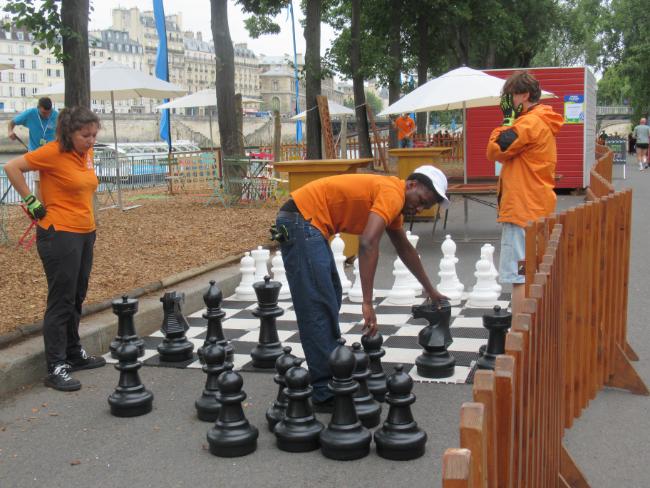
Jeux Geants at Paris Plages. Photo: Marian Jones
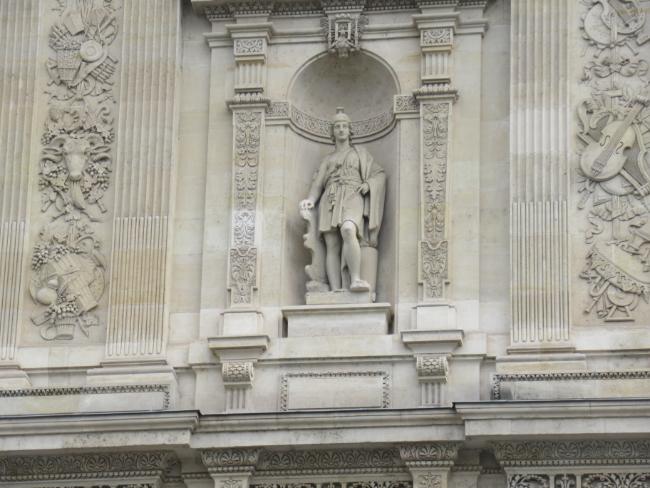
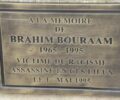
I was intrigued to see the “other” Paris Plage, which stretches up the left bank from the Pont Royal to the Pont de l’Alma, so I climbed the steps in order to cross the river. Heading up towards the Pont Royal took me past the side of the Louvre, where I lingered a moment to look at statues I’d never even glanced at before, and over the Pont du Carrousel, where a plaque remembers Brahim Bouram, victime du racisme. A 29 year-old Moroccan, he happened to be there one day in 1995 when a group of men left a nearby National Front rally and confronted him. They pushed him into the river and, as an article in Le Monde at the time explained chillingly, they left him and rejoined the march. Because Brahim could not swim, he drowned.

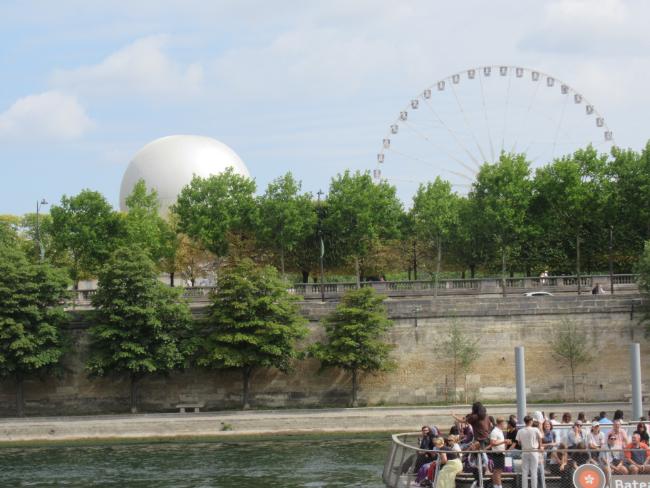
At the Pont Royal I crossed the Seine and walked along the Quai Anatole France admiring views of the giant wheel and the Olympic vasque in the Tuileries Gardens on the opposite bank. The first stretch was not so much a beach, more a hive of activity. A dozen or more workmen were building a stage and setting up equipment for, I discovered from a giant sign, a month-long event called Plages de Mercredi. There’ll be deckchairs and beach volleyball, it promised, but with a darker side. For, in conjunction with Netflix, Paris Plages will be hosting events to celebrate the release of Season 2 of the hit series Wednesday, an Addams family spin-off. Prepare for a gothic atmosphere – that’s not dreaming spires, but ghostly white skin and heavy black eyeliner – in which you can enjoy, among many activities, gothic beachball and drag bingo. It will be, says the advertising, a beach club with a difference.
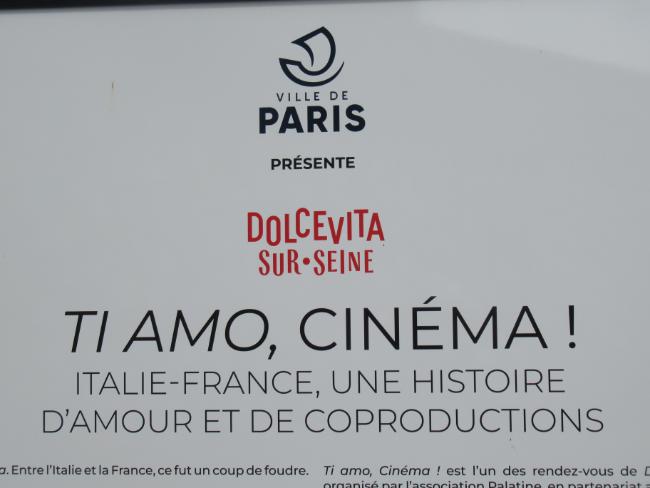
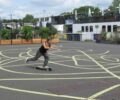
Before long, another surprise. A pop-up photo exhibition, “Ti amo, cinéma,” celebrating the collaboration between French and Italian cinema, described as “une longue, longue, longue histoire d’amour.” Thirty or so large photographs were displayed on giant cubes, stills featuring French and Italian actors working together: Claudia Cardinale with Jacques Perrin, for example and Sophia Loren starring alongside Robbert Hossein. These glimpses of la dolce vita sur Seine were soon interrupted by a skateboarder, practicing her turns and tricks on a mass of yellow squiggles painted onto the ground. As she completed one clattering jump-with-twist, passers-by broke out into spontaneous applause.



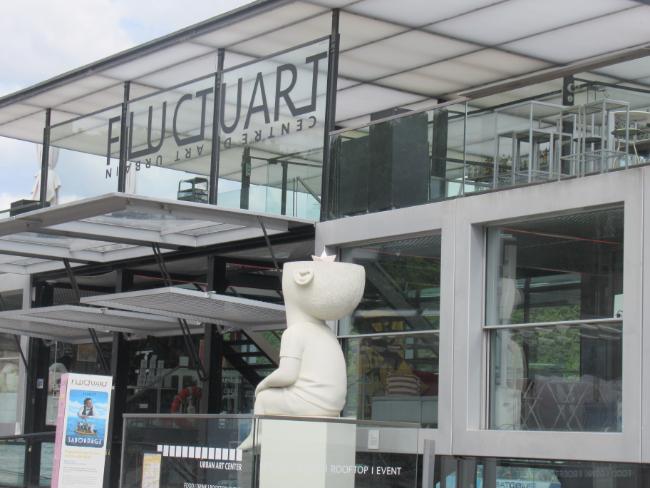
I’d come at the end of July, just a little too early for the revelries planned for August, but I still passed lots of enticing possibilities: a café terrace full of deckchairs, a snack booth where the crêpes du moment included one with salted butter caramel, a cocktail bar, a tapas restaurant backing straight onto the river. The passers-by seemed in no hurry. There were families on bikes snaking along behind a guide and a couple pausing at Fluctuart, the floating art center where you can see free exhibitions, buy art books and stop off at the outdoor café terrace to sit among large works of modern art. A man on a scooter was accompanied by a tiny, excitable dog who ran along the quai yapping at boats, so close to the edge that his owner lost his nerve and scooped him up into a doggie sling around his waist.

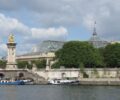
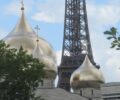
This second section was jam-packed with lovely riverside views. As I emerged from under the Pont de la Concorde I was met with the sight of the Grand Palais, built to impress visitors to the Universal Exhibition in 1900 and still stunning today. Approaching the Pont Alexandre III from this angle affords an unusual view of the art nouveau sculptures along the sides and the Belle Époque lampposts with their ornate garlands and cherubs. Walking up the steps to the Pont de l’Alma at the end of the route brings the Eiffel Tower and the silvery onion domes of the Cathédrale de la Sainte Trinité into view. One is a 19th-century triumph of engineering, the other a Russian Orthodox church, opened in 2016 and carefully designed to reflect Byzantine culture, yet fit into its surroundings.
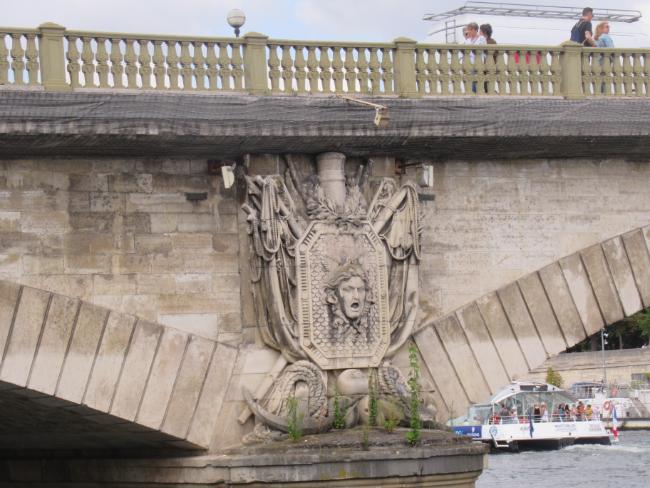

The many little moments which made up my walk were specific to that particular July morning, yet they combined to form an impression of Paris Plages. A place, but also a series of events, it offered moments of pleasure and relaxation, an invitation to arrive when you have a moment and enjoy whatever you happen across. As I crossed the Pont de l’Alma I saw a sign advertising bateaux-mouches trips, a chance, it said, to see “Paris par sa plus belle avenue.” I was still thinking about my wander down the Seine, “the most beautiful avenue in Paris,” as I headed into the car-honking chaos of the Place de l’Alma, in search of the metro station.
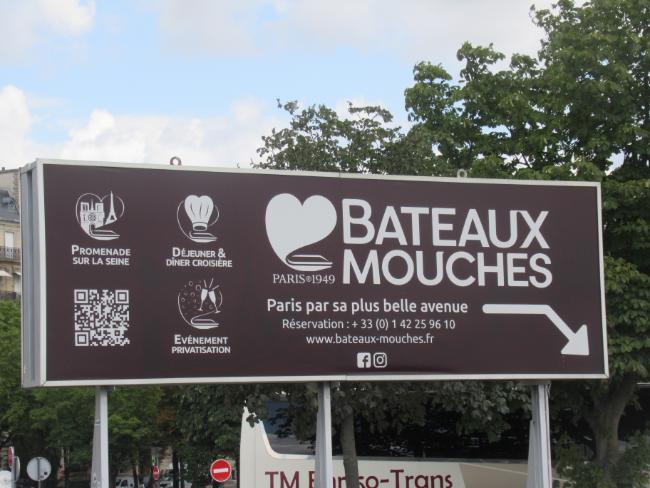
Bateaux mouches sign. Photo: Marian Jones
Lead photo credit : Beach area at Paris Plages. Photo: Marian Jones
Share to: Facebook Twitter LinkedIn Email
More in Flâneries in Paris, Paris Plages, summer
Related Posts
By Marian Jones
REPLY
REPLY