
Whatever Happened to Jane Poupelet, Sculptresse Extraordinaire?
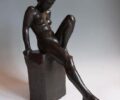
Whatever happened to Jane Poupelet, sculptresse extraordinaire, who wowed her contemporaries during the early 20th century? Poet/critic Guillaume Apollinaire lauded her gifts in his reviews of the Salon de la Sociéte Nationale des Beaux Arts in 1911 and 1913. For the latter, he wrote: “In the present state of the sculpture rooms, it seemed to me that this year’s best work was Mme. Jane Poupelet’s Seated Woman At the Water’s Edge, and a Study in plaster.” How did such a celebrated young talent fade into the vast sea of art history? Simple. She shifted her career from primarily exhibiting graceful modernist sculpture to fashioning prosthetic masks during World War I. Here is her impressive story.
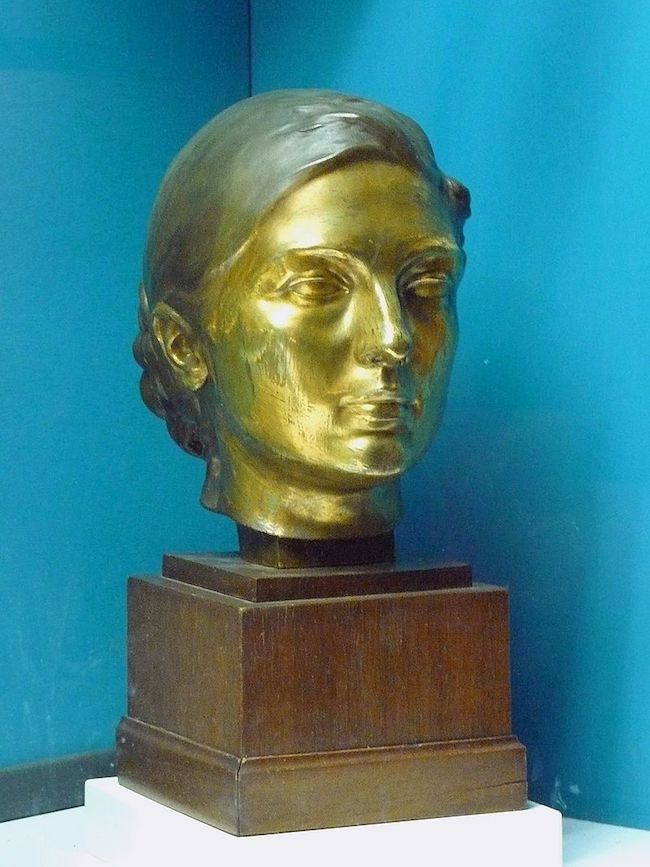
Lucien Schnegg, Portrait of Jane Poupelet, 1903, Bronze, Musées d’Alger, Bordeaux, Mont-de-Marsan et Paris (Petit Palais).
Marie Marcelle Jane Poupelet was born in Clauzure in the Dodogne on April 19, 1874. In 1892, she enrolled in the École des Beaux-Arts in Bordeaux and in 1896 she went to Paris to study at the Académie Julian. Displeased with her progress there, she took up training with the well-known artist at the time Lucien Schnegg (1864-1909), coincidently born in Bordeaux of Bavarian parents. She also knew his younger brother, the award-winning Bordeaux sculptor Gaston Schnegg. At first, she exhibited under the male pseudonym Simon de la Vergne from 1899 to1901. In 1903, she exhibited under her own name at the Salon de la Société Nationale des Beaux Arts. During the following year, she won an award for a fountain, which seems to be no longer extant.
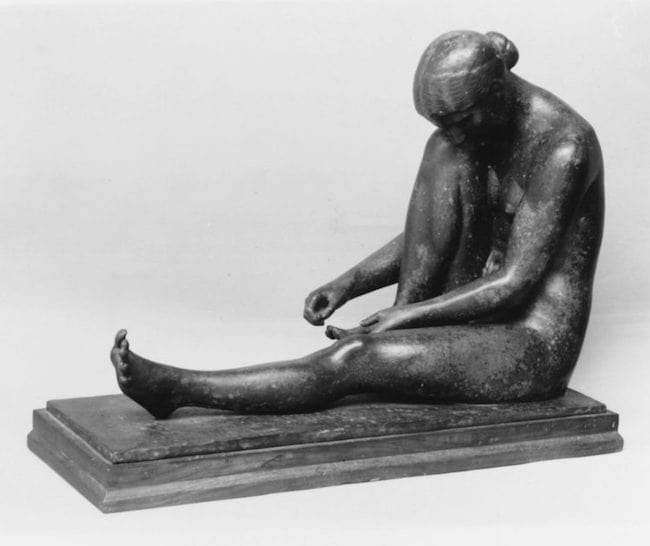
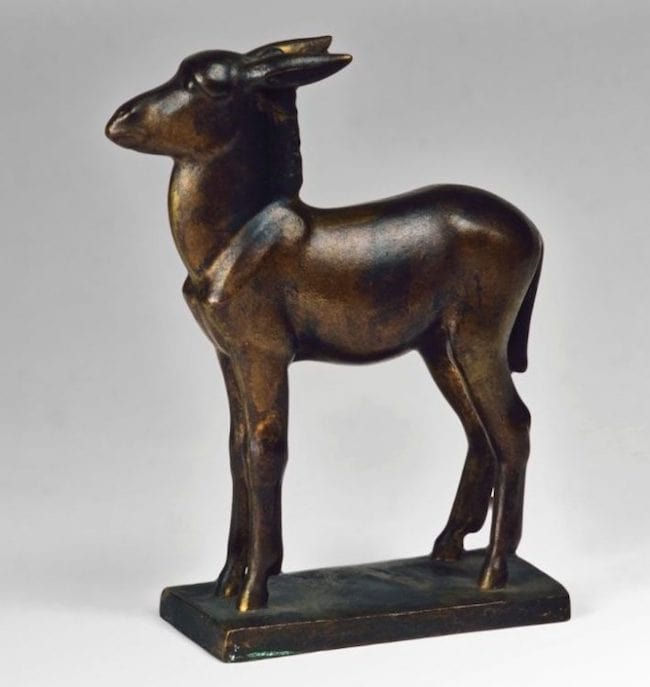
Jane Poupelet, Baby Donkey, 1907, Musée d’Orsay [public domain]
Jane Poupelet’s work continued to receive praise and her participation in the art world led to prominent positions among the arbiters of taste. She served as a juror for the Salon d’Automne, as Vice President of the Salon des Indépendants and, in 1921, as President of the Société Nationale des Beaux Arts, a remarkable accolade for any artist, above all a woman artist. Her best-known subjects are domestic and farmyard animals as well as the female nude.
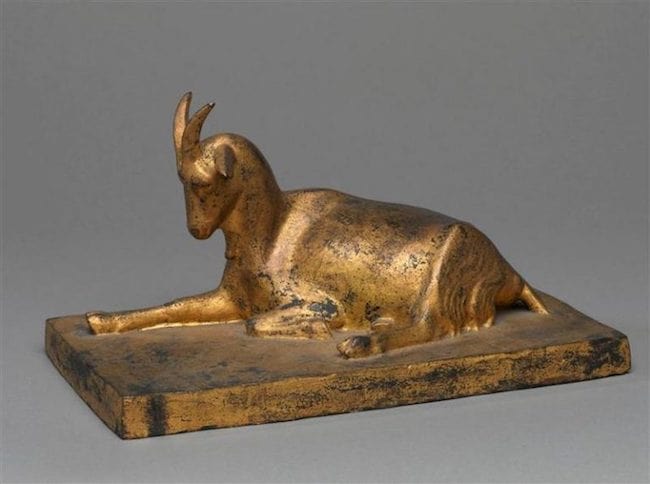
Jane Poupelet, Goat Lying Down, 1902, Centre Georges Pompidiou, Musée d’art modern.
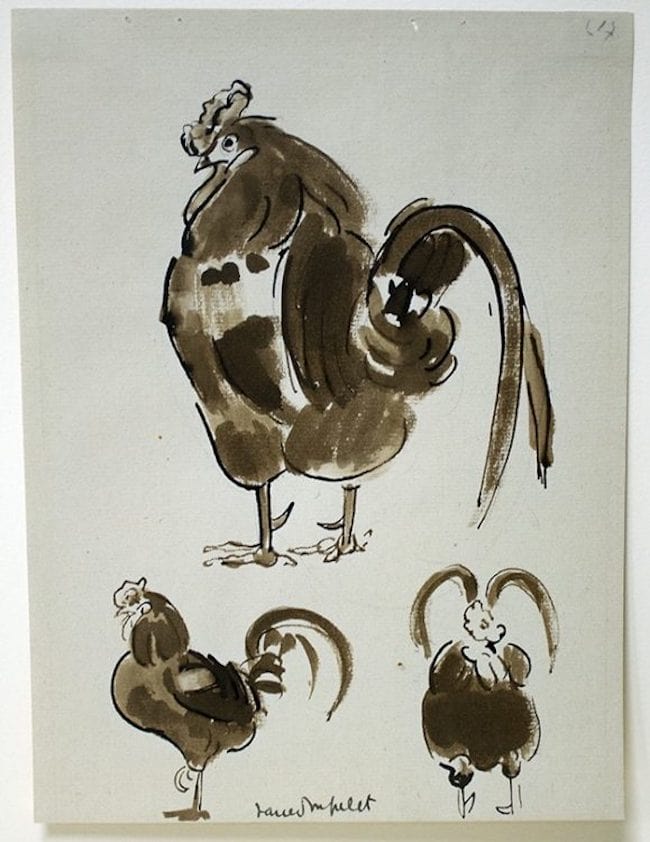
Poet/critic André Salmon wrote: “Mademoiselle Jane Poupelet’s animals, above all her cows, express a rather profound sensibility.” These much-loved, carefully rendered beauties and beasts have been acquired by the top museums in the world, including the Metropolitan Museum of Art, the Museum of Modern Art and the Brooklyn Museum, all in New York, as well as the Musée d’Orsay in Paris, Musée d’Art et d’Archéologie in Périgueux, the Cleveland Museum in Ohio, the Isabella Stewart Gardner Museum in Boston, and the Musée des Beaux-Arts in Calais, among others. She continued to sculpt until 1922, when she fell ill. Over the next decade she sketched. Numerous drawings belong to the Metropolitan Museum of Art and the Chicago Institute of Art. Jane Poupelet died in Talence in Bordeaux, on October 17, 1932.
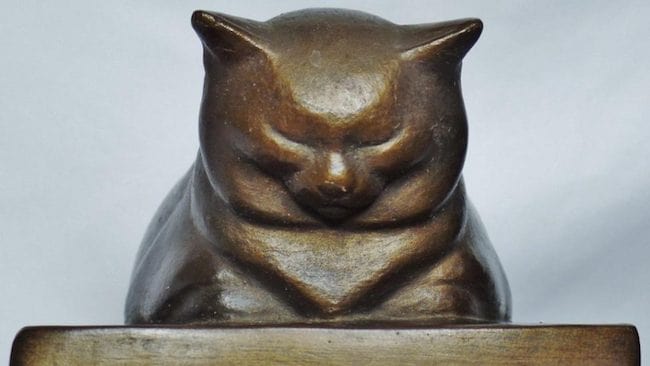
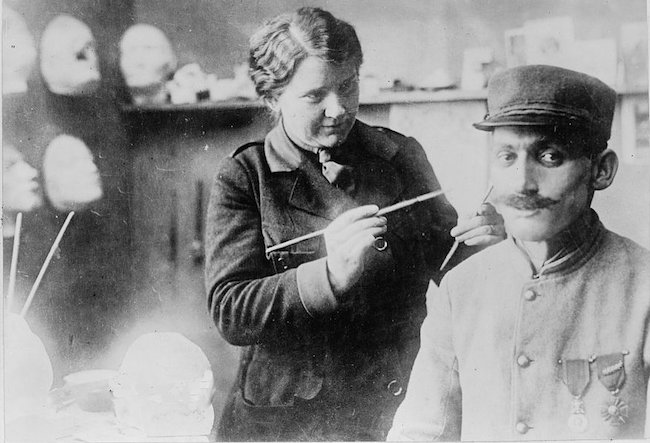
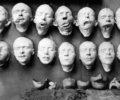
In 1928, Bernier Gallery mounted a retrospective exhibition of Jane Poupelet’s work, accompanied by a catalogue in which the well-known critic Louis Vauxcelles contributed an essay. In 2005, a major retrospective of her work was organized by La Piscine – André Dilgent Museum of Art and Industry, Roubaix, France, which reestablished her reputation among the best-known women sculptors of her era, such as Camille Claudel. Her contribution to the survivors of World War I deserves equal, if not greater, recognition.
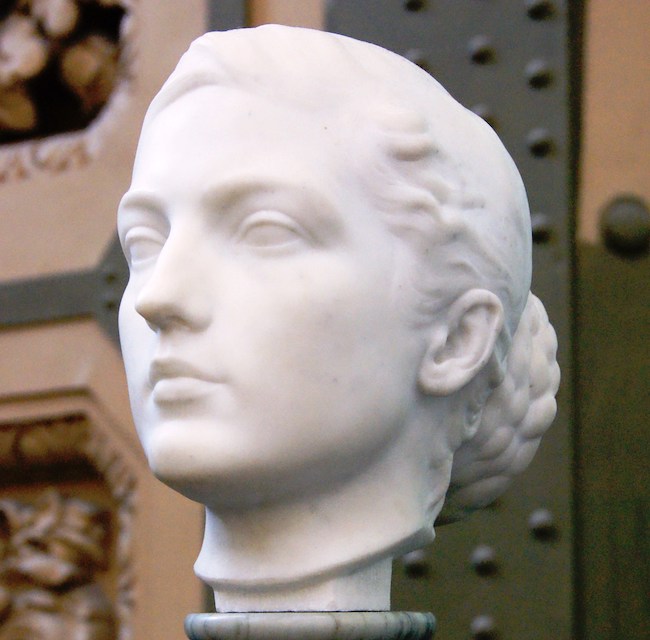
Lead photo credit : Lucien Schnegg, Jane Poupelet, 1901, marble, 14 x 11 x 6 ¾ inches Musée d’Orsay [Public Domain: Wikipedia]
Share to: Facebook Twitter LinkedIn Email
More in sculptor, World War I
Related Posts

REPLY
REPLY